what social media pays the most
What Social Media Pays the Most: A 2026 Creator Guide
Wondering what social media pays the most in 2026? This guide compares YouTube, TikTok, Instagram, and X payouts to help creators maximize their income.
Facebook generates the highest revenue per user at $64.6, yet that doesn't mean it pays creators the most directly. That gap is the whole story behind what social media pays the most in 2026, because the platform that monetizes users best is not always the platform that shares the most with the people making the content.
| Platform | Direct payout model | Typical RPM or payout range |
|---|---|---|
| YouTube | Ad revenue, memberships, Super Chat, shopping | $2 to $12 RPM for long-form, with some finance and business niches reaching $20+ Metricool |
| TikTok | Creator Rewards, brand deals, shopping | about $0.40 to $1.00 per 1,000 qualified views Paprika Bot |
| X | Ad-revenue sharing, subscriptions | about $8 to $12 per 1 million verified-user impressions Promote.sh |
| Content monetization, Stars, subscriptions, branded content | highly variable, tied to format and audience mix Watcher.Guru | |
| Sponsored content, affiliate sales, badges | usually indirect, not view-based in the same way as YouTube Watcher.Guru |
The Real Answer to Creator Payouts in 2026
The creator economy is booming, but the income picture is still messy. A 2026 survey from Epidemic Sound found that YouTube was the leading income source for 28.6% of 1,500 monetizing creators, which is a strong signal that it remains the benchmark for direct earnings Epidemic Sound.
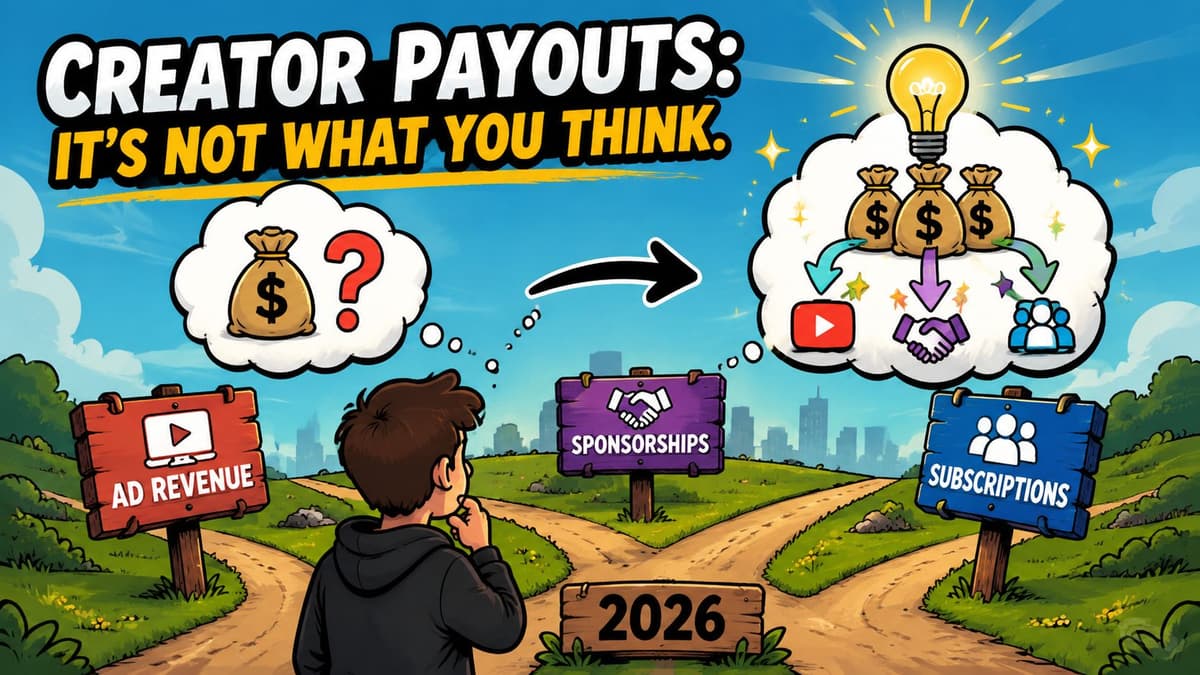
The hard truth is that “best paying” depends on what you mean by paying. If you mean native platform money, YouTube usually wins. If you mean total creator income, the answer often shifts toward a mix of platform reach, brand deals, affiliate links, product sales, memberships, and owned channels.
Practical rule: treat platform payouts as the floor, not the ceiling. The real business is usually built outside the feed, even when the feed is what fills the top of the funnel.
That's why a useful comparison is not “Which app pays the most?” but “Which app pays directly, and which one helps me make money somewhere else?” For a compact breakdown of the mechanics behind creator compensation, SponsorRadar explains influencer pay in a way that matches how most working creators earn.
Direct Payouts vs Indirect Income
Direct payouts are the money a platform sends you because people watched, subscribed, tipped, or engaged inside the app. Indirect income is everything that happens after the audience knows you exist, like sponsorships, affiliate commissions, consulting, digital products, merch, or driving traffic to a newsletter and store.
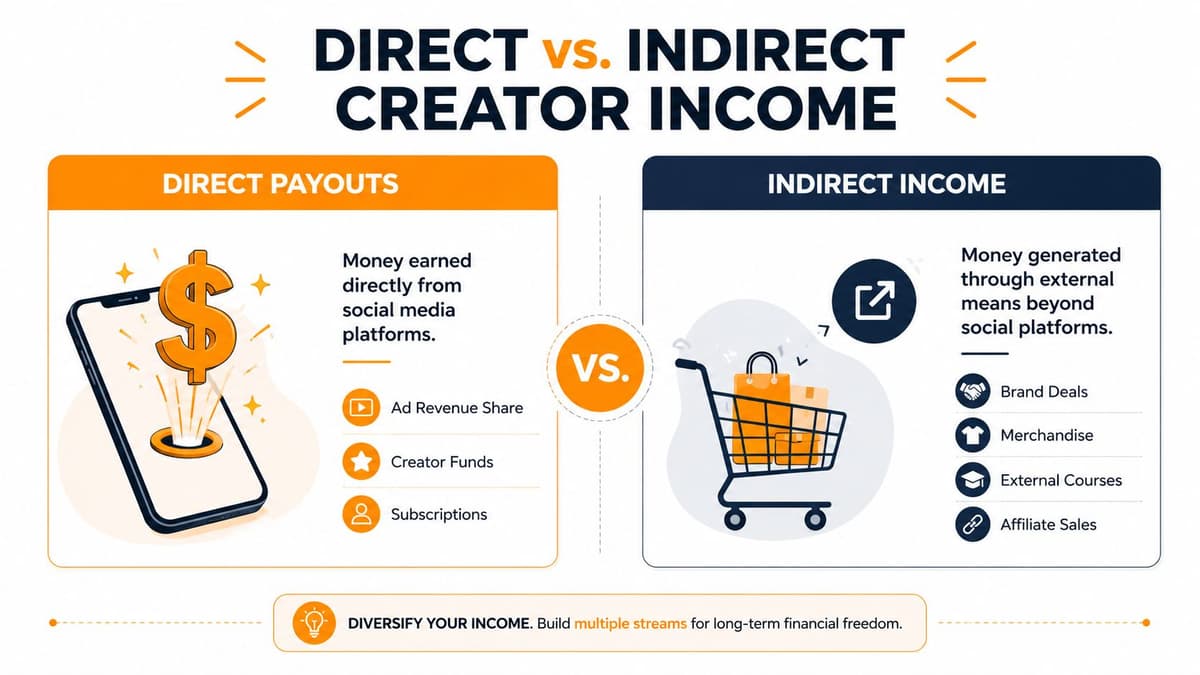
The distinction matters because a platform can be a great business engine without being a great payroll system. Facebook's revenue per user sits at $64.6, ahead of Instagram at $35.45, TikTok at $14.56, YouTube at $14.5, Snapchat at $6.7, and X at $4.09, but that ranking measures how well the platform monetizes users overall, not how much of that value goes to creators Watcher.Guru.
Think in two layers
First, ask whether the platform pays you for attention inside the platform. That covers ad share, creator funds, subscriptions, gifts, and similar tools. Second, ask whether the platform helps you earn outside the platform by pushing people to higher-value assets.
A lot of creators overrate the first layer and ignore the second. A short-video app can give you reach, but if the payout is thin and your audience never leaves the app, the business stays fragile. By contrast, a platform that helps you build trust can support a newsletter, course, service business, or paid community even if its native payouts are modest.
That's why the smartest creators separate distribution from monetization. Distribution platforms spread your work. Monetization platforms, or monetized assets like YouTube channels and blogs, convert attention into money more reliably.
Revenue share and creator share are not the same thing
A company can make excellent money per user and still hand creators a small slice of that revenue. That's the key reason platform economics mislead beginners. High company monetization can mean a healthier business for the platform, not a richer creator payout.
To properly evaluate a platform, compare three questions. Does it pay on views, does it pay on fans, and does it help you sell something else? The best platforms usually do at least one of those well, but rarely all three.
A Platform by Platform Payout Comparison
YouTube is still the clearest direct-money benchmark. Independent 2026 coverage says it remains the top-paying platform for creators, and YouTube's own published figures say it paid over $70 billion to creators, artists, and companies from 2021 to 2023 Metricool. Long-form content commonly lands around $2 to $12 RPM, with some finance and business niches reaching $20+ Metricool.
Estimated Direct Payouts Per 1,000 Views or Impressions
| Platform | Payment model | Typical RPM |
|---|---|---|
| YouTube | Ads, memberships, Super Chat, shopping | $2 to $12 for long-form, sometimes $20+ in stronger niches Metricool |
| TikTok | Creator Rewards | about $0.40 to $1.00 per 1,000 qualified views Paprika Bot |
| X | Ad-revenue sharing | about $8 to $12 per 1 million verified-user impressions Promote.sh |
| Content monetization, Stars, subscriptions | variable, depending on format and audience mix Watcher.Guru | |
| Sponsored content, affiliate income, badges | usually indirect rather than view-based Watcher.Guru |
YouTube is the only major platform in this group that combines scale, mature ad systems, and multiple native monetization paths in one place.
YouTube
YouTube wins for creators who can hold attention. Long-form watch time gives the platform more room to sell ads, and that's why RPM can be meaningfully higher than most short-form alternatives Metricool. It also works well because monetization doesn't depend on a single income stream.
A creator can earn from ads, memberships, Super Chat, and shopping. That makes YouTube less brittle than a pure short-form feed, where one payout program can change the entire revenue picture.
TikTok
TikTok is strong for discovery, but weak as a direct payday. A 2026 guide places TikTok's Creator Rewards at about $0.40 to $1.00 per 1,000 qualified views Paprika Bot. That makes it useful for reach, but usually not ideal as a core income engine.
X
X pays far less through ads than most creators expect. Industry summaries describe ad-revenue sharing at roughly $8 to $12 per 1 million verified-user impressions, which works out to about $0.01 per 1,000 views Promote.sh. For many users, X is better as a distribution and community platform than as a direct payout machine.
If you're trying to turn that platform into a business channel, this internal guide on how to get paid to tweet is a useful companion.
Facebook and Instagram
Facebook's monetization is broader than many people realize, but creator pay still depends heavily on format, audience, and setup. Instagram leans even more toward brand partnerships and affiliate income than native payouts Watcher.Guru. In practice, both platforms are often stronger for sales support than for paycheck-style platform revenue.
For livestreaming and fan support, Unlock your streaming platform payouts offers a helpful lens on how subscription-based income works across creator platforms.
Key Factors That Determine Your Earnings
The same platform can pay two creators very differently. The biggest reason is that niche, audience, format, and monetization mix all shape the payout.
Niche changes the ad value
High-value topics attract higher advertiser demand. In a 2026 analysis, YouTube long-form RPMs were estimated at $1 to $9, while TikTok sat at $0.20 to $5 and X at $0.15 to $4, with the strongest rates concentrated in finance and technology Zeely. That means a finance creator can often out-earn an entertainment creator even on the same platform.
Audience location and intent matter
Advertisers pay more for some audiences than others, especially when the viewer is likely to buy higher-ticket products or services. That's why a smaller, purchase-ready audience can be more valuable than a large but low-intent audience. A channel about software, personal finance, or B2B tools often monetizes better than a broad meme account because the downstream offer is clearer.
Format changes the economics
Long-form video tends to support stronger direct monetization than short clips because there's more time for ads, higher retention, and more room for a deeper offer. Text-first formats can still work, but they usually need stronger indirect monetization to compete. That's why creators often use short-form for reach and long-form for revenue.
Monetization mix decides durability
A creator who depends on one payout stream is exposed to policy changes, RPM swings, and audience shifts. A creator who combines ads, sponsorships, affiliate links, and a product or service business has more insulation. If you want a cleaner way to think about that balance, how to measure social media ROI is a practical starting point.
If your content is strong but your monetization is weak, the problem usually isn't the platform alone. It's the mismatch between topic, format, and income model.
Strategies to Maximize Your Social Media Income
The fastest route to more money is usually not posting everywhere. It's picking one monetization core, then using other platforms to feed it. Short-form and text-based platforms have lower direct payouts, with TikTok's Creator Rewards around $0.40 to $1.00 per 1,000 qualified views and X's ad-revenue sharing around $0.01 per 1,000 views Paprika Bot. That gap is exactly why those channels usually work better as distribution than as primary income sources.
Build one core asset first
A YouTube channel, newsletter, blog, or community usually deserves the first layer of effort because it can hold both attention and monetization. Once that core exists, every other platform should support it. That gives you a clearer path from content to income instead of chasing random platform rewards.
Use distribution to amplify the core
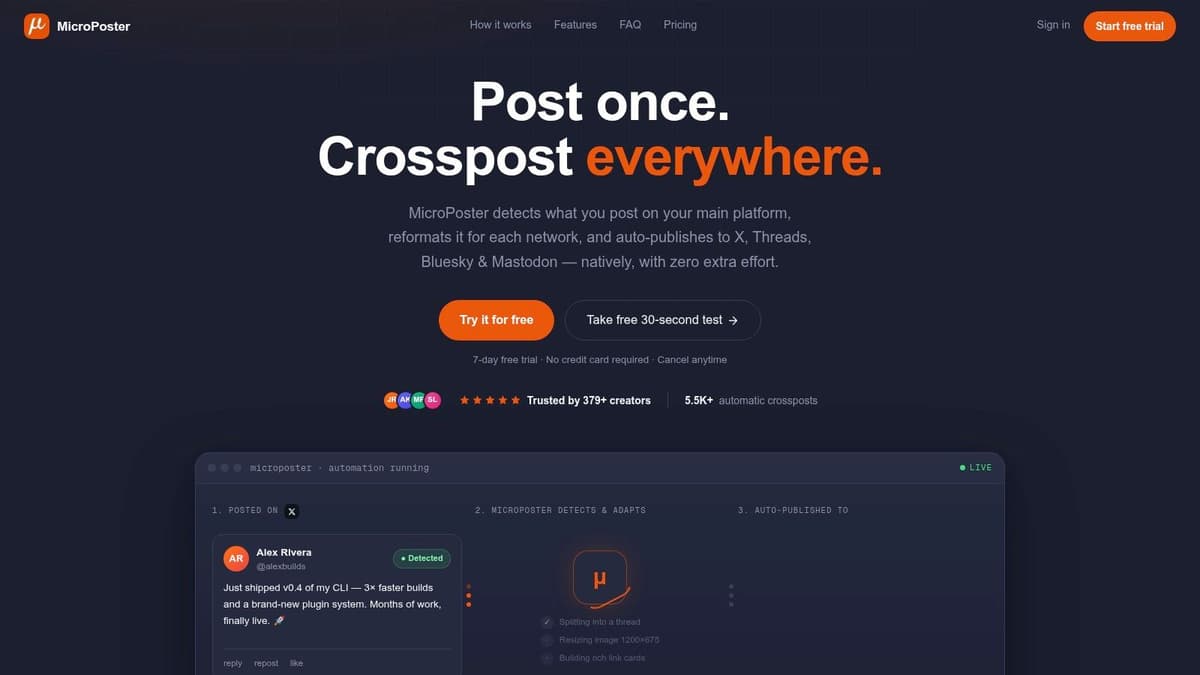
MicroPoster is one option for people who want to write once and mirror content to X, Threads, Bluesky, and Mastodon without manually reposting everywhere. It supports automatic crossposting, content adaptation, and scheduling, which makes it useful when the primary goal is to drive attention back to a main monetized asset rather than to treat every network as a separate business.
Favor income channels that compound
Brand deals, affiliate offers, digital products, and memberships tend to scale better than low-yield view payouts. That doesn't mean you should ignore native monetization. It means you should use it as one layer in a bigger stack, not the whole stack.
For teams or solo creators managing workflows around UGC and platform repurposing, monetizing UGC Copilot API is another useful reference point for turning content operations into a revenue system.
A simple operating rule
Create the highest-value version of your content where it has the most earning power. Then distribute the shorter or adapted versions everywhere else. That approach protects your time and makes every post work harder.
How to Choose Your Primary Monetization Platform
If you make video essays, tutorials, reviews, or business explainers, YouTube is usually the smartest primary platform. Its long-form RPM structure and layered monetization tools make it the clearest direct-income choice for creators who can sustain attention Metricool.
If you're a writer, operator, or commentator building a personal brand, X, Threads, or a blog can work better as a distribution layer than as a cash register. Use them to drive clicks, trust, and list growth, then monetize through services, products, sponsorships, or a newsletter. If you're posting visual, fast-moving content, Instagram and TikTok can still be excellent for brand deals, even when the native payouts are modest.
If you're a live performer, community host, or stream-first creator, Kick and similar livestream models deserve attention because subscription economics can reward loyalty more than viral spikes. Kick's 95/5 split means creators keep 95% of subscription revenue while the platform keeps 5%, which is one reason live community income can outperform standard short-form payouts PowerCouch Media.
The cleanest framework is a hub-and-spoke setup. Pick one hub where monetization is strongest, then let the spokes handle discovery and distribution. If you're deciding today, start with your format, then your niche, then your audience's buying intent. That order usually matters more than chasing whatever app is trending this week.
A CTA for MicroPoster.