social media manager tips
10 Actionable Social Media Manager Tips for Microblogging Mastery in 2025
Unlock growth on X, Bluesky, & Mastodon with these 10 social media manager tips. Master content, automation, and analytics to boost your strategy now.

In a digital landscape often dominated by visual media, the power of concise, text-driven communication on platforms like X, Bluesky, and Mastodon remains unmatched for building direct connections and authority. For social media managers, thriving in these microblogging environments demands more than just posting updates; it requires a specialized skill set focused on sparking conversations, constructing compelling narratives, and fostering dedicated communities one post at a time. This is where advanced strategy separates fleeting engagement from sustainable growth.
This guide moves beyond generic advice to deliver a comprehensive roundup of actionable social media manager tips tailored specifically for the nuances of text-first platforms. We're cutting straight to the tactics that work, from architecting viral hooks and intricate threads that capture attention to implementing sophisticated cross-posting workflows that maximize reach without sacrificing authenticity. You will learn practical methods for transforming your content calendar from a simple schedule into a strategic asset.
We'll cover concrete strategies for community building, data-driven performance measurement, and leveraging automation to streamline your process, including specific workflow examples using tools like MicroPoster. Whether you're an independent creator, a startup, or managing multiple client accounts, these insights are designed to be implemented immediately. Get ready to refine your approach, ensuring every character you publish is purpose-driven, impactful, and contributes directly to your growth objectives. This is your playbook for mastering the art and science of microblogging.
1. Master Content Ideation and Viral Hooks for Text-First Platforms
Success on fast-paced, text-first platforms like X, Bluesky, and Mastodon is won or lost in the first few words. Your opening line, or "hook," must immediately stop a user from scrolling by promising value, sparking curiosity, or challenging a common belief. This is a foundational skill for any social media manager, as a brilliant idea presented with a weak hook will almost always underperform.
Effective hook-crafting moves beyond simple updates into the realm of psychological triggers. It’s about creating an "information gap" that users feel compelled to fill by reading the rest of your post or thread. This systematic approach ensures your best content ideas get the attention they deserve, driving higher engagement and reach.
How to Craft Irresistible Hooks
One of the most effective social media manager tips is to build a repeatable system for generating and refining hooks. Instead of starting from a blank slate, use proven formulas that resonate with human psychology.
Consider the powerful, concise hooks used by thought leaders like Naval Ravikant, whose philosophical one-liners spark massive discussion from a single sentence. Or look at creators like Sahil Bloom, who uses frameworks like "The 1% Rule" to package complex ideas into a viral, easily digestible format. The hook promises a simple, powerful lesson, enticing users to click and learn.
Key Insight: A viral hook doesn't just state a topic; it makes an immediate promise to the reader. It promises a secret, a solution, a shortcut, or a surprising new perspective.
Actionable Hook-Crafting Tactics
Integrate these tactics into your content creation workflow to consistently produce high-performing posts:
- Lead with a Surprising Statistic or Controversial Claim: Start with a fact that challenges conventional wisdom. For example: "90% of startups fail, but not for the reason you think."
- Promise Immediate Value: Use formats like "Here's how..." or "The ultimate guide to..." to signal that your post provides a clear, actionable solution.
- Ask a Compelling Question: Pose a question that your target audience is already asking themselves. For instance: "Are you making this critical mistake with your personal finances?"
- Build a 'Swipe File': Create a dedicated folder or document where you save high-performing hooks from accounts in your niche. Analyze why they worked and adapt the underlying structure for your own content.
- Leverage AI for Variation: Use tools to generate multiple hook variations for a single idea. This allows you to A/B test different angles and quickly identify which style resonates most with your audience.
2. Leverage Data Analytics and Performance Metrics
Moving beyond intuition to data-driven strategy is a critical step for any serious social media manager. Using platform analytics and third-party tools to track key performance indicators (KPIs) allows you to understand what truly resonates with your audience, optimize your content, and prove your value. This involves monitoring engagement, reach, impressions, and conversion metrics to make informed decisions instead of just guessing.

This systematic approach transforms social media management from a creative-only discipline into a powerful growth engine. It empowers you to refine your content strategy, justify your efforts with concrete numbers, and consistently improve results over time. Without data, you are flying blind.
How to Turn Data into Strategy
One of the most impactful social media manager tips is to build a repeatable process for analyzing performance and extracting actionable insights. Instead of getting lost in a sea of numbers, focus on the metrics that directly align with business goals, a practice championed by analytics platforms like Sprout Social and Hootsuite.
For instance, Netflix doesn't just post trailers; it analyzes viewership data to create targeted social campaigns that speak directly to niche audience segments, boosting engagement. Similarly, Starbucks uses location-based analytics to tailor regional promotions, demonstrating how data can drive hyper-relevant content.
Key Insight: The goal of analytics isn't just to report numbers; it's to find the story behind them. A high-performing post isn't just a success, it's a clue to what your audience wants more of.
Actionable Analytics Tactics
Integrate these tactics into your monthly workflow to make data your most powerful tool:
- Focus on Business-Centric KPIs: Prioritize metrics like click-through rates, lead generations, or sales conversions over vanity metrics like follower count.
- Create Insightful Monthly Reports: Go beyond raw data. Document trends, highlight top-performing content pillars, and explain why certain posts succeeded while others did not.
- Use UTM Parameters for Precision: Append UTM tags to links shared on social media to accurately track website traffic and conversions in tools like Google Analytics.
- Segment Your Data: Analyze performance by content type (e.g., threads vs. single posts), audience demographics, and posting times to uncover hidden optimization opportunities.
- Establish Performance Baselines: Track your metrics week-over-week and month-over-month to understand your baseline and quickly identify significant changes or trends.
3. Build Authentic Community Engagement and Relationships
Broadcasting content is only half the battle on text-first platforms. True success lies in transforming your follower count into a thriving community through genuine, two-way conversations. This means moving beyond metrics and into the realm of human connection, where every reply, question, and acknowledgment builds brand loyalty and creates passionate advocates.

This approach shifts your role from content creator to community facilitator. Instead of just pushing out posts, you actively cultivate an environment where followers feel seen, heard, and valued. This is a powerful driver of organic growth, as engaged users are more likely to share your content and recommend your brand.
How to Foster Genuine Community
One of the most valuable social media manager tips is to view every interaction as an opportunity to build a relationship. This requires a dedicated, proactive strategy that prioritizes responsiveness and personalization over simply chasing vanity metrics.
Look at how brands like Wendy's leverage personality-driven replies to generate millions of impressions, turning simple customer interactions into viral moments. Similarly, Sephora builds immense brand loyalty by responding to nearly every comment, making customers feel individually valued. These brands understand that the conversation after the post is where the real magic happens.
Key Insight: Authentic engagement isn't about having the last word; it's about making your audience feel like part of an ongoing conversation. It turns passive followers into active participants.
Actionable Community-Building Tactics
Implement these tactics to transform your account from a broadcast channel into a community hub:
- Prioritize Rapid, Personalized Responses: Aim to reply to all relevant comments within a few hours. Use the person's name and reference their specific point to show you're not using a canned response.
- Ask Open-Ended Questions: Don't just respond, prompt further discussion. Instead of a simple "Thanks!", try "Thanks! What part of the advice did you find most useful?"
- Feature User-Generated Content (UGC): Regularly highlight and credit posts from your community members. This provides social proof and encourages others to contribute.
- Identify and Nurture Superfans: Find 5-10 of your most engaged followers and build direct relationships. Offer them early access or simply thank them for their support to create powerful brand ambassadors. For more ideas on boosting interaction, learn more about how to improve your social media engagement.
- Set and Enforce Clear Guidelines: A safe and respectful environment is crucial for open conversation. Create and pin community guidelines to manage expectations and moderate effectively.
4. Master Platform-Specific Content Optimization
One-size-fits-all content is a recipe for mediocrity on social media. Each platform, from X to LinkedIn, has a unique algorithm, user expectation, and content culture. Mastering platform-specific optimization means moving beyond simple cross-posting to strategically tailoring your message for each channel, a critical skill for any effective social media manager.
This approach acknowledges that what works on a visual-first platform like Instagram will likely fail on a text-centric network like X. By respecting the native environment of each platform, you significantly increase the chances of your content resonating with the audience and being favored by the algorithm, leading to higher reach and more meaningful engagement.
How to Tailor Content for Maximum Impact
Successful social media managers don't just create content; they adapt it. The core message can remain the same, but the delivery must change based on where it's being published. This is one of the most vital social media manager tips for driving growth across multiple channels.
For example, a short, punchy business tip might be perfect for an X post. That same tip could be expanded into a longer, more professional text post on LinkedIn with a formal tone. On Instagram, it could be transformed into a visually engaging Reel or a carousel post with graphics. The fundamental idea is repurposed, but the execution is native to each platform.
Key Insight: Content optimization isn't about creating entirely new ideas for each platform. It's about translating a single core idea into the native language of each channel.
Actionable Platform-Specific Tactics
To effectively optimize your content, build a checklist for each platform you manage:
- For X / Text-First Platforms: Prioritize concise, powerful hooks and threads. Engage in real-time conversations and leverage frequent, punchy updates to stay top-of-mind.
- For Instagram: Focus on high-quality visuals. Use Reels with trending audio for algorithmic preference and carousels for educational content. The caption supports the visual, not the other way around.
- For LinkedIn: Adopt a professional, authoritative tone. Craft longer, insightful text posts, articles, and carousels that offer industry-specific value and career advice.
- For TikTok: Embrace authenticity and trends. Use native editing features and trending sounds, and optimize your videos to capture attention within the first three seconds.
- Track Performance Separately: Never group all platform analytics together. Monitor what content formats (e.g., text vs. video, single post vs. thread) perform best on each individual channel to continuously refine your strategy.
5. Develop a Crisis Management and Response Protocol
In the high-speed, public arena of text-first platforms, a single negative comment or unforeseen event can escalate into a full-blown crisis within minutes. A proactive crisis management protocol is not a "nice-to-have"; it's an essential tool for protecting brand reputation. This plan ensures you respond swiftly, consistently, and effectively, rather than reacting chaotically under pressure.
Having a pre-defined strategy prevents panicked decision-making and empowers your team to control the narrative. This systematic approach allows you to de-escalate situations, show accountability, and even turn a potential negative into an opportunity to demonstrate your brand's integrity and commitment to its community.
How to Build a Proactive Response System
One of the most critical social media manager tips is to prepare for a crisis before it ever happens. This involves creating a playbook that outlines roles, procedures, and pre-approved messaging templates. The goal is to minimize response time and eliminate guesswork when tensions are high.
Consider KFC's famous "FCK" campaign after running out of chicken in the UK. Their swift, humorous, and honest full-page newspaper ad and social posts were a masterclass in crisis management, turning a massive operational failure into a viral PR win. Similarly, JetBlue is known for its social media response team, often addressing customer issues publicly within 15 minutes, which builds immense brand trust.
Key Insight: Effective crisis management isn't about avoiding mistakes; it's about having a robust, human-centric plan to address them with speed, transparency, and authenticity when they inevitably occur.
Actionable Crisis Protocol Tactics
Integrate these tactics into your social media strategy to build a resilient crisis response framework:
- Create a Crisis Playbook: Document potential crisis scenarios, key stakeholders, a clear chain of command, and pre-approved messaging templates for common issues like service outages or negative feedback.
- Establish a Response Hierarchy: Define clear timelines for action. For example, aim to acknowledge critical issues within 15 minutes and provide a substantive update within one hour.
- Set Up Social Monitoring Alerts: Use tools to actively listen for spikes in negative sentiment or mentions of specific keywords related to potential crises. Early detection is crucial.
- Empower Your Team: Grant specific team members the authority to respond to certain types of issues without needing multiple layers of approval, preventing dangerous delays.
- Know When to Go Offline: Train your team to quickly move sensitive or complex customer service conversations from public replies to direct messages or official support channels.
6. Collaborate with Influencers and Brand Ambassadors
Partnering with influencers and brand ambassadors is a powerful strategy to amplify your message beyond your own follower base. This approach leverages the trust and authority that creators have built within their niche communities, allowing you to access new, highly relevant audience segments with a level of authenticity that traditional advertising often lacks.
This method is more than a simple transaction; it's about building synergistic relationships. When done correctly, influencer collaborations serve as a powerful form of social proof, signaling to a creator's audience that your brand is credible and aligned with their values. This is a critical one of many social media manager tips for rapidly scaling brand awareness and driving conversions on text-first platforms.
How to Build Effective Partnerships
The key to successful influencer marketing lies in identifying partners whose audience and values genuinely align with your brand. It's about shared ethos, not just follower count. A smaller, highly-engaged creator can often deliver more impactful results than a celebrity with a disengaged audience.
For example, Daniel Wellington famously built its brand by partnering with a vast network of micro-influencers, turning watches into a viral accessory. Similarly, Glossier bypasses traditional celebrities, instead empowering its own customers and "Glossier Girls" community as authentic brand ambassadors. This strategy transforms loyal users into a powerful marketing force, generating immense user-generated content and organic buzz.
Key Insight: The most effective influencer partnerships are built on mutual respect and creative freedom. Treat creators as collaborative partners, not just paid media channels, to unlock genuine, resonant content.
Actionable Partnership Tactics
To integrate influencer marketing into your strategy, focus on building a scalable and repeatable process. This ensures your efforts are strategic rather than sporadic.
- Prioritize Micro-Influencers: Focus on creators with 10,000 to 100,000 followers. They often have higher engagement rates and a more personal connection with their audience, leading to more authentic endorsements.
- Vet Audience Demographics: Use analytics tools to verify that an influencer's audience matches your target customer profile. Look beyond follower count to ensure you are reaching the right people.
- Start with Smaller Test Campaigns: Before committing to a large-scale collaboration, run a smaller, paid test campaign to gauge chemistry, workflow, and audience response.
- Provide Creative Freedom within Guidelines: Give influencers clear brand guidelines but allow them the creative freedom to speak in their own voice. Their audience follows them for their unique style, not for scripted ads.
- Build Long-Term Relationships: Aim for long-term ambassador programs over one-off posts. Sustained partnerships build deeper trust and feel more genuine to the audience over time.
- Track ROI with Unique Codes/Links: Provide each influencer with unique tracking links or discount codes to accurately measure the traffic, leads, and sales generated from their posts.
7. Implement a Video and Live Streaming Strategy
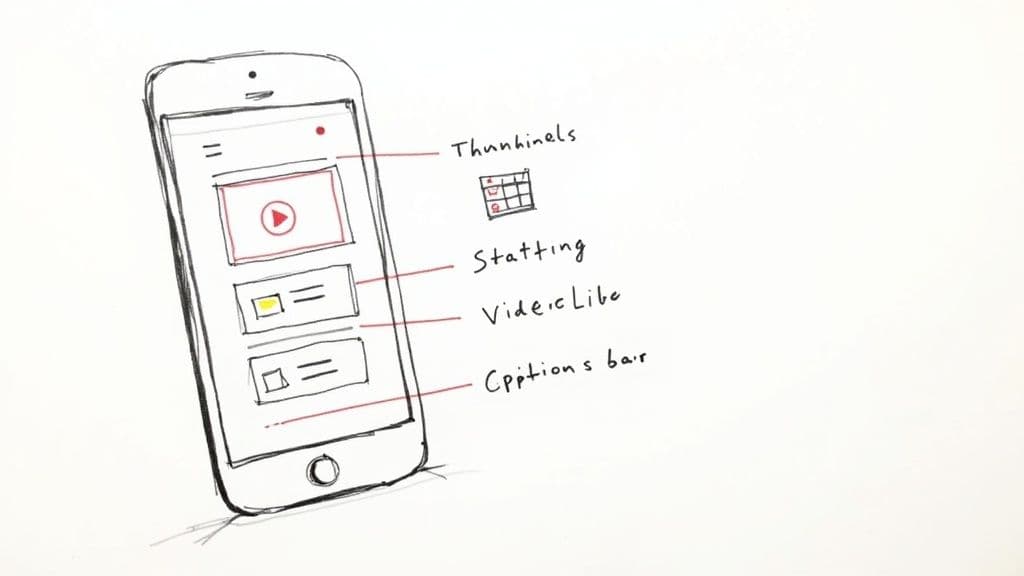
While text-first platforms remain powerful, algorithms across the social media landscape now heavily favor video content. Integrating short-form videos, long-form content, and live streams is no longer optional; it’s a critical component for driving engagement, expanding reach, and building deeper community connections. This is one of the most impactful social media manager tips for capturing attention in a saturated market.
Video content, including formats like Reels and Shorts, often receives multiples of the reach and engagement compared to static posts. For instance, Instagram Reels can achieve up to 3x more reach than standard feed posts. Similarly, live streams on platforms like Facebook average 3x more engagement than pre-recorded videos, creating an invaluable real-time connection with your audience.
How to Build a Sustainable Video Workflow
A successful video strategy doesn't require a Hollywood budget; it requires consistency and a smart workflow. The key is to create repeatable formats and repurpose content efficiently to maintain a steady stream of high-value video assets.
Think about how educational creators turn a single long-form tutorial into a dozen short, actionable clips. Each clip addresses a specific pain point, making the content highly shareable and discoverable. This "content atomization" maximizes the ROI on your initial video production effort.
Key Insight: Your audience consumes video passively. Your job is to make it impossible to scroll past by hooking them in the first three seconds with a compelling visual, a provocative question, or an immediate promise of value.
Actionable Video & Live Streaming Tactics
Integrate these tactics to build a video strategy that delivers tangible results without overwhelming your resources:
- Start with Basic Gear: A modern smartphone, a simple ring light, and a lavalier microphone (a total investment of $50-300) are all you need to produce professional-quality video.
- Leverage Trending Audio: Incorporate trending sounds and music into your short-form videos to tap into existing viral momentum and boost algorithmic visibility.
- Create Recurring Series: Develop a themed video series (e.g., "Weekly Marketing Tip," "Behind-the-Scenes Friday") to build audience anticipation and create a predictable content schedule.
- Always Add Captions: Design for silent viewing. The vast majority of users watch videos without sound, making on-screen captions or subtitles essential for accessibility and message retention.
- Promote Live Streams: Schedule live events in advance and promote them across all channels to maximize attendance. Use a clear topic and guest speakers to create intrigue.
8. Personalize Content and Use Audience Segmentation
Broadcasting generic, one-size-fits-all messages on text-first platforms is a recipe for low engagement. Audience segmentation is the practice of dividing your followers into distinct groups based on shared characteristics like interests, behaviors, or demographics. This allows you to create highly personalized content that speaks directly to each group's specific needs and motivations.
This strategic approach moves beyond simply posting content into the realm of building targeted relationships. By tailoring your messaging, you dramatically increase its relevance, which in turn boosts engagement, fosters loyalty, and drives higher conversion rates. It is a critical skill for any social media manager looking to maximize their impact.
How to Implement Audience Segmentation
One of the most powerful social media manager tips is to stop viewing your audience as a monolith. Instead, identify and cater to the key subgroups within it. This systematic personalization ensures your content resonates more deeply, making followers feel seen and understood.
Consider how Netflix sends personalized recommendations, which reportedly increase engagement significantly. Similarly, Spotify's "Wrapped" campaign generates millions of social shares by packaging a user's own data into a highly personal and shareable story. While you may not have their resources, the principle is the same: make it about them.
Key Insight: Personalization isn't just about using a follower's name. It's about delivering the right message to the right person at the right time, based on what you know about their interests and pain points.
Actionable Segmentation Tactics
Integrate these tactics into your social media strategy to create more meaningful connections with your audience:
- Start with 3-5 Core Segments: Begin by analyzing your existing audience data. Identify natural groupings based on engagement patterns, declared interests in their bios, or how they found your account.
- Create Segment-Specific Content Pillars: Develop unique content themes or pillars for each segment. For example, a fintech account might have separate content streams for "Beginner Investors," "Experienced Traders," and "Small Business Owners."
- Use Platform Analytics to Refine: Regularly review your analytics on platforms like X to see which topics resonate with different follower clusters. Use this data to identify new potential segments or adjust existing ones.
- Conduct Polls and Surveys: Directly ask your audience about their challenges, goals, and content preferences. This first-party data is invaluable for creating accurate and effective segments.
- Test Messaging Variations: Use A/B testing on your hooks and calls-to-action to see which language performs best with different segments, optimizing your communication for each group.
9. Create Consistent Brand Voice and Visual Identity
In a crowded digital landscape, consistency is the foundation of trust and recognition. A well-defined brand voice and visual identity ensure that every post, reply, and interaction contributes to a cohesive and memorable brand personality. This goes beyond just using the same logo; it’s about creating a predictable yet engaging experience that followers can connect with, making your brand instantly recognizable even without seeing the name.
This systematic approach is one of the most vital social media manager tips for building brand equity. When your tone, messaging, and visuals are aligned, you transform your profile from a simple content feed into a distinct destination. It helps manage audience expectations, strengthens brand loyalty, and ensures that multiple team members can post content that feels unified and intentional.
How to Define Your Brand’s Personality
Building a consistent brand starts with documenting its core attributes. Instead of relying on intuition, create a formal guide that outlines every aspect of your brand's communication style. This document becomes the single source of truth for all content creation, ensuring everyone speaks with one voice.
Consider the wildly successful yet different approaches of major brands. Wendy's uses a witty, sarcastic, and conversational tone that sets it apart from other fast-food chains. In contrast, Apple maintains a minimalist, premium, and aspirational voice across all channels, reinforcing its product positioning. Both are effective because they are relentlessly consistent, creating an identity that followers can easily identify and engage with.
Key Insight: A strong brand voice isn't about being loud; it's about being consistent. It’s the recurring personality that turns one-time visitors into a loyal community.
Actionable Brand-Building Tactics
Use these tactics to develop and maintain a powerful brand identity across all your text-first platforms:
- Create a Brand Voice Guide: Document your brand's personality traits (e.g., witty, authoritative, empathetic), tone, preferred vocabulary, and things to avoid.
- Establish Core Messaging Pillars: Define 3-5 key themes or values your brand consistently talks about. For Patagonia, this is environmentalism and quality gear.
- Develop a Visual Identity System: Standardize your color palette, fonts, and imagery style. Create templates for common post types like quotes, announcements, or thread covers.
- Document 'Do's and Don'ts': Clearly outline brand safety guidelines. What topics are off-limits? What kind of humor is acceptable? This prevents brand-damaging mistakes.
- Train and Review: Ensure all team members are trained on the brand guidelines and review all scheduled content against them before it goes live to maintain consistency.
10. Test, Iterate, and Continuously Optimize Campaigns
The most effective social media managers operate like scientists, not just creatives. Instead of relying on guesswork or sticking to a strategy simply because it "feels right," they adopt a cycle of continuous improvement. This means systematically testing variables, measuring outcomes against clear goals, and iterating based on data-driven insights.
This approach transforms your social media presence from a static content channel into a dynamic growth engine. By constantly optimizing, you prevent performance from stagnating and ensure your efforts are always adapting to audience behavior and platform algorithms. This methodical process is a cornerstone of advanced social media manager tips for achieving sustainable, long-term success.
How to Adopt a Scientific Approach
Building a testing framework is about isolating variables to understand what truly drives results. This removes ambiguity and allows you to make informed decisions that compound over time. It’s the difference between accidentally finding a winning post format and intentionally building a system that produces them consistently.
Look at how major tech companies operate. Netflix, for example, tests thousands of creative variations for its thumbnails and promotional materials, relentlessly optimizing for click-through rate. Similarly, HubSpot's legendary A/B testing of email subject lines and calls to action has led to massive improvements in open and conversion rates. They don't guess; they test, measure, and scale what works.
Key Insight: Treat your social media strategy as a living document, not a one-time plan. The goal isn't to be right from the start, but to get less wrong over time through continuous, data-backed optimization.
Actionable Optimization Tactics
Integrate these testing protocols into your regular workflow to ensure your strategy is always evolving and improving:
- Isolate One Variable: To establish clear causation, test only one element at a time. This could be the posting time, content format (e.g., single post vs. thread), hook style, or call to action.
- Set Clear Success Metrics: Before launching a test, define what success looks like. Is it higher engagement rate, more link clicks, or increased follower growth?
- Create a Testing Roadmap: Don't test random ideas. Prioritize tests based on their potential impact. Start with high-leverage variables like your content hooks or post timing.
- Document Everything: Maintain a simple spreadsheet or document to log every test. Record your hypothesis, the variable being tested, the duration, the results, and the key learning.
- Establish a Minimum Viable Sample: Don't end a test prematurely. Wait until a post has received a statistically significant number of impressions or interactions (e.g., 100+ likes/replies) before drawing conclusions.
10-Tip Comparison for Social Media Managers
| Strategy | Implementation Complexity 🔄 | Resource Requirements ⚡ | Expected Outcomes ⭐ / 📊 | Ideal Use Cases 💡 | Key Advantages 📊 |
|---|---|---|---|---|---|
| Create a Content Calendar and Planning Strategy | Medium — upfront planning, workflows 🔄 | Low–Medium — team time, scheduling tools ⚡ | ⭐ Consistent posting; 📊 steady engagement and efficiency | Brands needing regular, multi-platform publishing | 📊 Predictability, time savings, team alignment |
| Leverage Data Analytics and Performance Metrics | Medium–High — setup, interpretation, dashboards 🔄 | Medium — analytics tools, analyst time ⚡ | ⭐ Data-driven decisions; 📊 improved ROI and content performance | Performance-focused teams and budget justification | 📊 Objective insights, KPI-driven optimization |
| Build Authentic Community Engagement and Relationships | High — continuous monitoring and human response 🔄 | Medium–High — community managers, moderation tools ⚡ | ⭐ Strong loyalty and advocacy; 📊 improved sentiment | Customer-centric brands, service and D2C businesses | 📊 Organic word-of-mouth, real-time feedback |
| Master Platform-Specific Content Optimization | High — platform expertise per channel 🔄 | High — creative resources, varied assets ⚡ | ⭐ Higher engagement and reach per platform; 📊 better algorithm favorability | Multi-platform growth, platform-targeted campaigns | 📊 Maximized relevance and format performance |
| Develop a Crisis Management and Response Protocol | Medium — playbooks, roles, escalation paths 🔄 | Low–Medium — monitoring tools, legal review ⚡ | ⭐ Faster, consistent responses; 📊 reduced reputation damage | Brands with high visibility or PR risk | 📊 Speed, consistency, controlled messaging |
| Collaborate with Influencers and Brand Ambassadors | Medium — vetting, contracts, coordination 🔄 | Medium–High — budgets, management resources ⚡ | ⭐ Expanded reach and credibility; 📊 improved conversions | Awareness campaigns, niche audience targeting | 📊 Authentic endorsements, user-generated content |
| Implement Video Content Strategy and Live Streaming | High — production, editing, live ops 🔄 | High — equipment, editors, time ⚡ | ⭐ Strong engagement and conversion; 📊 algorithmic boost | Product demos, storytelling, engagement drives | 📊 Emotional connection, higher reach |
| Personalize Content and Use Audience Segmentation | High — data integration, segmentation logic 🔄 | High — analytics, content variants, tooling ⚡ | ⭐ Greater relevance and conversion; 📊 reduced churn | E‑commerce, subscriptions, varied audiences | 📊 Targeted messaging, efficient budget use |
| Create Consistent Brand Voice and Visual Identity | Medium — guidelines, templates, training 🔄 | Medium — design work, documentation, training ⚡ | ⭐ Strong recognition and trust; 📊 clearer positioning | Scaling teams, rebrands, multi-channel brands | 📊 Cohesion, faster content production |
| Test, Iterate, and Continuously Optimize Campaigns | Medium–High — experiment design, tracking 🔄 | Medium — analytics tools, time for tests ⚡ | ⭐ Incremental performance gains; 📊 continual improvement | Growth teams, performance marketing | 📊 Reduced waste, data-backed improvements |
Your Blueprint for Smarter Microblogging
Navigating the fast-paced world of text-first microblogging platforms like X, Bluesky, and Mastodon requires more than just a sporadic posting schedule. It demands a sophisticated blend of strategy, creativity, and ruthless efficiency. The comprehensive list of social media manager tips we've explored isn't just a collection of good ideas; it's a strategic framework for transforming your social media presence from a daily chore into a powerful growth engine. You've moved beyond basic advice and are now equipped with actionable blueprints for every stage of the process, from initial content ideation to detailed performance analysis.
The journey to social media mastery is built on a foundation of consistent, intentional action. It’s about understanding that a single viral post is a moment, but a thriving community is a movement. This movement is built by consistently applying the principles we've covered: creating a data-informed content calendar, building genuine relationships through authentic engagement, and optimizing every piece of content for its specific platform. By doing so, you stop being a reactive content creator and evolve into a proactive architect of your brand’s digital ecosystem.
Synthesizing Strategy into Action
The true power of these social media manager tips is realized when they are integrated into a cohesive workflow. Let's distill the core principles into a powerful, actionable summary to guide your next steps.
- Systemize Your Creativity: Your best ideas deserve a structured home. Move from random inspiration to a deliberate content strategy by implementing a robust content calendar and leveraging proven hook formulas and thread-crafting techniques. This ensures a steady flow of high-quality content that doesn't rely on last-minute genius.
- Engagement is Your North Star: Growth is a byproduct of community. Prioritize building authentic relationships by actively participating in conversations, personalizing your interactions, and creating content that invites a response. Remember, the goal is not just to be seen but to be known and trusted by your audience.
- Data-Driven, Not Data-Drowned: Analytics are your roadmap, not your report card. Focus on the metrics that truly matter, like engagement rate, reply-to-post ratio, and follower growth over time. Use this data not to judge past performance but to inform and refine your future strategy, constantly testing and iterating your approach.
Key Takeaway: The most successful social media managers operate like scientists. They form a hypothesis (the content strategy), run an experiment (the post), analyze the data (the metrics), and use the results to inform the next experiment. This continuous optimization loop is what separates stagnant accounts from those experiencing exponential growth.
Your Immediate Next Steps
Feeling overwhelmed? Don't be. The key to progress is incremental improvement. Instead of trying to implement all ten strategies at once, choose one or two that address your biggest pain points right now.
- For the Overwhelmed Manager: Start by creating a simple content calendar (Tip #1). Just planning your posts one week in advance can dramatically reduce stress and improve content quality.
- For the Stagnant Account: Focus intensely on community engagement (Tip #3). Dedicate 30 minutes each day exclusively to replying, quote-posting, and starting conversations with others in your niche.
- For the Data-Curious Marketer: Pick three key performance metrics to track weekly (Tip #2). Don't get lost in vanity numbers; focus on what truly indicates a healthy, growing account.
Mastering these platforms is a marathon, not a sprint. By embracing a systematic approach, you create a sustainable and scalable process that not only grows your audience but also protects your most valuable asset: your time. The ultimate goal is to build a well-oiled machine that handles the repetitive tasks, freeing you to focus on high-impact activities like strategic planning and genuine connection.
Ready to implement these advanced social media manager tips with a tool built for efficiency? MicroPoster is designed to be your command center for X, Bluesky, and Mastodon, helping you schedule threads, analyze performance, and manage your content workflow in one place. Stop juggling tabs and start building your community with a smarter, more streamlined process.
Discover how MicroPoster can revolutionize your microblogging strategy.