
how to find your target audience
How to Find Your Target Audience on X Bluesky and Mastodon
Discover how to find your target audience on X, Bluesky, and Mastodon with actionable strategies for identifying, analyzing, and engaging the right followers.
To really nail down your target audience, you've got to dig into three key areas: analyzing your current customers to find common threads, checking out your competitors to see who they're talking to, and then building detailed personas that bring your ideal follower to life. This isn't just theory; it's how you turn guesswork into a solid, actionable plan.
Your Blueprint for Audience Discovery
Before you even think about growing your following on platforms like X, Bluesky, or Mastodon, you have to know exactly who you're talking to. A lot of people get caught up in chasing big follower numbers, but that's a losing game. The real win comes from building a community around a well-defined niche, which sets the stage for every post, thread, and conversation you start.
This isn't just about generic advice. This is your practical roadmap to finding and connecting with the right people on text-based social platforms. When you grasp the core of audience discovery, organic growth naturally follows.
Think of the whole process in three distinct stages: first you analyze the data, then you research the wider market, and finally, you create personas you can actually use.
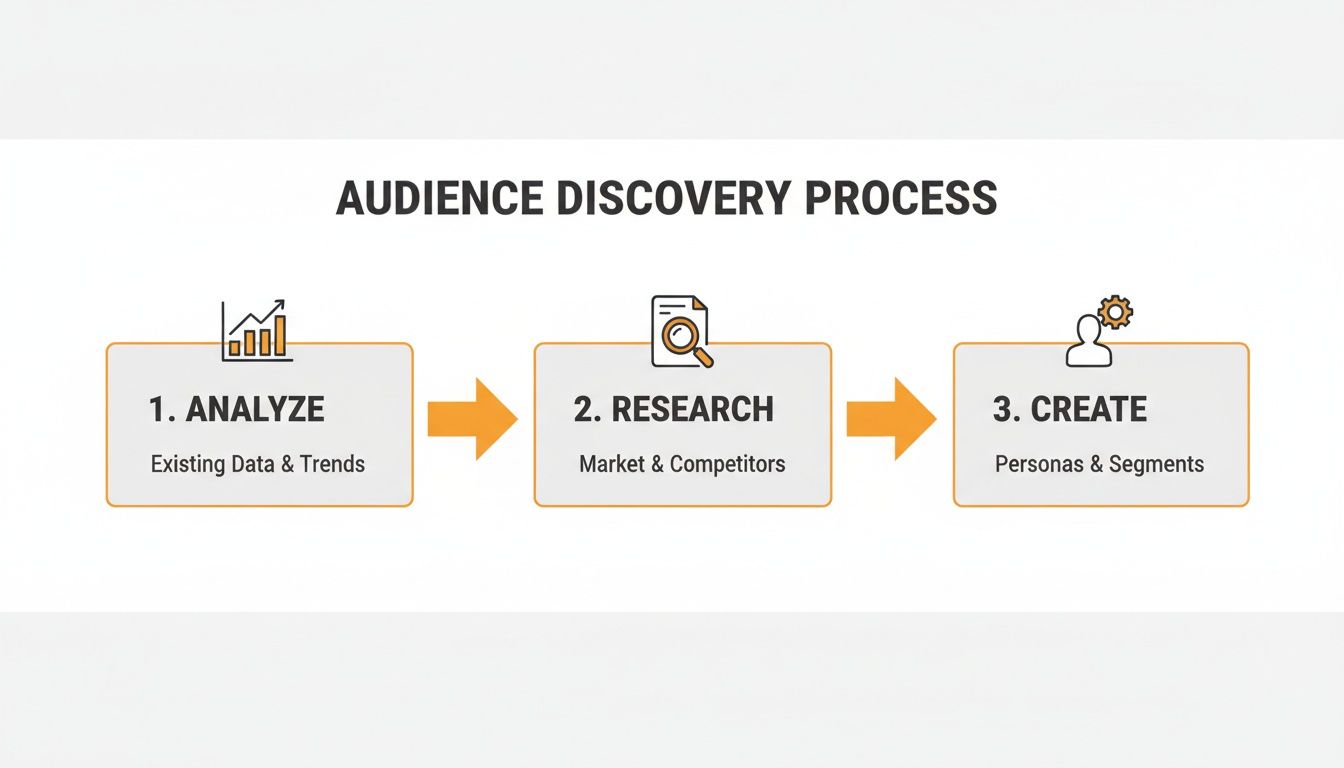
This visual makes it clear that finding your audience isn't a one-and-done task. It's a continuous cycle of learning, applying what you learn, and refining your approach. Following this flow helps turn a mountain of abstract data into a clear path forward.
The goal isn't just to find followers; it's to find the right followers. A small, hyper-engaged community that hangs on your every word is infinitely more valuable than a massive, silent one.
The Pillars of Audience Discovery
Your journey starts with three foundational pillars. Each one builds on the last, and they aren't just boxes to check off a list—they're ongoing habits that will keep your content perfectly aligned with your audience's needs.
- Analyze Your Current Followers: The best place to start is with the data you already have. Who's liking, sharing, and commenting on your stuff? Dive into their bios and see what topics get them talking. This is your ground zero.
- Research Your Industry and Competitors: Now, look outward. Who are the big players in your space? Study their followers. What questions are people asking in their replies? What are their biggest frustrations? This is where you'll find a goldmine of content ideas.
- Create Actionable Personas: Time to pull it all together. Distill your research into 2-3 detailed user personas. Give them names, jobs, goals, and struggles. From now on, you're not writing for a faceless crowd; you're writing for "Marketing Maria" or "Startup Steve."
If you want to go even deeper on these foundational steps, this guide on how to identify your target audience for SaaS companies has some great insights. The same principles apply directly to building a dedicated following on microblogging platforms.
Start With What You Know: Your Current Audience
The best clues for finding your ideal audience are often hiding in plain sight—right within your existing data. Before you go searching for new followers, the smartest move is to take a good, hard look at the people who are already paying attention. This isn't about guesswork; it's about playing detective and finding the patterns in your current following.
Your first stop should be a manual review of your most engaged followers. Who are the people consistently replying to your threads or sharing your posts? Take a few minutes to click through their profiles. Look at their bios. You'll probably start seeing trends in job titles, industries, and personal interests that paint a clear picture of who your content is already clicking with.
Dig Into Your Platform Analytics
Most microblogging platforms have built-in analytics that offer a treasure trove of demographic info. On X (formerly Twitter), for example, the analytics dashboard gives you a breakdown of the age, gender, location, and top interests of your followers. This is how you move from making educated guesses to basing your strategy on solid facts.
Just look at the data: on X, a massive 37.5% of users are in the 25-34 age bracket. This makes millennials a huge potential audience for many organic content strategies. If you're a creator using a tool like MicroPoster's unified studio, you can tap into this by creating threads and polls that cater to this group's love for quick, insightful content. You can always find more social media demographic insights to sharpen your approach.
Your most engaged followers are a focus group you don't have to pay for. Pay close attention to the questions they ask in your replies—they are handing you your next content ideas on a silver platter.
Reverse-Engineer Your Best-Performing Content
Your analytics don't just tell you who is listening, but also what they're listening to. Don't just glance at the likes. Look for the posts that sparked real conversations, earned a high number of shares, or drove clicks. This is how you connect the "who" (your audience) with the "what" (their interests).
To get started, it's helpful to organize what you find. I recommend creating a simple reference table to track the most important data points as you audit your account.
Key Audience Data Points to Analyze
This table breaks down the essential metrics you should be looking at to build an initial profile of your audience.
| Data Point | What It Tells You | Where to Find It |
|---|---|---|
| Follower Demographics | The age, gender, and location of your audience. | Platform-native analytics (e.g., X Analytics). |
| Engagement Patterns | Which posts get the most replies, shares, and clicks. | Your post-level analytics and notifications. |
| Follower Bios | The professional roles and interests of your community. | Manually reviewing profiles of top engagers. |
| Follower Growth Rate | Which content attracts new followers most effectively. | Your platform's analytics growth chart. |
When you put these pieces together, you're doing more than just looking at numbers; you're starting to understand the human behavior behind the clicks.
For example, maybe you notice that your threads on "project management tips" are consistently shared by followers with "founder" or "startup lead" in their bios. That’s not a coincidence; it's a clear, data-backed signal telling you who you're reaching and what they value. This is the foundation you'll build everything else on.
Look Beyond Your Followers with Competitor Analysis

Looking at your own followers is a great starting point, but it only tells you who you've already reached. To really grow, you need to look outside your bubble. The people you want to reach are already out there, talking, engaging, and following accounts similar to yours. Finding those communities is the fastest way to get in front of them.
First thing's first: identify a few key players in your space. Don’t just think about direct competitors. Who are the complementary voices? The industry publications everyone reads? For example, if you sell productivity software, you shouldn’t just look at other software companies. You should be analyzing tech reviewers, project management influencers, and even popular startup culture accounts.
Uncovering Audience Pain Points and Language
Once you have your list, it's time to do some digging. The comment sections and replies on these accounts are where the real magic happens—it’s a raw, unfiltered look into the minds of your potential audience.
Pay close attention to how people talk. Do they use a lot of industry slang, or is their language more straightforward? Speaking their language is half the battle.
Even more crucial, look for the questions that keep popping up. If you see a dozen people asking a competitor how to integrate a specific tool, that's a huge sign. You've just discovered a common frustration, a pain point you can solve, and a content gap you can fill.
Your competitors' comment sections are a goldmine of audience research. The questions people ask reveal their biggest challenges, and the language they use shows you exactly how to connect with them.
This isn’t about ripping off their content strategy. It’s about being a better listener and finding the opportunities they've overlooked. You can position yourself as the one who truly gets it.
Tapping Into Active Conversations
Beyond just snooping on specific accounts, you need to have a finger on the pulse of the wider conversation. This means getting smart with hashtags and keywords. I recommend setting up saved searches on platforms like X for terms directly related to your work. Then, just watch and see who’s talking.
When you start monitoring these conversations, a few things will happen:
- You'll find highly engaged people: These aren't just lurkers. You’ll spot the individuals who are actively asking for help and looking for solutions.
- You'll see trends before they peak: You can jump on topics as they're gaining steam, not after everyone else has already covered them to death.
- You can engage without being salesy: Jump into a thread to offer a helpful tip, not to pitch your product. This builds real authority and trust.
A freelance writer, for instance, might keep a close eye on hashtags like #copywritingtips or #contentstrategy. By chiming in with genuine advice when someone asks a question, they instantly demonstrate their value. This turns audience research from a passive task into a powerful, organic way to grow.
Bring Your Audience to Life with Detailed Personas
All that data you've collected is just a pile of numbers until you put a human face on it. This is where creating audience personas makes a huge difference, turning abstract stats into real, relatable people you can actually talk to.
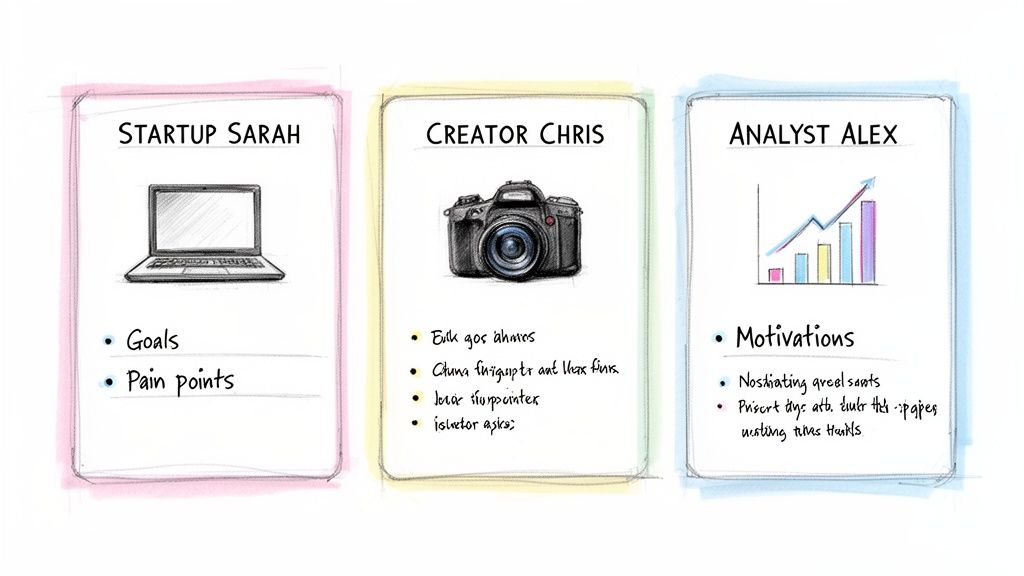
Think about it. Instead of trying to create content for a vague group like "millennial entrepreneurs," you can focus on making something for "Startup Sarah." This shift is more than just a name change; it forces you to consider the actual person on the other side of the screen. You stop broadcasting and start having a real conversation.
I recommend building 2-3 core personas to represent your most valuable audience segments. Any more than that and your focus gets diluted. Just one is often too narrow.
Building Your Core Personas
A truly useful persona goes way beyond basic demographics like age and location. The real gold is in the psychographics—the why behind what people do. If you really want to bring these profiles to life, it’s worth diving into the nitty-gritty of Crafting the Ultimate Persona Profile. This means answering some very specific questions that define their entire online world.
Here's what I always include in a solid persona:
- Goals and Motivations: What are they really trying to accomplish? Is it climbing the career ladder, finding a clever life hack, or just getting a dose of creative inspiration?
- Pain Points and Challenges: What’s getting in their way? Maybe they can’t stay organized, they're drowning in bad information, or they feel disconnected from their peers.
- Preferred Content and Tone: Do they want quick tips they can scan in seconds? Or do they prefer deep-dive threads and a bit of humor with their industry news?
- Key Platforms: Where do they actually hang out online? Knowing if they live on X, are exploring Bluesky, or prefer Mastodon tells you where to put your energy.
For example, say you're trying to reach creators and social media managers. Recent digital reports show that 62% of global social media users are aged 16-34, and Gen Z spends nearly three hours a day on these apps. This tells you a lot. Your personas should reflect a mobile-first audience that values authenticity and clear, scannable content over slick, corporate ads.
A well-crafted persona is your North Star for content. Before you publish anything, ask a simple question: "Would Sarah find this useful? Would Chris share this?" If the answer is no, it's back to the drawing board.
Let's make this real with a couple of examples.
| Persona Attribute | 'Startup Sarah' | 'Creator Chris' |
|---|---|---|
| Role | Founder of a bootstrapped SaaS company | Independent content creator & influencer |
| Goals | Drive organic user acquisition, build brand authority fast | Grow his personal brand, find workflow tools |
| Pain Points | Tiny marketing budget, no time, overwhelmed by complex advice | Content burnout, struggles to stand out in a crowd |
| Needs | Actionable, no-fluff marketing tips she can use immediately | Tips on content repurposing, automation, and community building |
Suddenly, your content strategy becomes crystal clear. For Sarah, you’d create threads on low-cost growth hacks. For Chris, you’d share posts about productivity tools and how to avoid burnout. This is how you stop guessing and start creating content that truly connects.
Test and Refine Your Audience Understanding
So you've built out these detailed audience personas. That’s a huge step forward, but let's be honest—right now, they're just educated guesses. The real magic happens when you start testing those assumptions out in the wild. This is where you move from theory to practice, turning audience research into a living, breathing part of your content strategy.
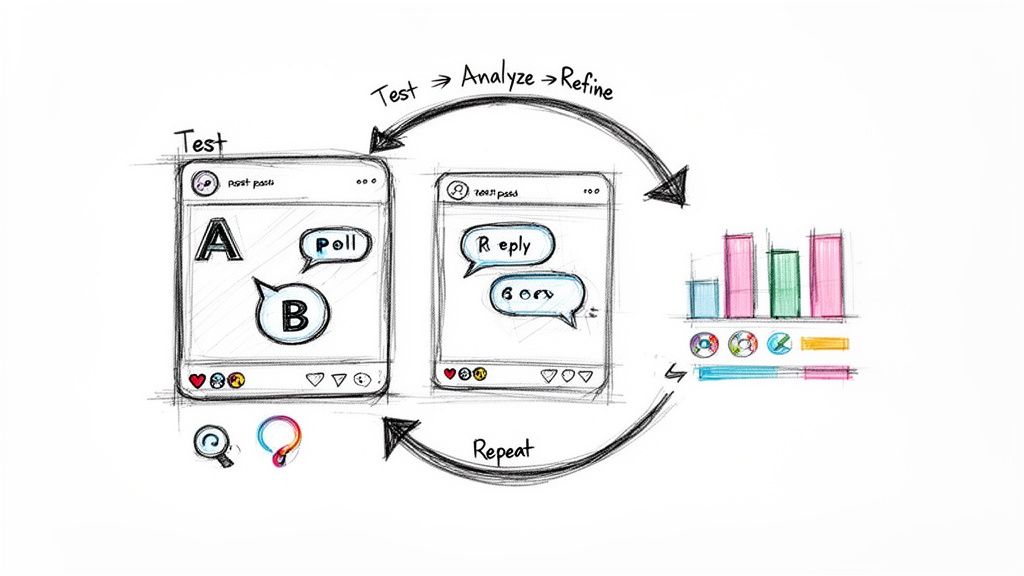
Every single post you publish is a mini-experiment. You're not just shouting into the void; you're actively collecting data that will either confirm or completely upend what you thought you knew about 'Startup Sarah' or 'Creator Chris'. This is how you create a feedback loop: post, listen, analyze, and adapt.
Validate Personas with Targeted Content Tests
The trick to testing effectively is to be deliberate. Don't just throw content at the wall to see what sticks. Instead, let your personas guide you. The objective here is to figure out which pain points, content formats, and tones actually get a reaction from your different audience segments.
Here are a few ways I’ve seen this work incredibly well:
- Run simple A/B tests. Write two posts for the same persona, but each one tackling a different problem or angle. Schedule them for similar times on different days and watch what happens. You're looking for meaningful replies and shares, not just a spike in likes.
- Just ask them. Seriously, polls and direct questions are your best friends. Ask your followers what they’re struggling with, what topics they want to learn more about, or if they prefer quick tips or deep-dive threads. You'd be surprised how willing people are to tell you what they want.
- Play with your tone. Try a serious, data-backed thread one day, and a more personal, story-driven post the next. Does your audience respond better to professional authority or relatable anecdotes? The answer tells you a lot about who they are.
Don't get hung up on likes. A single thoughtful comment from someone who perfectly matches your ideal persona is worth more than a hundred passive likes from people who will never become customers or true fans.
Read the Right Signals in Your Analytics
Focusing on the right metrics is everything. It's easy to get a dopamine hit from a rising follower count, but those "vanity metrics" don't tell you if you're actually connecting with the right people. You need to look deeper.
The quality of engagement is your North Star. To really get a feel for what’s landing, you need to analyze your social media comments and look for recurring questions, common sentiments, and patterns. Thoughtful discussions are the clearest sign you've found your tribe.
Remember, the average user is active on 6.75 social platforms every month. This is a huge opportunity. You can test variations of your content across X, Bluesky, and Mastodon to see what works where. A tool like MicroPoster makes this easy, letting you quickly identify which messages resonate with different audience pockets across the microblogging world. For more on where things are headed, check out these 2026 social media trends at Social Media Today.
Frequently Asked Questions About Finding Your Audience
Even with the best strategy in hand, a few questions always pop up when you're digging in and trying to find your people. Let’s tackle some of the most common hurdles I see creators and brands face, so you can fine-tune your approach and keep moving forward.
How Specific Should My Target Audience Be?
There's a common fear that if you get too specific, you'll box yourself in and alienate potential followers. I've found the exact opposite is true. When you try to be everything to everyone, you end up being nothing to anyone. A broad audience is almost always an unengaged one.
Think about it. "Women who like fitness" is a massive, vague group. But what about "women aged 25-40 who practice yoga and prioritize eco-friendly workout gear"? Now that is a group you can build a real community around. This level of detail lets you create content that hits on their specific values and solves their actual problems, making you instantly relatable.
A narrowly defined audience doesn't limit your reach; it amplifies your message. You’re making sure your content lands with the people who are most likely to become your biggest fans.
Your goal is to be so specific that your ideal follower reads your post and thinks, "Wow, it's like they're talking directly to me." That’s the kind of connection that generic content can never replicate. Start niche, build a loyal core, and you can always broaden your appeal later on.
What If My Current Audience Is Not My Ideal Audience?
This happens all the time, especially if you've been at this for a while. You dive into your analytics and have a moment of panic—the people following you aren't the ones you actually want to reach. Don't worry. This isn't a failure; it’s an incredibly valuable piece of feedback.
When you spot a mismatch, it’s time for a course correction, not a full-blown crisis. Here's a simple way to approach it:
- Figure Out the Gap: First, get to the bottom of why you're attracting the wrong crowd. Is it your tone of voice? The topics? The hashtags? Do some real detective work to find the source of the disconnect.
- Shift Your Content Gradually: Don't just flip a switch overnight. That’ll confuse everyone. Instead, start slowly weaving in content designed for your ideal audience. If you want to attract startup founders instead of hobbyists, begin sharing more about growth hacking, fundraising, and B2B sales.
- Go Where They Are: Start spending your time in the digital spaces where your target audience already congregates. Use your competitor and industry analysis to find those niche communities, forums, or hashtags and start participating authentically.
Think of it as steering a ship, not slamming on the brakes. Over time, your engagement will shift, and you'll naturally start attracting the followers who are a much better fit for your brand.
How Often Should I Revisit My Audience Personas?
Audience personas are not "set it and forget it" documents. Markets change, new trends explode onto the scene, and your followers’ needs evolve. Your personas need to be living, breathing guides that you check in with regularly.
As a general rule, I recommend a formal review and update of your personas at least once or twice a year. But honestly, you should be informally testing them with every single post you publish.
Keep an eye out for these tell-tale signs that it’s time for a refresh:
- You see a noticeable drop in engagement on topics that used to perform well.
- Your own business goals have pivoted, which means you need to attract a new segment.
- The questions and feedback you're getting just don't line up with your persona's defined pain points.
Constantly asking yourself, "Does this post still solve a problem for 'Startup Sarah'?" keeps you honest and aligned. This ongoing validation is what builds and maintains a strong connection with the people who matter most. The work of finding your audience never really stops; it just gets smarter.
Ready to turn these insights into a powerful content machine? MicroPoster gives you the tools to schedule, analyze, and publish smarter across X, Bluesky, and Mastodon. Start your free trial and connect with your ideal audience more effectively. Try MicroPoster today.


