what is microblogging
What Is Microblogging and How Does It Actually Work
Curious about what is microblogging? This guide breaks down how it works, why platforms like X and Bluesky matter, and how to use them for real growth.

So, what exactly is microblogging?
Think of it as the internet's version of a quick, punchy conversation. It’s all about sharing short, frequent posts in real time. Instead of writing a long, detailed letter (like a traditional blog post), you're sending out a series of impactful little postcards. The whole point is brevity and immediate connection.
Defining Microblogging in Simple Terms
At its heart, microblogging is simply sharing bite-sized updates with an audience. These little snippets can be anything—text, images, links, short videos—as long as they're concise. It’s a world away from traditional blogging, where you might spend hours crafting a 2,000-word article. Microblogging is all about content that's quick to create and even quicker to consume, especially on a phone.
This is a communication style built for our fast-paced, always-on world. Platforms like X (formerly Twitter), Bluesky, and Mastodon are the natural homes for this kind of rapid-fire exchange. The goal isn't to write the definitive piece on a topic, but to spark a conversation, share a fleeting thought, or report on something as it’s happening.
The Shift from Long-Form to Short-Form
The whole idea of microblogging really took off back in March 2006. That’s when Jack Dorsey, a co-founder of Twitter, sent out the very first tweet: 'just setting up my twttr.' That simple, character-limited format kicked off a massive shift in how we talk online. We started moving away from long, deep-dive blog posts and toward quick updates that better matched our shrinking attention spans.
Fast forward to today, and with platforms like Threads exploding in popularity, it’s clear that microblogging is still a powerful way to grow. It allows creators and small businesses to build genuine communities without having to pour money into ads. If you want to dig deeper, it's worth exploring the history of blogging and its evolution to see just how we got here.
The key difference is intent: A traditional blog is a destination for in-depth information, while a microblog is a dynamic stream of ongoing conversation.
Core Principles of Microblogging
This content style is built on a few core ideas that really set it apart from other types of social media and blogging:
- Brevity: You’re always working against a character limit. This forces you to get straight to the point and be crystal clear with your message. No fluff allowed.
- Immediacy: It’s all about the here and now. This makes it perfect for covering live events, breaking news, or just sharing a random thought as it pops into your head.
- Interactivity: The format is designed for quick replies, shares, and likes. It’s naturally conversational and helps build a real sense of community.
Exploring the Modern Microblogging Landscape
For the longest time, the answer to "what is microblogging" was simple: Twitter. It was the undisputed king, the global town square where conversations unfolded in real-time. But today, things are a lot more interesting. The landscape has fragmented into a far more diverse and dynamic space, giving creators and brands a real choice between platforms, each with its own unique culture.
Understanding this new ecosystem is non-negotiable. While X (formerly Twitter) is still a massive player you can't ignore, it’s no longer the only game in town. A new wave of platforms is challenging the old, centralized model, often giving users more say over their data and their feeds. This shift means the audience is spread out, making a multi-platform strategy more valuable than ever.
You can even see the DNA of microblogging—short-form, rapid-fire content—in the video world when comparing platforms in the TikTok vs. YouTube Shorts debate. It’s all about capturing attention quickly.
The New Contenders Reshaping the Conversation
The best way to get a feel for the modern microblogging world is to look at the key players and what they stand for:
- X (The Established Giant): As the original, X still holds immense cultural weight. It's the default platform for breaking news, live commentary, and high-profile public conversations. However, it's also grappling with challenges around content moderation and the consequences of its corporate ownership.
- Bluesky (The Decentralized Newcomer): Spun out of a project that actually started within Twitter, Bluesky is built on the idea of creator control and algorithmic choice. It feels familiar, but under the hood, it’s a decentralized network that gives users the freedom to customize their feeds and build their own communities.
- Mastodon (The Open-Source Federation): Mastodon is a different beast altogether. It isn’t one single website but a massive network of thousands of independent servers (or "instances") that can all talk to each other. This "federated" approach creates a community-driven, ad-free experience that’s a world away from a centrally controlled platform.
This infographic really nails the core differences between the quick-fire updates of microblogging and the deep dives of traditional blogging.
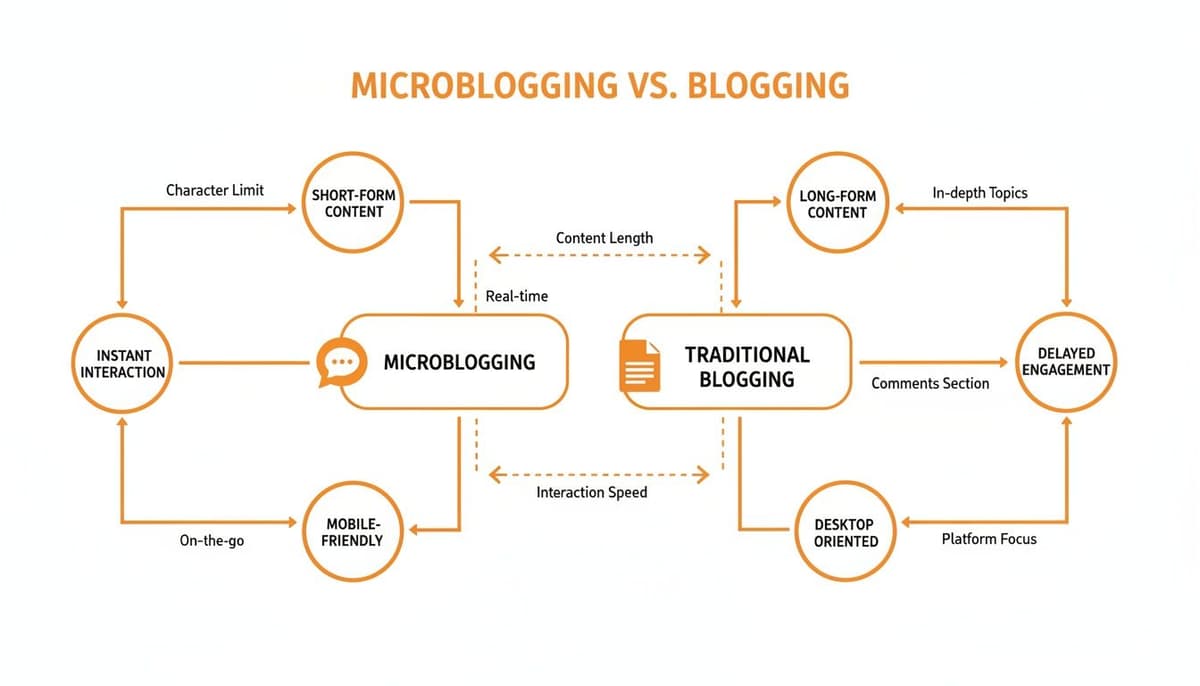
As you can see, microblogging is all about frequency and immediate interaction, whereas traditional blogging is built for depth and long-term value.
Choosing Your Platform Strategically
The meteoric rise of platforms like Threads just hammers home the point: the digital town square is no longer a monopoly. Each network cultivates a slightly different vibe and attracts a distinct crowd.
Choosing a platform isn't about finding the 'best' one; it's about finding the right one for your audience and goals. A brand focused on tech might thrive on Mastodon, while a creator building a personal brand may find Bluesky's culture more welcoming.
In the end, building a resilient online presence today often means showing up in more than one place. Once you understand the unique strengths of each platform, you can tailor your content and engagement to connect with people authentically, building a stronger community wherever your audience gathers.
How Microblogging Actually Grows Your Audience
Knowing the platforms is one thing, but the real question is, why bother? What makes this format so effective?
It all comes down to its ability to foster real, sustainable growth by simply lowering the bar for connection. Microblogging tears down the walls between creators and their audiences. It gives anyone a shot at building a loyal following without needing a massive budget or a fancy design team.
Think about it. A polished YouTube video or a 2,000-word article takes serious time and resources. A microblog post? You can have that up in minutes. This ridiculously low barrier to entry means you can put all your energy into the idea itself, not the production. A startup founder can share a quick win from their desk. An artist can post a snapshot of a work in progress. These small, consistent updates are what build momentum and keep people hooked.
That speed also makes you incredibly nimble. When something big happens in your industry, you don't have to wait for the next content meeting. You can jump into the conversation right away, sharing your take and cementing your position as someone who's on the ball.
Building Real Trust, One Post at a Time
The secret sauce of microblogging is the direct, unfiltered conversation it sparks. Every reply, share, and quote-post is a chance to build a genuine relationship. Because the format is so casual, it feels less like you're broadcasting a message and more like you're just... talking to people. This is where a true community starts to form.
Imagine a social media manager running a live Q&A right in a thread, or a small business owner personally jumping in to answer customer feedback. These moments aren't just good PR; they're public displays of who you are and what you stand for. In fact, a whopping 86% of consumers say authenticity is a huge deal when they decide which brands to support. Microblogging is the perfect engine for building that trust, one short post at a time.
A polished ad campaign tells people what you want them to hear. A microblogging feed shows them who you are through your daily actions and conversations.
The Big Wins for Creators and Brands
When you lean into this conversational style, you unlock some powerful advantages that are tough to get with other types of content. Over time, these benefits stack up to create a stronger, more invested community that grows on its own.
- No More Content Hurdles: Forget complex editing software or graphic design skills. If you have an idea, you can share it. Right now. This opens the door for anyone to create.
- Move at the Speed of Culture: It's the ideal format for jumping on trends, sharing breaking news, or running timely marketing campaigns. You stay relevant and top-of-mind.
- Forge a Real Community: Constant, direct interaction creates a powerful feedback loop. Your followers feel seen and heard, which turns them from passive scrollers into genuine supporters.
Creating Content That Connects and Engages
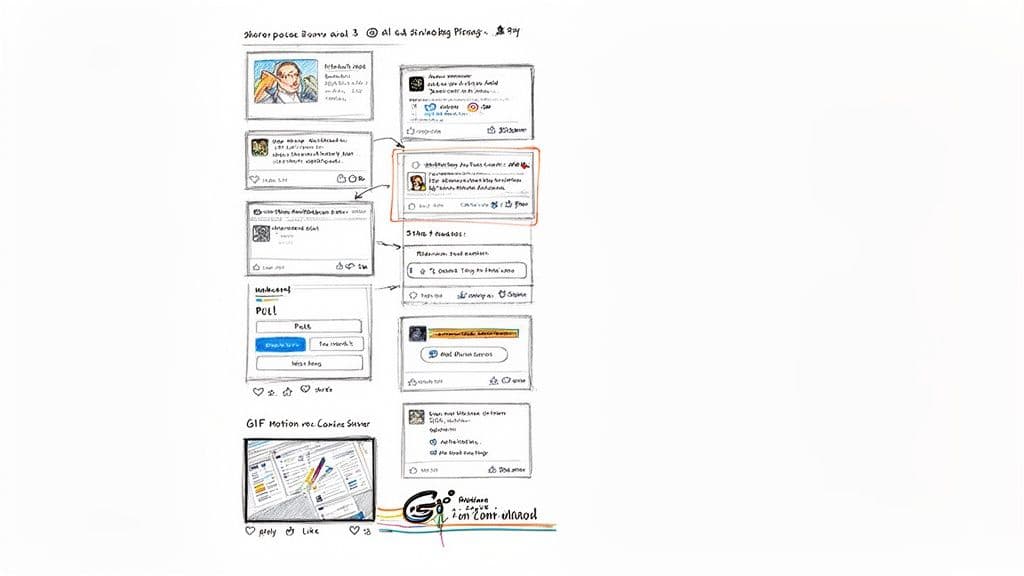
If you think microblogging success is just about posting often, you're only seeing part of the picture. The accounts that really take off are the ones that mix things up. A witty one-liner is great, but a truly magnetic feed keeps people guessing by using a variety of formats.
This is how you stop being a broadcaster and start building a real connection. You're not just throwing information out there; you're creating little experiences for your followers, turning them from passive scrollers into an actual community.
Mastering the Art of the Thread
A thread—a string of connected posts—is easily one of the most powerful tools you have. It's your escape hatch from character limits, letting you tell a full story, unpack a complicated idea, or walk someone through a process step-by-step.
Think of it this way: a single post is the headline, but the thread is the whole story, served up in easy-to-swallow pieces.
The first post is everything. It needs a killer hook that grabs attention and makes people need to see what’s next. Numbering your posts (like 1/5, 2/5) is also a classic move because it lets people know how much of a commitment they're in for. Always try to stick the landing with a solid summary or a clear call to action.
Sparking Conversation with Polls and Questions
Want an easy way to get people to interact? Use a poll. It's a low-effort tap for your audience but gives you instant feedback. Polls are perfect for getting a quick pulse on opinions, doing some light market research, or just kicking off a fun debate.
For instance, a software developer could ask, "Which coding language are you betting on for 2024?" with options like Python, Rust, or Go. Simple, but effective.
Open-ended questions work wonders, too. Asking something like, "What's the one tool you absolutely can't do your job without?" invites people to share their own stories and tips. This doesn't just bump up your engagement numbers; it gives you a treasure trove of insight into what your audience actually cares about.
A great microblogging feed is a two-way street. It doesn't just broadcast information; it actively invites participation and makes the audience feel like part of the conversation.
Capturing Attention with Visuals
Let's be real: people scroll fast. Visuals are your best bet for getting them to hit the brakes. A sharp image, a funny GIF, or a simple chart can communicate an idea or a feeling much faster than text ever could. Time and time again, we see posts with images get way more engagement than those without.
You don't need a degree in graphic design to make this work. Here are a few simple ideas:
- GIFs for Reaction: Add some personality and humor to your replies or posts with a perfectly timed GIF.
- Screenshots for Proof: Show, don't just tell. Use screenshots to illustrate a point, highlight a result, or give a peek behind the scenes.
- Simple Infographics: Hop on a tool like Canva to turn a few key stats into a clean, shareable graphic.
By playing with these different formats, you can create a feed that’s interesting and unpredictable. If you're looking for even more inspiration, our guide on the best types of content for social media is packed with ideas. The main goal is to keep your content fresh so your audience always has a reason to check in.
Building Your Strategic Microblogging Framework
Just showing up and posting every day is a start, but it won't get you very far. If you want to turn your microblogging efforts into a real growth engine, you need a plan. A solid framework is what separates the accounts that take off from the ones that just add to the noise. It’s all about being intentional with every single post, reply, and hashtag.
This isn't about working harder or creating more content. It's about making the content you already create work smarter. The goal here is to build a reliable, repeatable plan for organic growth that lines up with what you're trying to achieve—whether that's building a personal brand, launching a product, or growing a community.
Find Your Niche and Define Your Voice
Before you can rally an audience, you have to know who you're talking to and what you want to be known for. Your niche is your territory—the specific topic where you aim to become a go-to source. It could be anything from AI productivity tools for startups to sustainable fashion for millennials. Get specific.
Once you’ve staked out your niche, your voice is how you bring it to life. Are you the witty, sarcastic expert? The encouraging, educational mentor? A consistent voice makes your content instantly recognizable in a crowded feed, building a sense of familiarity and trust with your audience.
Your niche gives people a reason to follow you, but your voice gives them a reason to stick around. It’s the unique personality that turns passive followers into an engaged community.
Establish a Sustainable Posting Rhythm
Consistency is the heartbeat of any good microblogging strategy. But let's be clear: this doesn't mean you have to post 20 times a day and burn yourself out. It's about finding a sustainable rhythm that keeps you top-of-mind without overwhelming your audience (or yourself). For most people, 1-3 high-quality posts per day is the sweet spot.
A content calendar is your best friend for this. You can map out your core posts for the week ahead but always leave some breathing room for spontaneous thoughts, timely commentary, and real-time engagement. It's this mix of planned value and in-the-moment interaction that makes a feed feel both reliable and alive.
This diagram shows how these core pieces—your voice, rhythm, engagement, and hashtags—all connect to form a cohesive strategy.
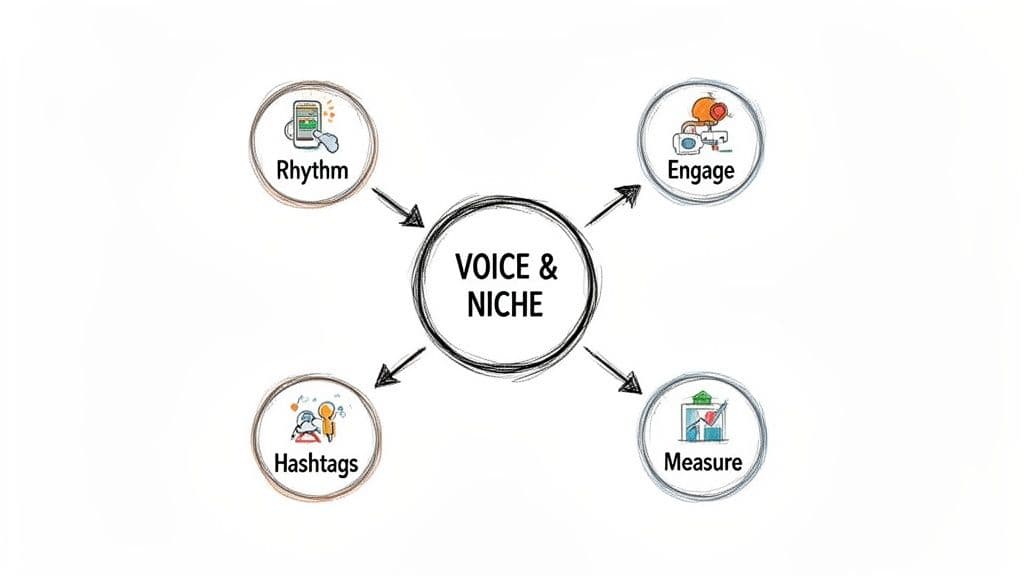
As you can see, a clear niche and an authentic voice are the foundation. Everything else you do is built on top of that.
Engage Authentically to Build Relationships
Microblogging is a conversation, not a broadcast. Your timeline is only half the story; the other half is happening in the replies, and if you ignore them, you're missing the point entirely. You have to set aside time to actually engage with other people.
And I don't just mean liking a few posts. Real engagement involves:
- Leaving thoughtful replies: Jump into conversations on other accounts in your niche and add real value.
- Answering your own comments: Acknowledge every person who takes the time to respond to your content.
- Asking questions: Don't just talk at people. Actively invite them to share their own opinions and experiences.
These little interactions are where real relationships are built. Think of every meaningful reply as a micro-investment in your community. It shows you're there to connect, not just to shout into the void.
Use Hashtags to Expand Your Reach
Hashtags are the signposts that guide new audiences to your content. They act like filing systems, categorizing your posts and making them searchable for anyone interested in your topics.
But the key is to be strategic. Don't just cram your posts with whatever's trending. A much better approach is to use a mix of broad and niche-specific hashtags. For instance, if you're posting about a new JavaScript framework, you might use:
- Broad: #WebDev, #Programming
- Niche: #JavaScript, #ReactJS
- Specific: #NextJS14
This tiered approach helps you reach a wider audience while also pulling in the highly-relevant followers who are genuinely looking for your specific expertise. Sticking to 2-3 relevant hashtags per post is a solid best practice that boosts visibility without making your content look spammy.
Measuring Performance and Refining Your Strategy
Meaningful growth on any microblogging platform isn't about watching your follower count tick up. That’s just a number. Real success is about building a community that actually listens and talks back, and you can only do that by paying attention to the right data.
It’s tempting to fixate on vanity metrics like follower counts or impressions. They look impressive on a report, but they don't tell you if anyone actually cares about what you're saying. Actionable metrics, on the other hand, tell the real story of how your content connects with people.
Key Metrics That Actually Matter
To figure out what’s working, you have to track the numbers that show genuine interaction. These data points are like direct feedback from your audience.
- Engagement Rate: This is the big one. It’s the percentage of people who saw your post and cared enough to do something—like, reply, or share. A high engagement rate is the clearest sign that your content is hitting the mark.
- Link Clicks: If you’re trying to drive people to your website, blog, or product page, this is your bottom line. It shows how many people are taking that next step you want them to take.
- Reply Quality: Don't just count the number of replies, actually read them. Are people asking smart questions and sharing their own stories? Or are they just dropping a quick "lol"? Thoughtful replies are the hallmark of a healthy, engaged community.
Looking at these numbers helps you get inside your audience's head. Just like with any other marketing effort, applying principles for measuring content marketing ROI will tell you if your microblogging efforts are truly paying off. Diving into your analytics can show you what your best posts have in common.
The goal isn't just to be seen; it's to be heard and to start a conversation. Actionable metrics measure the conversation, while vanity metrics only measure the potential audience.
A Simple Framework for Performance Review
Data is useless without a process. The best way to use this information is to build a simple, repeatable habit of reviewing it. A quick check-in once a week or every month is all you need to stay on course.
Block out a little time to look at your key metrics. Hunt for patterns. Which posts got people talking the most? What kind of content drove the most link clicks? This isn't just about celebrating your wins; it's also about learning from the posts that fell flat.
Use what you learn to guide what you create next. If you want a more detailed breakdown, our guide to understanding your Twitter account analytics is a great place to start. This simple review loop ensures that your daily microblogging efforts are always tied to your bigger goals, whether that's building a brand or finding new customers.
Your Microblogging Questions Answered
Getting started with microblogging always sparks a few questions. Let's tackle some of the most common ones we hear from creators and brands who are just finding their footing.
How Often Should I Post?
Don't fixate on frequency; focus on consistency. A great starting point for platforms like X or Bluesky is 1-3 high-quality posts per day.
This is a sustainable rhythm that lets you provide steady value to your audience without burning yourself out. Using a scheduling tool can be a massive help here, allowing you to plan ahead and keep the content flowing smoothly.
Is It All Just Text?
Definitely not. While microblogging is text-first, the most engaging accounts mix it up. Think of it as a media-rich conversation.
You should absolutely be weaving in images, short videos, GIFs, and even polls. These elements are what stop people from scrolling past your post in a busy feed. The text carries your message, but the visuals grab the attention.
Think of it this way: Your text provides the substance, while visuals provide the spark. Both are essential for creating posts that connect and get noticed.
Can I Post the Same Thing Everywhere?
You can, but you shouldn't—at least not without a few tweaks. It’s far better to adapt the same core idea to fit each platform's unique vibe.
For instance, Mastodon users really value detailed image descriptions (alt text), while on X, a sharp, punchy hook is everything. A good workflow is to write your main message once, then adjust the tone, formatting, and hashtags for each network. It shows you respect the community and understand how people communicate there.
How Long Until I See Real Growth?
This is a marathon, not a sprint. While you'll likely see some initial engagement in the first few weeks, building a truly loyal community usually takes several months of consistent, dedicated effort.
The secret is to stop chasing follower counts and start focusing on providing real value and building genuine connections. Sustainable growth is built on trust and consistent interaction, not a viral flash in the pan.
Ready to build your community smarter, not harder? MicroPoster provides a unified content studio, smart scheduling, and AI-powered tools purpose-built for X, Bluesky, and Mastodon. Start your free trial at https://microposter.so.