types of content for social media
10 Key Types of Content for Social Media to Master in 2025
Discover the top 10 types of content for social media that drive engagement. Learn how to create compelling posts for microblogging platforms today!

In the fast-paced world of microblogging on platforms like X, Bluesky, and Mastodon, the right content isn't just king, it's the entire kingdom. Gone are the days of posting simple text updates and hoping for engagement. To capture attention, build a community, and drive meaningful conversations, you need a diverse and strategic content arsenal. This is why understanding the most effective types of content for social media is no longer optional; it's a fundamental requirement for growth.
This comprehensive guide moves beyond generic advice to provide a strategic blueprint for each essential content format. We will break down everything from short-form video and engaging carousels to user-generated content and live streaming. You'll learn not just what to post, but why a particular format works, how to execute it flawlessly for your audience, and when to deploy it for maximum impact.
We will explore practical implementation, platform-specific examples, and best-practice tips for each category. We will also demonstrate how a dedicated tool like MicroPoster can supercharge your efforts, transforming your content creation from a daily chore into a streamlined, automated growth engine. Whether you're a creator building a personal brand, a small business connecting with its audience, or a marketer managing multiple accounts, mastering these formats is your key to standing out. This list is your actionable plan to elevate your strategy and achieve tangible results.
1. Reels/Short-Form Video
Short-form video is a dominant force among the various types of content for social media, captivating audiences with its fast-paced, engaging, and mobile-first format. Popularized by TikTok and quickly adopted by Instagram (Reels), YouTube (Shorts), and Facebook, these vertical videos are typically 15 to 90 seconds long. They leverage quick cuts, trending audio, and dynamic visual effects to tell a compelling story or share information in a highly digestible format.
For creators and brands, this format is a powerful tool for rapid audience growth and high engagement. Its algorithm-driven nature allows content to reach new, non-follower audiences, making it ideal for discovery and brand awareness. From beauty brands showcasing products in a quick tutorial to influencers participating in viral dance challenges, the applications are versatile and effective.
Actionable Tips for Success
- Hook Immediately: You have only 1-2 seconds to capture a viewer's attention. Start with a strong visual, a bold statement, or a question to prevent them from scrolling past.
- Leverage Trends: Incorporate trending audio, effects, or challenges strategically. This signals to the platform's algorithm that your content is relevant, increasing its potential for viral reach.
- Prioritize Consistency: Aim to post at least 3-5 short-form videos per week. This consistency keeps your audience engaged and provides the algorithm with more data to understand and promote your content.
- End with a CTA: Conclude your video with a clear call-to-action. Ask a question to spark comments, direct viewers to a link in your bio, or encourage them to follow for more.
To ensure your video strategy remains cutting-edge, it's crucial to stay updated on what's currently resonating with audiences. You can explore the 10 short-form video trends dominating TikTok in 2025 to gather fresh ideas and adapt them for your own content calendar.
2. Carousel Posts/Swipeable Content
Carousel posts, or swipeable content, are a highly versatile format among the different types of content for social media, allowing creators to share multiple images or videos in a single, interactive post. Users swipe horizontally through a series of up to 10 "slides," which can tell a cohesive story, break down complex information, or showcase a product from multiple angles. This format is a staple on platforms like Instagram, LinkedIn, and Facebook, prized for its ability to hold user attention longer than a static image.
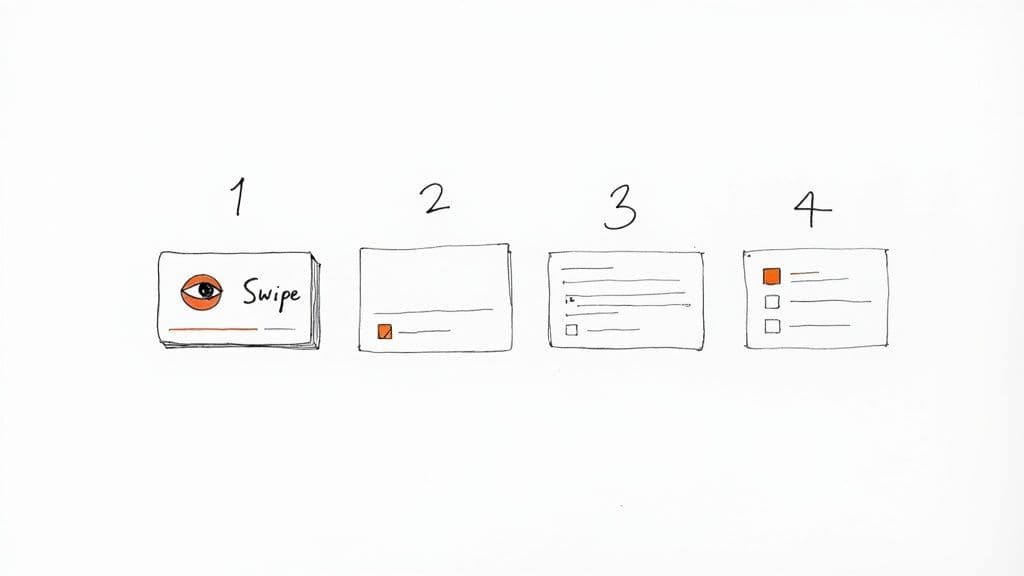
For brands and creators, carousels are an exceptional tool for education and storytelling. The multi-slide format encourages saves and shares, signaling high value to platform algorithms. For example, a fitness coach can demonstrate exercise progressions across several slides, a travel influencer can showcase a destination with a series of stunning photos, or a B2B consultant on LinkedIn can share a multi-slide presentation on industry insights.
Actionable Tips for Success
- Create a Compelling Cover: The first slide must be visually stunning and intriguing. Use a bold headline or a captivating image to create an "information gap" that makes users want to swipe to learn more.
- Encourage the Swipe: Explicitly tell your audience what to do. Including visual cues like arrows or text prompts such as "Swipe to see the transformation" directly on the first few slides significantly increases engagement.
- Tell a Cohesive Story: Ensure each slide logically connects to the next. Whether you're sharing a step-by-step guide, a before-and-after reveal, or a list of tips, maintain a clear narrative flow from beginning to end.
- End with a Strong CTA: The final slide is prime real estate for a call-to-action. Prompt users to comment with their thoughts, save the post for later, share it with a friend, or visit a link in your bio.
3. User-Generated Content (UGC)
User-Generated Content (UGC) is a powerful and authentic asset among the different types of content for social media. This refers to any content, including images, videos, reviews, or testimonials, created by your audience, customers, or community members rather than by the brand itself. By showcasing genuine user experiences, UGC builds powerful social proof and fosters a strong sense of community around your products or services.

For brands, leveraging UGC is a cost-effective strategy to generate a steady stream of trustworthy marketing material that resonates deeply with potential customers. Its strength lies in its authenticity; a recommendation from a peer often carries more weight than a direct brand advertisement. Iconic examples include GoPro featuring thrilling customer-shot adventure videos and Airbnb showcasing beautiful guest photos, which turn customers into brand advocates and content creators.
Actionable Tips for Success
- Create a Branded Hashtag: Establish a unique and easy-to-remember hashtag for your community to use when posting about your brand. This makes it simple for you to discover, track, and curate relevant content.
- Always Ask for Permission: Before reposting any user's content, reach out and ask for their explicit permission to share it on your official channels. Always give prominent credit by tagging the original creator.
- Incentivize Participation: Encourage submissions by running contests, offering discounts, or featuring the best content on your profile. This gives your audience a clear reason to create and share.
- Engage with Every Submission: Respond promptly to users who share content about your brand. A simple like, comment, or share shows appreciation and strengthens community bonds, encouraging others to participate.
To successfully gather and leverage user-generated content, consider exploring various tools for effective UGC video marketing that can streamline your campaigns and help you manage submissions more efficiently.
4. Carousel Stories/Story Series
Carousel Stories, also known as Story series, are a powerful and ephemeral entry among the various types of content for social media. This format leverages sequential posts on platforms like Instagram and Facebook to tell a longer narrative, provide step-by-step guides, or deliver updates throughout the day. Because Stories disappear after 24 hours, they create a sense of urgency and exclusivity, encouraging followers to check back frequently for new content. Their interactive nature, supported by features like polls, quizzes, question stickers, and countdowns, makes them a hub for community engagement.
For brands and creators, this format is ideal for building a deeper, more personal connection with their audience. It offers a behind-the-scenes look that feels more authentic and less polished than feed posts. From a fitness influencer sharing clips of their daily workout routine to a beauty brand like Sephora posting a multi-part makeup tutorial, the applications are designed to hold viewer attention and drive direct interaction.
Actionable Tips for Success
- Structure a Narrative: Plan your Story series with a clear beginning, middle, and end. Start with a hook, build suspense or provide value through multiple frames, and conclude with a strong call-to-action or resolution.
- Boost Interactivity: Don't just post images or videos; use the platform's native tools. Ask questions with the question sticker, run polls to gather feedback, and use quizzes to test your audience’s knowledge. This boosts engagement signals.
- Maintain Consistent Pacing: Aim to post a series of 3-7 related Stories at once or spread them throughout the day to keep your brand at the top of your followers' feeds. This consistency increases visibility and recall.
- Save Your Best Content: Use the Highlights feature to save your most valuable or popular Story series to your profile. This turns temporary content into an evergreen resource for new followers.
5. Educational/How-To Content
Educational content is a cornerstone among the various types of content for social media, providing tangible value to an audience by teaching them a new skill, process, or piece of information. This category includes everything from step-by-step tutorials and quick tips to in-depth explainers and "how-to" guides. Its power lies in positioning the creator or brand as a credible expert and a trusted resource in their niche.
This format builds long-term loyalty and trust because it directly addresses audience pain points and curiosities. Instead of just entertaining, it empowers. Creators like Brian Dean (Backlinko) with his detailed SEO guides, or Jamie Oliver with his accessible cooking tutorials, have built massive followings by consistently delivering high-value, instructional content that solves real problems for their viewers.
Actionable Tips for Success
- Solve a Specific Problem: Start by identifying your audience's most common questions or challenges. Content that provides a clear solution to a known problem will always perform well.
- Break It Down: Deconstruct complex topics into simple, digestible steps. Use numbered lists, short paragraphs, and clear visuals like text overlays on videos to make the information easy to follow.
- Show, Don't Just Tell: Whenever possible, use visuals to demonstrate the process. A screen recording of a software tutorial or a video of you completing a recipe is far more effective than text alone.
- Encourage Application: End your content by asking your audience to try the skill themselves and share their results. This not only boosts engagement but also reinforces the learning process.
By consistently providing useful knowledge, you create a dedicated community that sees you as an indispensable guide. To effectively integrate this into your broader plan, you should explore how to build a robust content strategy for social media that balances education with other content types for maximum impact.
6. Live Video/Live Streaming
Live video, or live streaming, is one of the most immediate and authentic types of content for social media. It involves broadcasting real-time video to an audience, creating an unscripted and interactive experience. Platforms like Instagram Live, Facebook Live, YouTube Live, and TikTok Live have made this format accessible to everyone, fostering a direct connection between creators and their communities through live comments, reactions, and Q&A sessions.
This format excels at building trust and a sense of community. Its raw, unedited nature feels more genuine than polished, pre-recorded content. Brands use it for major product launches and exclusive behind-the-scenes access, while influencers host intimate Q&A sessions to connect with followers. The real-time engagement provides immediate feedback and strengthens audience loyalty by making viewers feel like active participants in the event.
Actionable Tips for Success
- Promote Your Stream in Advance: Announce your live video across all your social media channels at least 24-48 hours beforehand. Use countdown stickers and reminders to build anticipation and maximize attendance.
- Have a Loose Agenda: Plan key talking points or a structure for your stream, but remain flexible. The magic of live video is its conversational nature, so be prepared to adapt based on audience comments and questions.
- Engage with Comments in Real-Time: Acknowledge viewers by name and answer their questions as they come in. This direct interaction is the core appeal of live streaming and makes your audience feel seen and valued.
- Ensure Technical Quality: A stable internet connection, good lighting, and clear audio are non-negotiable. Test your setup before going live to avoid technical glitches that can frustrate viewers and disrupt the experience.
- Repurpose the Content: After the stream ends, save the recording. You can repurpose it by sharing the full video, editing it into short clips for Reels or TikTok, or pulling key quotes for text posts. This extends the life of your content and reaches audiences who missed the live event.
7. Infographics and Data Visualization
Infographics and data visualizations are essential types of content for social media for anyone looking to communicate complex information quickly and effectively. By translating data, statistics, or processes into a visually appealing and easy-to-digest format, they make intricate topics more accessible and shareable. This format leverages charts, graphs, icons, and illustrations to present a compelling narrative that a simple text post could not achieve.

For brands and creators, infographics are a powerful tool for establishing authority and thought leadership. They are highly shareable, often leading to backlinks and increased brand visibility as other accounts and websites use them as a source. Companies like HubSpot and Statista built their reputations by producing high-quality, data-driven infographics that simplify marketing trends and industry research, making them go-to resources in their respective fields.
Actionable Tips for Success
- Start with a Compelling Story: Don't just present data; tell a story with it. Begin with a powerful statistic or a key insight that immediately grabs attention and provides context for the rest of the visual.
- Maintain Brand Consistency: Use your brand's color palette, fonts, and logo to ensure the infographic is instantly recognizable. This strengthens brand recall every time it is shared across different platforms.
- Design for Scannability: Organize information with a clear visual hierarchy. Use bold headings, icons, and ample white space to guide the viewer's eye through the data, making it easy to understand at a glance.
- Optimize for Mobile: Create vertical versions of your infographics specifically for platforms like Pinterest, Instagram Stories, and X. This ensures the text is legible and the visuals are impactful without requiring users to zoom in.
8. Memes and Trending Formats
Memes are a powerful and highly shareable form of social media content, leveraging humor and cultural relevance to create an immediate connection with an audience. This content type thrives on timeliness, tapping into trending formats, catchphrases, and viral moments to generate high levels of engagement. By participating in these online conversations, brands can showcase personality, appear more human and relatable, and reach new audiences organically.
This format is particularly effective for building brand affinity and community. When executed well, a meme can communicate a complex message or feeling in a simple, highly digestible image or video. Brands like Wendy's, with its witty roasts, and Duolingo, with its absurdist TikTok presence, have successfully used memes to define their online persona and foster a loyal following. These examples highlight how humor is one of the most versatile types of content for social media for creating memorable brand interactions.
Actionable Tips for Success
- Act Quickly: Meme culture moves at an incredible pace. A format that is popular today might be outdated by tomorrow. Capitalize on a trend while it is peaking to maximize its impact and relevance.
- Ensure Brand Alignment: Don't force a meme if it doesn't fit your brand's voice or values. Inauthentic participation can appear cringe-worthy and damage your credibility. The humor should feel natural to your established persona.
- Add a Unique Twist: Avoid simply reposting a popular meme. The most successful examples are those that adapt a trending format to their specific niche or industry, adding a unique and clever spin that resonates with their target audience.
- Monitor the Conversation: Pay close attention to the comments and reactions your meme receives. This feedback will tell you if the joke landed well and will help you gauge whether the trend has become oversaturated, controversial, or irrelevant.
9. Behind-the-Scenes Content
Pulling back the curtain with behind-the-scenes (BTS) content is one of the most effective types of content for social media for humanizing your brand and fostering genuine connection. This approach moves beyond polished final products to showcase the authentic, often messy, process of creation, the people behind the work, and the day-to-day culture that defines your mission. It builds trust and loyalty by offering audiences a transparent, relatable glimpse into your world.

For brands and creators, BTS content serves as a powerful bridge between the "what" (your product or service) and the "why" (your purpose and values). It’s a versatile format that works across platforms, from casual Instagram Stories showing a "day in the life" to detailed LinkedIn articles about overcoming a business challenge. Brands like Patagonia excel at this by showing their manufacturing process, reinforcing their commitment to sustainability, while influencers build deeper rapport by sharing their studio setup or creative struggles.
Actionable Tips for Success
- Show the Process, Not Just the Product: Document the journey from idea to execution. This could be a time-lapse of a product being made, a screenshot of a brainstorming session, or a quick video explaining a design choice.
- Feature Your Team: Introduce the people who make everything happen. A short Q&A with a team member or a spotlight on their role adds a personal touch and makes your brand more relatable.
- Embrace Imperfection: Authenticity is key. Don't be afraid to share mistakes, challenges, and lessons learned. Sharing both successes and failures makes your journey more compelling and trustworthy.
- Use Casual Formats: Leverage Instagram Stories, TikTok videos, and Facebook Reels for raw, minimally edited BTS content. These formats feel more immediate and personal, which is perfect for this type of storytelling.
To truly connect, think about the stories your audience hasn't seen yet. You can find inspiration by exploring how other mission-driven companies share their purpose, such as these 8 brand storytelling examples that masterfully blend product with purpose.
10. Community Engagement Posts
Community engagement posts are one of the most powerful types of content for social media because they transform passive followers into an active, invested community. Instead of simply broadcasting a message, this content invites direct audience participation through polls, questions, challenges, and discussion prompts. It’s a strategy built on two-way communication, fostering a sense of belonging and making your audience feel heard and valued.
For brands and creators, this approach is invaluable for building loyalty and gathering real-time feedback. The algorithm often rewards posts with high interaction rates (comments, shares, votes), increasing their visibility across the platform. From a gaming community running a fan-art competition to a skincare brand asking "What’s the one product you can't live without?", these posts generate authentic conversations that strengthen the creator-audience relationship and provide rich user-generated content.
Actionable Tips for Success
- Ask Open-Ended Questions: Instead of simple yes/no questions, ask "why" or "how" to encourage detailed, thoughtful responses that spark deeper conversations.
- Be Hyper-Relevant: Tailor your prompts to topics, pain points, or interests specific to your niche. A generic question gets a generic response; a targeted one ignites passion.
- Engage with a Sense of Urgency: Prioritize responding to comments, especially within the first hour of posting. This signals to both your audience and the algorithm that your post is an active conversation hub.
- Showcase Audience Contributions: Acknowledge and highlight the best or most interesting responses in a follow-up post or story. This rewards participation and encourages more people to join in next time.
Building a vibrant community is a key objective for any social media strategy, and these posts are the engine that drives it. To dive deeper into the tactics that turn followers into fans, you can explore proven techniques for how to improve social media engagement and apply them to your content calendar.
10 Social Media Content Types Compared
| Content Type | Implementation Complexity 🔄 | Resource Requirements ⚡ | Expected Outcomes 📊 | Ideal Use Cases 💡 | Key Advantage ⭐ |
|---|---|---|---|---|---|
| Reels / Short-Form Video | 🔄🔄 — quick editing + trend timing | ⚡⚡ — low production, consistent output needed | 📊 High reach & engagement — ⭐⭐⭐⭐ | Awareness, virality, product teases | Algorithmic discoverability; rapid attention capture |
| Carousel Posts / Swipeable Content | 🔄🔄🔄 — multiple assets & sequencing | ⚡⚡⚡ — more images/videos and design time | 📊 Longer dwell time & CTR uplift — ⭐⭐⭐ | Tutorials, product comparisons, storytelling | Enables multi-step storytelling and comparisons |
| User-Generated Content (UGC) | 🔄 — sourcing & moderation workflow | ⚡ — cost-effective content supply | 📊 High trust and conversion lift — ⭐⭐⭐⭐ | Social proof, testimonials, community growth | Authenticity and strong social proof |
| Carousel Stories / Story Series | 🔄🔄 — frequent, ephemeral sequencing | ⚡⚡ — mobile-first, low-polish assets | 📊 High frequency views & FOMO — ⭐⭐⭐ | Day updates, BTS, interactive polls | Real-time interaction and urgency (24h) |
| Educational / How-To Content | 🔄🔄🔄 — research and clear structure | ⚡⚡ — expertise and editing time | 📊 Evergreen authority and saves — ⭐⭐⭐⭐ | Tutorials, thought leadership, lead gen | Builds long-term trust and repeat audiences |
| Live Video / Live Streaming | 🔄🔄🔄 — setup, moderation, rehearsal | ⚡⚡⚡ — stable tech and staff | 📊 Very high engagement & loyalty — ⭐⭐⭐⭐⭐ | Q&A, launches, events, community building | Real-time connection and immediate feedback |
| Infographics & Data Visualization | 🔄🔄🔄 — data sourcing + design | ⚡⚡ — design tools and research time | 📊 Shareable clarity & SEO value — ⭐⭐⭐ | Reports, summaries, data storytelling | Simplifies complex data; backlink potential |
| Memes & Trending Formats | 🔄 — fast turnaround, cultural sense | ⚡ — very low production cost | 📊 High virality potential (time-sensitive) — ⭐⭐⭐⭐ | Brand voice, quick engagement, relatability | Low-cost virality and strong shareability |
| Behind-the-Scenes Content | 🔄 — casual production, candid planning | ⚡ — minimal equipment, frequent posting | 📊 Builds authenticity & loyalty — ⭐⭐⭐ | Company culture, process reveals, founders | Humanizes brand with low production needs |
| Community Engagement Posts | 🔄🔄 — content plus active moderation | ⚡⚡ — time to respond and follow-up | 📊 Boosts comments & audience insights — ⭐⭐⭐ | Polls, challenges, feedback collection | Strengthens community and gathers feedback |
From Plan to Action: Unifying Your Content Workflow
Navigating the vast landscape of social media content can feel like a monumental task. We've explored ten powerful types of content for social media, from the viral potential of Reels and Memes to the trust-building power of Educational Content and Behind-the-Scenes glimpses. Each format offers a unique pathway to connect with your audience, build authority, and drive meaningful growth. However, knowledge without execution is just untapped potential.
The real challenge isn't just knowing what to post; it's creating a sustainable system to post consistently and effectively. Juggling different formats, optimizing for various platforms, and maintaining a steady stream of high-quality content can quickly lead to creative burnout. This is where a strategic, unified workflow becomes your most valuable asset.
The Shift from Reactive Creator to Strategic Publisher
The key to long-term success is moving from a reactive "what should I post today?" mindset to a proactive, strategic approach. This involves batching content creation, planning your calendar in advance, and leveraging tools that streamline the entire process from ideation to publication. A unified content studio acts as the command center for your entire social media operation.
Consider the core takeaways from our deep dive:
- Diversity is Strength: Relying on a single content type limits your reach and appeal. A healthy mix of educational, entertaining, and community-focused posts keeps your audience engaged and caters to different segments of your following.
- Authenticity Builds Trust: Formats like User-Generated Content (UGC) and Behind-the-Scenes videos are not just filler. They are powerful tools for humanizing your brand and building a loyal community that feels seen and valued.
- Value is Non-Negotiable: Whether it's a quick infographic, a detailed how-to carousel, or a live Q&A session, every piece of content must provide tangible value to your audience. This is what transforms passive followers into dedicated fans.
Mastering these different types of content for social media is about more than just filling a calendar; it's about building a dynamic and resilient brand presence. It’s about understanding that some posts will build community, others will drive traffic, and some will simply entertain and delight. Each plays a critical role in a holistic strategy.
Your Actionable Next Steps
The goal is progress, not perfection. Don't feel pressured to implement all ten content types at once. Instead, start small and build momentum.
- Select Your Starting Trio: Choose two or three content types from this list that align best with your brand's strengths and your audience's preferences. For example, you might start with Educational Carousels, Behind-the-Scenes Stories, and Community Engagement Posts.
- Map it to Your Workflow: Dedicate specific time blocks to create these posts. Use a content calendar to plan when they will go live. Think about how you can repurpose a single idea across these different formats.
- Implement an Automation & Scheduling System: This is the game-changer. Use a tool to schedule your content weeks in advance, create reusable templates for your best-performing formats, and automate repetitive tasks like hashtagging. This frees you from the daily grind and allows you to focus on high-level strategy and genuine community interaction.
Ultimately, the most successful creators and brands are not the ones who work the hardest, but the ones who work the smartest. By systematizing your content production, you reclaim your time and energy to focus on what truly drives growth: listening to your audience, analyzing your performance, and building authentic relationships. Your content strategy is a living, breathing thing. Equip it with the right framework and tools, and watch your social media presence flourish.
Ready to stop juggling tabs and start publishing strategically? MicroPoster is the all-in-one content studio designed to help you master all types of content for social media with powerful scheduling, AI-assisted writing, and seamless cross-posting. Unify your workflow and reclaim your time by visiting MicroPoster to start your free trial today.