content repurposing strategies
10 Smart Content Repurposing Strategies to Maximize Your Reach in 2026
Discover 10 actionable content repurposing strategies for X, Bluesky, & Mastodon. Learn to atomize threads, convert carousels, and grow your audience.

In the fast-paced world of microblogging, the pressure to create fresh content daily is relentless. But what if the most effective way to grow wasn't about creating more, but about strategically amplifying what you've already made? The answer lies in mastering a few key content repurposing strategies. This isn't about mindlessly copy-pasting posts across platforms; it's a sophisticated system for transforming your best ideas into a library of high-performing micro-content tailored for X, Bluesky, and Mastodon.
This guide breaks down 10 proven, actionable strategies that move beyond generic advice. Instead of vague tips, you'll find a complete playbook designed to turn a single piece of your best work into a month's worth of engaging posts. We'll move from high-level concepts to practical application, equipping you with the tools to build a more efficient and impactful content engine. For those looking to broaden their toolkit even further, you can explore additional content repurposing strategies to get more mileage from every asset you create.
Each strategy detailed below includes specific templates, platform-native tweaks for optimal performance, and workflow examples using tools like MicroPoster. Our focus is on helping you publish smarter, maintain consistency across your accounts, and reclaim your time without sacrificing audience growth. By the end of this article, you will have a clear, step-by-step system for maximizing the value of your existing content, ensuring your best ideas reach the widest possible audience. Let's dive in.
1. Thread-to-Post Atomization
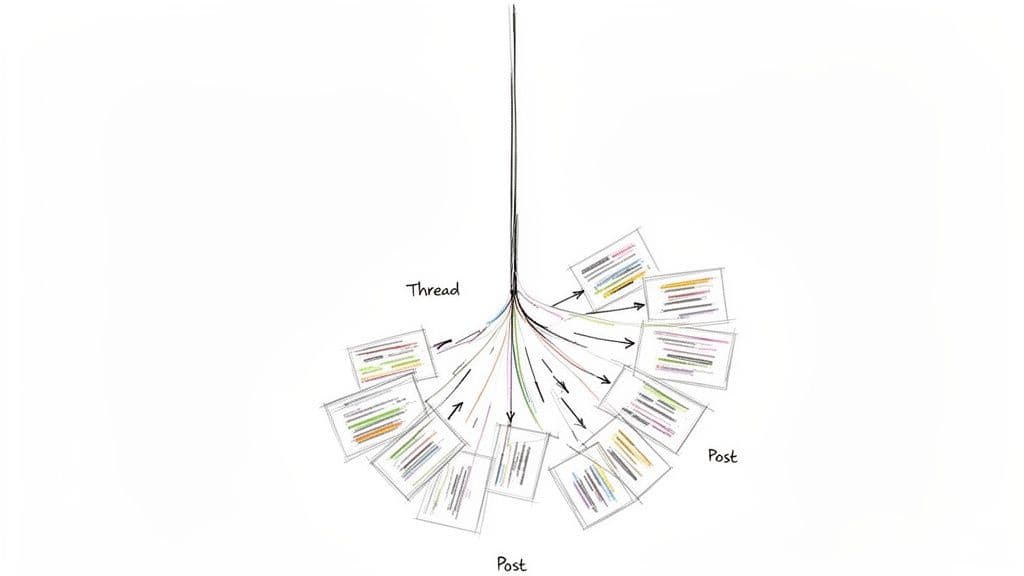
Thread-to-Post Atomization is one of the most effective content repurposing strategies for microblogging platforms. This technique involves deconstructing a comprehensive, long-form thread (like those popular on X) into individual, standalone posts. Each "atomized" post is then optimized and scheduled across various platforms, turning one piece of content into a multi-day campaign.
The core idea is to treat each tweet in a thread as a potential piece of micro-content. A 15-part thread on a topic like "Productivity Hacks" can become 15 distinct daily tips. This approach multiplies your content output, increases visibility, and allows you to test which specific ideas resonate most with your audience without them needing the context of the full thread.
Actionable Implementation Steps
To execute this strategy effectively, follow a structured workflow. Start by identifying your highest-performing threads or a new concept that requires detailed explanation.
- Isolate Key Ideas: Review your thread and ensure each tweet can stand on its own. If a tweet relies heavily on the previous one, rephrase it to include the necessary context. The goal is for each post to be self-contained and valuable.
- Rewrite for Each Platform: Adapt the tone and format. For a professional audience on a platform like Mastodon, you might use more formal language. For Bluesky, you could add relevant hashtags like
#Scienceor#Techthat are popular there. - Stagger Your Schedule: Avoid overwhelming your audience. Use a scheduling tool to spread the atomized posts out over several days or even weeks. This creates a consistent stream of valuable content from a single creation effort.
- Add Unique CTAs: To make each post feel fresh, append a different call-to-action to each one. One post might ask a question to drive engagement, another could link to a relevant blog post, and a third might promote your newsletter.
Creators like Justin Welsh have perfected this by turning massive threads on solopreneurship into countless individual posts, each driving engagement and reinforcing his expertise. This method keeps his content calendar full while consistently delivering value.
2. Carousel-to-Caption Conversion
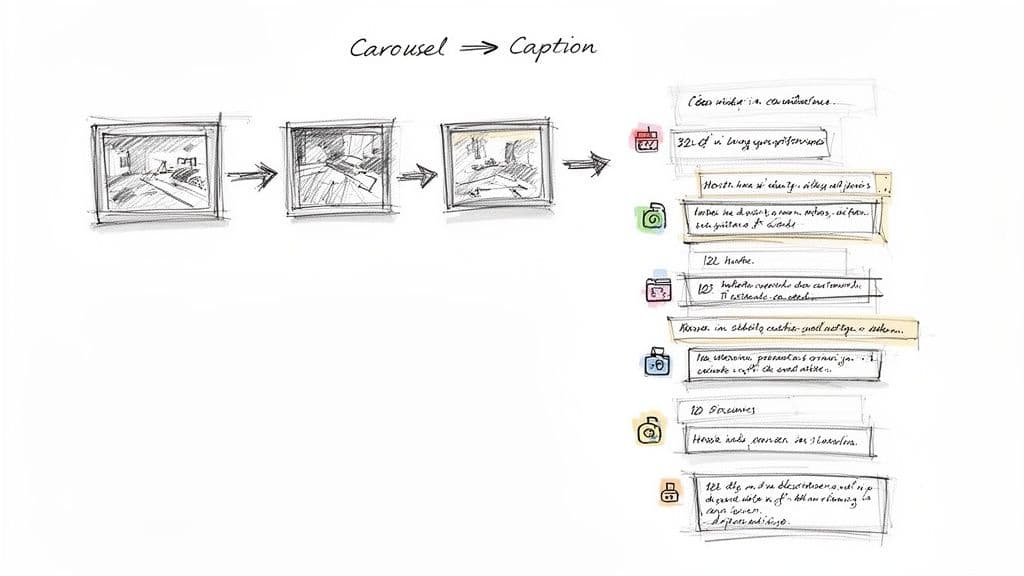
Carousel-to-Caption Conversion is a powerful approach in our list of content repurposing strategies, designed to translate visual storytelling into compelling text-first narratives. This technique involves deconstructing multi-slide carousels from platforms like Instagram or LinkedIn and rebuilding their core message as a text-based thread or a series of standalone posts for microblogging platforms.
The fundamental idea is to extract the educational or narrative value locked within each visual slide and articulate it purely through text. A 10-slide educational carousel on "Marketing Funnels" can be repurposed into a 10-part, high-value X thread. This strategy makes your visual assets work harder, extending their reach to audiences who prefer text-based consumption while reinforcing your expertise in a new format.
Actionable Implementation Steps
To effectively convert visual carousels into text, focus on capturing the original's flow and impact without relying on images. This requires a shift from visual-first to text-first thinking.
- Extract the Core Lesson: Before writing, identify the single underlying insight or takeaway from each carousel slide. The text should communicate this core message clearly and concisely, without the visual aid.
- Replicate Visual Hooks with Text: The first slide of a carousel is designed to grab attention. Recreate this effect with a strong, curiosity-driven opening post. Use bold statements, questions, or surprising statistics to hook the reader.
- Mirror the Carousel Progression: Use numbers, bullet points, or "Part 1/5" formatting to mimic the slide-by-slide reveal of a carousel. This structure guides the reader through the information and creates a sense of narrative progression.
- Test Different Narrative Angles: A product feature carousel can be converted into a problem-solution thread, a behind-the-scenes story, or a numbered list of benefits. Experiment with different narrative frames to see which text-based version performs best.
This strategy is frequently used by business educators and SaaS companies who repurpose their polished Instagram explainers for X. They effectively translate visual frameworks into educational threads that drive engagement and establish thought leadership on text-centric platforms.
3. Quote-Mining and Micro-Content Extraction
Quote-Mining and Micro-Content Extraction is a powerful technique in the world of content repurposing strategies that treats your long-form assets as a goldmine of shareable insights. This method involves meticulously scanning articles, podcast transcripts, or video recordings to pull out the most impactful quotes, statistics, and key takeaways. Each extracted piece is then repurposed into a standalone microblog post.
The central idea is that every piece of long-form content contains dozens of potent, atomized ideas. A single 45-minute podcast episode can yield 15-20 quotable moments, while an in-depth blog post might contain several key statistics perfect for individual sharing. This strategy allows you to amplify a single asset's reach, drive traffic back to the source, and consistently populate your content calendar with high-value snippets.
Actionable Implementation Steps
To implement this strategy, establish a system for identifying and transforming key moments from your core content into engaging micro-posts.
- Create Quote Templates: Design a consistent visual style for your quotes. For X, you might use bold text or emojis to frame the quote. On a platform like Mastodon, a cleaner, more professional format without excessive formatting may perform better. Consistency builds brand recognition.
- Attribute and Link Back: Always credit the original speaker or source and include a link to the full content. This practice builds goodwill, encourages cross-promotion, and provides your audience with a direct path to explore the topic in greater depth.
- Time Your Posts Strategically: Schedule your extracted micro-content to be published one to two weeks after the original long-form piece goes live. This timing allows you to reignite interest in the original asset and capture a secondary wave of audience engagement.
- Test Quote Variations: Experiment with how you present the information. You can post the exact quote, paraphrase it into a concise insight, or turn a statistic into a question to prompt discussion. This helps you discover what resonates most with your followers.
Podcast networks and industry publications excel at this, often sharing guest quotes or key report findings to drive traffic and establish authority. It's an efficient way to maximize the value of every content investment.
4. Platform-Native Format Optimization
Platform-Native Format Optimization is a crucial content repurposing strategy that moves beyond simple copy-pasting. It involves adapting a core message to fit the unique formats, algorithms, and user behaviors of each microblogging network. This acknowledges that a viral post on X might fall flat on Mastodon if not properly tailored to the platform's culture and technical features.
The central concept is to maintain your message's integrity while re-packaging it for maximum impact. A single idea, such as a product update announcement, could become a multi-image carousel on X, a more descriptive and community-focused post on a Mastodon instance, and a concise, discovery-oriented post with custom hashtags on Bluesky. This approach ensures your content feels authentic and native to each environment, significantly boosting engagement and reach.
Actionable Implementation Steps
To effectively optimize your content for different platforms, you need a system that accounts for each network's nuances. This ensures your message resonates without feeling like generic crossposting.
- Analyze Platform Norms: Understand what works on each network. X rewards engagement velocity and threaded content. Mastodon values context, content warnings, and thoughtful hashtagging. Bluesky's custom feeds prioritize discoverability through specific keywords and labels.
- Adapt Content Elements: Modify your posts based on platform features. On X, use relevant hashtags and consider creating a thread for deeper dives. For Mastodon, focus on descriptive text and avoid excessive hashtags. On Bluesky, leverage specific feed-related tags like
#Scienceor#ArtFeed. - Leverage Visuals Appropriately: The way visuals are used differs. A meme that performs well on X might not land with a professional community on Mastodon. For instance, leveraging AI tools can significantly simplify the process of adapting written social content into new visual formats, as demonstrated by a guide on turning X posts into AI images.
- Test and Refine: Use each platform's analytics to see what resonates. Track engagement rates for different formats and adjust your strategy accordingly. A tool's platform preview feature can help you see exactly how a post will render before publishing, preventing formatting errors. For a deeper understanding of this approach, explore the nuances of crossposting versus native posting.
5. Question-Answer Threading
Question-Answer Threading is a powerful conversational approach within the realm of content repurposing strategies. This technique transforms frequently asked questions, customer support inquiries, and common queries from your comments into engaging, multi-post threads. It turns a static knowledge base into a dynamic, interactive dialogue that educates your audience while inviting participation.
The core concept is to take questions your audience is already asking and answer them publicly in a structured format. A thread starting with "People always ask me about X..." immediately captures attention because it promises a solution to a common problem. This method positions you as a helpful authority and builds community by addressing genuine user pain points directly.
Actionable Implementation Steps
To effectively execute Question-Answer Threading, you need to be a good listener. Start by mining your own digital footprint for recurring questions that signal audience interest and confusion.
- Source Your Questions: Scour your X replies, DMs, email inbox, and support ticket system for common questions. What do people consistently misunderstand about your product or niche? These are your content goldmines.
- Frame the Hook: Start your thread with the most compelling or controversial question. Use openings like, "Here's what most people get wrong about [Topic]" or "The #1 question I get is..." to create immediate intrigue.
- Structure the Answers: Dedicate each post in the thread to answering one specific question or one part of a larger question. Use numbering (e.g., 1/5, 2/5) to guide readers and create a logical flow from problem to solution.
- Encourage More Questions: Conclude your thread with a strong call-to-action. Ask, "What other questions do you have about this?" This not only drives engagement on the current thread but also provides the source material for your next one.
This strategy is frequently used by startup founders building in public and educators who want to demonstrate their expertise by systematically breaking down complex topics. It turns reactive support into proactive, high-value content.
6. Data Visualization to Data Narrative
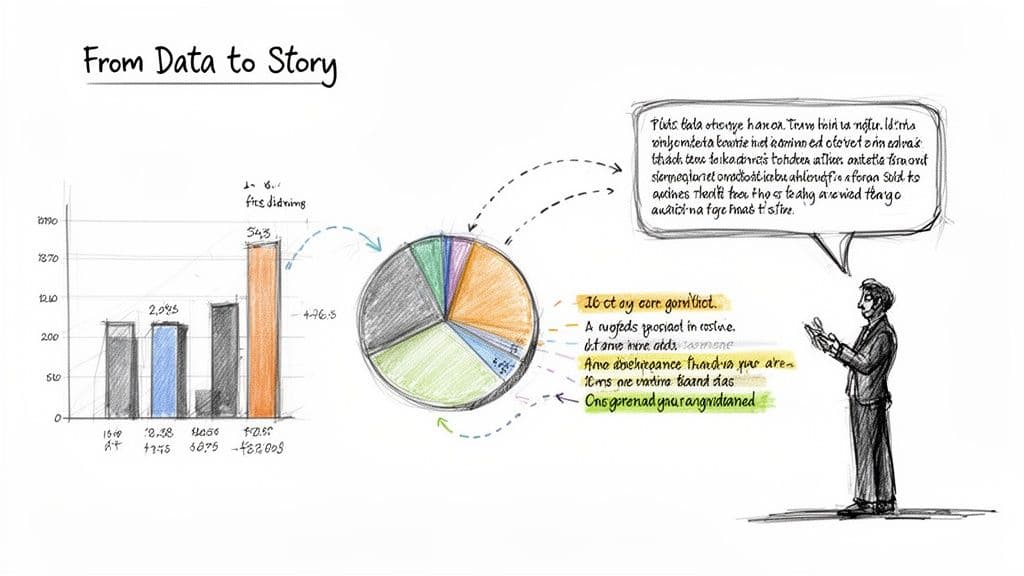
Data Visualization to Data Narrative is a powerful content repurposing strategy for translating complex visual data into compelling, text-based stories. This technique involves taking charts, graphs, or infographics and converting their key insights into a narrative format suitable for text-first platforms. Instead of just sharing an image of a chart, you explain what the data means, making it accessible and engaging for a broader audience.
The core concept is to shift from showing data to telling its story. A dense industry report chart becomes an insightful thread on X explaining market shifts. This approach makes your data-driven content more shareable and understandable, positioning you as an expert who can distill complex information into clear, meaningful takeaways.
Actionable Implementation Steps
To effectively convert data into a narrative, focus on the story behind the numbers. Identify the most impactful findings from your visualization and build a story around them.
- Lead with the Biggest Insight: Start your post or thread with the most surprising or counterintuitive finding. A hook like, "Our latest survey found that 78% of remote workers actually feel more connected to their teams," grabs attention immediately.
- Provide Context and Comparison: Numbers are meaningless without context. Frame your data points with comparisons like "This is a 25% increase from last year" or "This is double the industry average" to make them impactful.
- Break Down Complexity: Deconstruct complex statistics into simple, digestible statements. Instead of a single, dense post, create a short thread where each post explains one key data point and its implication.
- Ask 'Why' to Deepen the Narrative: Go beyond simply reporting the data. Ask "Why is this happening?" and offer your analysis or hypotheses. This transforms a simple report into a thought-provoking piece that encourages discussion and engagement.
This strategy is frequently used by data journalists, industry analysts, and marketing teams to make their research findings resonate on social media. They turn static reports into dynamic conversations, reinforcing their authority and driving traffic back to their original research.
7. Evergreen Content Recycling
Evergreen Content Recycling is a foundational strategy for maintaining a consistent presence and reinforcing core messages. This technique involves systematically republishing your most timeless, high-performing content, such as foundational guides, frameworks, or principles, on a recurring schedule. Unlike seasonal or trending topics, evergreen content remains relevant indefinitely, making it a powerful asset for reaching new audience members and solidifying your authority.
The central concept is to treat your best content not as a one-off publication but as a durable resource. A powerful framework on "Building an Audience" or a guide to "Effective Time Management" can be shared quarterly, each time with a fresh hook or updated context. This approach is one of the most efficient content repurposing strategies because it leverages proven winners to guarantee engagement and deliver continuous value with minimal new effort.
Actionable Implementation Steps
To implement this strategy without appearing repetitive, focus on systematic scheduling and subtle variations. A well-managed evergreen calendar ensures your core ideas are always in circulation.
- Create Multiple Variations: For each evergreen post, write 3-5 different versions. Change the introductory hook, the call-to-action, or the angle. One version might start with a question, another with a bold statement, and a third with a statistic.
- Schedule on a Cadence: Use a scheduling tool like MicroPoster to set up a recurring schedule. For example, a core productivity tip could be set to publish on the first Monday of every quarter. This automates your content pipeline with proven material.
- Update and Refresh Content: Before each republishing cycle, briefly review the content. Update any statistics, replace outdated examples, or add new insights based on recent events or audience feedback to keep it fresh and accurate.
- Monitor Performance: Track the engagement of each variation. If the version starting with a question consistently outperforms others, favor that format in future cycles. This data-driven approach optimizes your evergreen strategy over time.
This method is heavily used by course creators who recycle posts about their core methodologies and SaaS companies that consistently share content about the problems their products solve. It ensures their foundational message is never lost.
8. Debate/Perspective Splitting
Debate/Perspective Splitting is an advanced content repurposing strategy designed to generate high-engagement discourse. This technique involves taking a complex or polarizing topic and breaking it into multiple posts, each representing a distinct viewpoint, nuance, or counterargument. Instead of a single balanced post, you create a series that explores an issue from all sides.
The core idea is to transform one multifaceted analysis into several focused pieces of micro-content. For example, a single article on the "future of remote work" can be split into separate posts arguing for its productivity benefits, its negative cultural impact, and its effect on employee retention. This method stimulates deeper conversation and positions you as a thoughtful, well-rounded expert.
Actionable Implementation Steps
To effectively execute this strategy, you must approach each perspective with intellectual honesty and structural clarity. Start with a topic that has legitimate, compelling arguments on multiple sides.
- Steel-Man Each Argument: Present each viewpoint as strongly and charitably as possible, as if you fully believed it. Avoid straw-man arguments, as this will undermine the credibility of the entire series and shut down genuine discussion.
- Use Clear Signposting: Number your posts or use clear introductory phrases like "The Case For X..." and "The Counterargument..." to guide your audience. On platforms like X or Bluesky, link the posts together in a thread to create a clear narrative arc.
- Present Your Synthesis: After exploring the different perspectives, create a concluding post that offers your own nuanced take or synthesis. This final post resolves the tension you've built and solidifies your authority on the subject.
- Optimize for Clarity: For complex topics, use a tool's readability score to ensure your arguments are clear and concise. The goal is to make sophisticated ideas accessible, not to confuse your audience with academic jargon.
Industry analysts and political commentators often use this technique to break down complex trends or policies. By fairly representing multiple sides of a debate, they attract a wider audience and foster a more thoughtful community around their content.
9. Behind-the-Scenes and Process Documentation
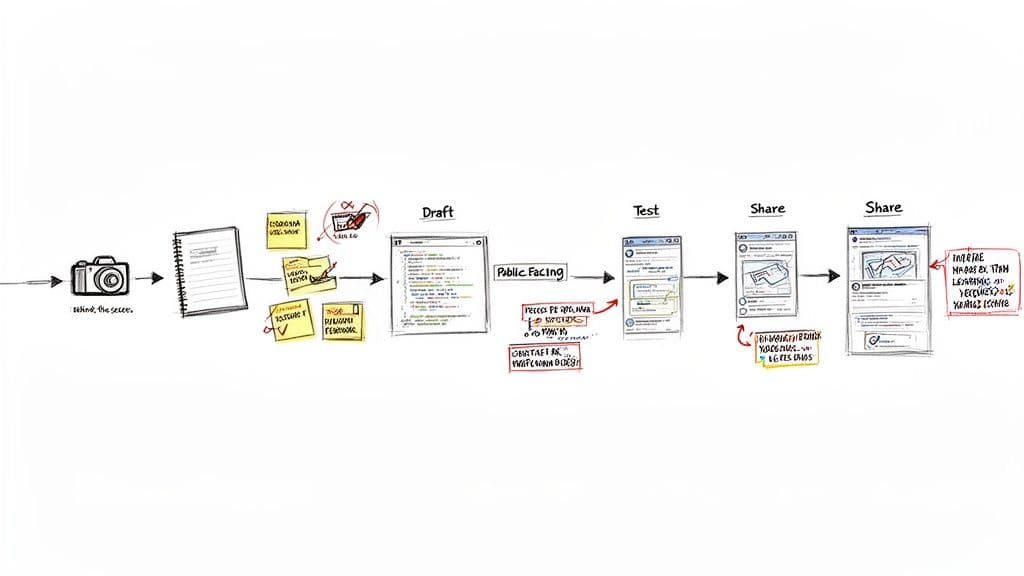
Transforming internal processes into public narratives is one of the most authentic content repurposing strategies available. This technique involves taking behind-the-scenes content, such as work-in-progress snapshots, internal memos, or decision-making frameworks, and turning them into compelling micro-stories. It humanizes your brand or personal journey by revealing the effort, challenges, and breakthroughs that happen off-stage.
The core idea is to "build in public" by repurposing the documentation you already create. A thread detailing the three-month process behind a pricing change or a post showing early, failed product designs builds trust and connection. This approach turns routine operational artifacts into valuable content that demonstrates transparency and expertise, resonating deeply with audiences who appreciate authenticity.
Actionable Implementation Steps
To effectively repurpose your internal processes, integrate documentation into your daily workflow rather than trying to recreate stories from memory.
- Document as You Go: Get in the habit of taking photos, screen recordings, or jotting down notes during key project phases. Capture the messy middle, not just the polished result. This creates a rich archive of raw material.
- Embrace Narrative Tension: Frame your content as a story. Show the struggle, the pivotal decisions, and the lessons learned. A post titled "We almost built it this way... here's why we pivoted" is far more engaging than a simple feature announcement.
- Reveal the Human Element: Share mistakes, doubts, and personal breakthroughs. This vulnerability makes you more relatable and trustworthy than a facade of perfection. Audiences connect with the journey, not just the destination.
- Create Themed Series: Turn recurring processes into a content series. For example, "Product Development Fridays" or a monthly "Growth Learnings" thread can build anticipation and create a consistent content pillar.
Indie hackers and startup founders in the "build in public" movement have mastered this. By sharing revenue dashboards, user feedback, and strategic pivots, they turn their business journey into an ongoing narrative that attracts loyal followers, customers, and advocates.
10. Audience Feedback and Comment Mining into Content
Audience Feedback and Comment Mining is one of the most powerful, data-driven content repurposing strategies available. This technique involves transforming audience questions, popular replies, and community feedback into dedicated posts and threads. Instead of guessing what your audience wants, you use their direct input to create content that is guaranteed to resonate.
The core idea is to treat your comments and replies section as a goldmine of proven content ideas. When multiple people ask the same question or a specific reply gets significant engagement, it signals a strong interest in that topic. Repurposing this feedback into a full-fledged post or educational thread directly addresses demonstrated audience demand, making your content inherently valuable and relevant.
Actionable Implementation Steps
To execute this strategy effectively, you need a systematic approach to monitoring and categorizing audience interactions. Start by dedicating a specific time each week to review your engagement.
- Isolate Recurring Themes: Sift through your replies, direct messages, and mentions to identify common questions or points of confusion. Tools can help you analyze comments at scale, but even a manual review will reveal patterns. If three people ask about your "morning routine," that's your next content piece.
- Frame as a Direct Response: Begin your post by acknowledging the source. Phrases like, "Many of you asked about X, so here's a detailed breakdown..." or "Based on your feedback from my last post..." immediately signal that you are listening and providing value.
- Tag and Credit Audience Members: When a specific question inspires a post, tag or credit the original commenter (with their permission). This builds strong community relationships, encourages future engagement, and shows that you value your audience's contributions.
- Track Performance and Iterate: Monitor which feedback-sourced posts perform best. This creates a powerful feedback loop. You'll not only validate individual content ideas but also identify broader topics your audience is passionate about, guiding your future content strategy.
Expert consultants and community-focused creators use this method to ensure their content calendar is always filled with topics their audience is eager to learn about. This turns your content creation from a monologue into a dialogue, fostering loyalty and growth. You can explore how a comments analyzer can streamline this process.
10-Strategy Content Repurposing Comparison
| Strategy | 🔄 Implementation Complexity | ⚡ Resource Requirements | ⭐📊 Expected Outcomes | 💡 Ideal Use Cases | ⭐ Key Advantages |
|---|---|---|---|---|---|
| Thread-to-Post Atomization | Medium — requires careful editing and platform tailoring 🔄 | Low–Medium — editing, scheduling tools ⚡ | Increased reach & posting frequency; improved algorithmic visibility ⭐📊 | Long-form threads repurposed across X, Bluesky, Mastodon 💡 | Maximizes output from one thread; cross-platform optimization ⭐ |
| Carousel-to-Caption Conversion | Medium — significant rewriting to translate visuals to text 🔄 | Medium — writing, narrative design, testing ⚡ | Good reach to text-first audiences; adds SEO value ⭐📊 | Creators turning Instagram/TikTok carousels into microblogs 💡 | Recovers visual content value; efficient repurposing ⭐ |
| Quote-Mining & Micro-Content Extraction | Low — extractable but needs attribution checks 🔄 | Low — minimal editing, scaling automation ⚡ | High volume of posts; drives traffic to originals ⭐📊 | Podcasters, bloggers, long-form creators seeking volume 💡 | Scales content output quickly; builds topical authority ⭐ |
| Platform-Native Format Optimization | High — ongoing platform expertise & tuning required 🔄 | Medium–High — time for tailoring and community mgmt ⚡ | Significantly improved engagement and authenticity ⭐📊 | Brands and multi-platform creators seeking native fit 💡 | Maximizes per-platform engagement vs identical cross-posting ⭐ |
| Question-Answer Threading | Medium — curate questions and craft narrative arcs 🔄 | Low–Medium — research and storytelling time ⚡ | High engagement; establishes topical authority ⭐📊 | Support teams, educators, founders building in public 💡 | Directly answers audience pain points; encourages replies ⭐ |
| Data Visualization → Data Narrative | High — translate visuals into clear, accurate prose 🔄 | Medium–High — writing skill + data checks ⚡ | Makes data accessible; increases searchability and insight impact ⭐📊 | Data journalists, analysts, B2B thought leaders 💡 | Preserves analytical rigor while broadening audience reach ⭐ |
| Evergreen Content Recycling | Low–Medium — identify evergreen pieces and schedule 🔄 | Low — calendar management and occasional updates ⚡ | Steady traffic and repeat ROI from existing content ⭐📊 | Course creators, educators, SaaS brands with timeless content 💡 | Maximizes ROI on high-effort content; reduces creation burden ⭐ |
| Debate / Perspective Splitting | Medium–High — requires balanced research and framing 🔄 | Medium — writing, moderation and curation ⚡ | Sparks nuanced discussion; builds reputation for depth ⭐📊 | Commentators, analysts, thought leaders exploring complexity 💡 | Produces multiple focused posts; fosters high-quality discourse ⭐ |
| Behind-the-Scenes & Process Documentation | Low–Medium — document workflows and craft narratives 🔄 | Low — ongoing documentation (photos, notes) ⚡ | Stronger audience connection and trust; multiple post opportunities ⭐📊 | Founders, indie creators, teams building in public 💡 | Humanizes brand; differentiates via transparency ⭐ |
| Audience Feedback & Comment Mining | Medium — monitor, synthesize, and surface themes 🔄 | Medium — community monitoring tools and time ⚡ | Highly relevant, audience-validated content; increased engagement ⭐📊 | Community managers, coaches, customer education teams 💡 | Produces audience-driven content; reduces guesswork and increases resonance ⭐ |
Build Your Content Engine, Not Just Another Post
The journey through these ten content repurposing strategies reveals a fundamental truth about modern digital marketing: sustainable growth isn't about creating more; it's about making more from what you create. The most successful creators, brands, and marketers on platforms like X, Bluesky, and Mastodon operate not as content creators, but as content engineers. They build systems, not just posts. This is the critical mindset shift that transforms sporadic effort into a consistent, powerful presence.
We've moved beyond the generic advice of "repost your blog." Instead, you now have a tactical playbook. You know how to atomize a long-form thread into a week's worth of high-impact micro-posts. You can convert a visual carousel into a compelling caption narrative. You have the tools to mine your own audience's comments and feedback, turning their engagement directly into your next valuable piece of content. Each strategy, from Quote-Mining to Data Visualization narratives, is a cog in a larger machine, your personal content engine.
From One-Off Posts to a Sustainable System
The core takeaway is to view every piece of content you produce as a source asset. An insightful comment, a successful thread, a detailed case study, or even a behind-the-scenes glimpse into your process is not an endpoint. It is the beginning of a dozen potential new conversations.
Consider the compounding effect:
- Leverage: One well-researched article or thread doesn't just provide value once. Through strategic repurposing, its core ideas can reach different segments of your audience in various formats over weeks or even months.
- Consistency: Burnout is the enemy of growth. A repurposing-first workflow ensures you always have a backlog of proven, high-quality material ready to be adapted, which is essential for maintaining a consistent posting schedule without constant pressure to innovate from scratch.
- Audience Resonance: By recycling evergreen content and splitting debates into multiple perspectives, you test which angles and formats resonate most deeply. This feedback loop refines your future original content, making it more effective from the start.
Mastering these content repurposing strategies is not just about saving time, though the efficiency gains are significant. It is about strategic amplification. It's about ensuring your best ideas get the visibility and engagement they deserve. It's about building an interconnected web of content where each piece supports and elevates the others, creating a richer, more cohesive experience for your followers.
Your Actionable Next Steps
Don't feel overwhelmed by the ten different methods. The goal is progress, not perfection. Start small and build momentum.
- Choose Your Entry Point: Pick just one strategy from this list that aligns with your existing content. If you just published a long thread, start with Thread-to-Post Atomization. If you have a data-rich report, try turning it into a Data Narrative.
- Schedule Your First Repurposed Post: Commit to it. Take that source content, apply the template, and schedule it. Use a tool to make this seamless. The act of doing it once will demystify the process.
- Analyze and Iterate: Once the repurposed content is live, watch the metrics. Did the quote-mined post get more likes? Did the atomized thread posts spark new conversations? Use this data to choose your next strategy.
By adopting this systematic approach, you stop participating in the content hamster wheel and start building a genuine asset. Your content library becomes a dynamic resource that works for you long after the initial creation effort. This is how you build a lasting brand and community, one strategically repurposed post at a time.
Ready to stop manually copying and pasting and start building your content engine? MicroPoster provides the unified content studio and intelligent automation you need to implement these content repurposing strategies seamlessly across X, Bluesky, and Mastodon. Plan, schedule, and amplify your best content with a workflow designed for efficiency and growth.
Discover how MicroPoster can streamline your content repurposing today.