crosspost
The Strategic Guide to Smart Crossposting
Learn to crosspost content with a purpose. Our guide covers proven strategies for X, Bluesky, and Mastodon to expand your reach without sacrificing engagement.

At its core, crossposting is the practice of publishing a single piece of content across multiple social media platforms. But it's more than just a copy-and-paste job. Think of it as the art of taking one core message and tailoring it to fit the unique audience and culture of each channel.
This approach lets creators and brands get the most out of their work, reaching a wider audience without having to reinvent the wheel for every single network they're on.
Understanding the Art of Effective Crossposting
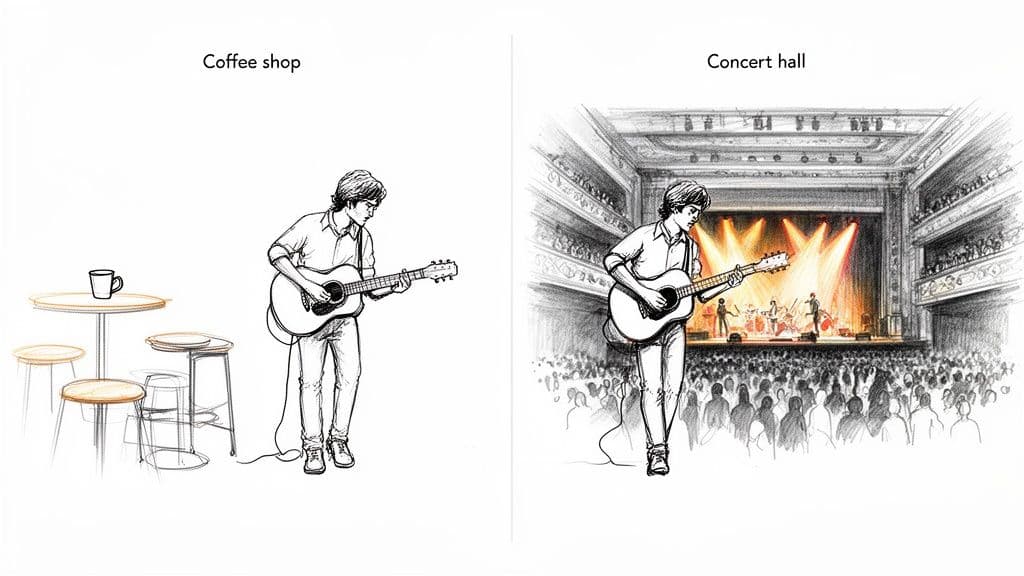
Imagine a musician playing the same song in two totally different venues—first in a quiet, intimate coffee shop and then in a massive, roaring concert hall. The song itself doesn't change, but the performance absolutely has to. That's the perfect way to think about smart crossposting. It isn’t about robotic duplication; it’s about adapting your delivery to match the room.
This is a critical distinction for anyone trying to juggle multiple social media accounts. Simply blasting the exact same post everywhere often feels lazy or out of place, and it can turn off audiences who expect content that feels native to the platform they love.
Maximizing Impact with Less Effort
The biggest win with a good crossposting strategy is efficiency. It allows you to connect with different segments of your audience without burning yourself out by creating endless new content. Instead of starting from scratch every time, you get to focus on refining one solid idea and making it shine in multiple places.
When you get it right, a repetitive chore turns into a powerful tool for growth. You’re staying present and relevant everywhere your audience hangs out, but without tripling your workload.
Crossposting is more than a time-saver; it's a strategic amplifier. It ensures your core message reaches the widest possible audience by speaking the unique language of each platform.
A Modern Necessity for Creators
The pressure to be everywhere at once has never been higher. Today's creators spend an average of 19 hours a week managing their content across roughly seven different networks. This grind is only getting more intense with the rise of new platforms like Threads, which exploded to 100 million users in just five days, largely because its tight integration with Instagram made crossposting a breeze.
To really get a handle on this, it's helpful to see it as part of a bigger picture. Diving into some smart content repurposing strategies can help you maximize the reach of everything you create. By building a thoughtful crossposting workflow, you can maintain a strong, consistent presence everywhere that matters.
Weighing the Benefits and Risks of Crossposting
Deciding whether to crosspost isn't just a tactical choice; it's a strategic one. It's a bit like being a musician who can play in different venues. You can play the same core song, but a great performer knows you don't play a coffee house the same way you play a rock stadium. The song has to fit the room.
At its heart, a smart crossposting strategy is about understanding this dual nature. It’s an incredible tool for growth, but its success hinges entirely on how you use it. When you get it right, the advantages are massive and can seriously amplify your message.
The most obvious win is saving a ton of time and creative energy. Let's be real, brainstorming unique ideas for every single platform is exhausting. Crossposting lets you pour your effort into one fantastic piece of content and then adapt it, helping you stay active everywhere without hitting a wall.
It also keeps your brand message tight and coherent. When you share a core idea across your channels, you’re building a consistent identity. People start to recognize what you’re about, making your brand stick in their minds, no matter where they find you.
The Benefits of a Smart Crosspost Strategy
When you approach it thoughtfully, the upsides are pretty compelling. It’s all about working smarter, not harder, to get your message in front of more people.
- Increased Reach: This is the big one. You instantly get your content in front of different crowds, reaching people who might hang out on Bluesky but not on X.
- Time Efficiency: You can dramatically slash your content creation time. One core idea gets repurposed, freeing you up for other things.
- Consistent Brand Messaging: A unified voice across all platforms builds a much stronger and more memorable brand.
- Audience Growth: Being active where different communities gather naturally creates more pathways for people to discover you and hit that follow button.
The Risks of a Poor Crosspost Strategy
On the flip side, a lazy, copy-paste crossposting approach can backfire spectacularly. The danger isn't the act of crossposting itself but the "one-size-fits-all" mindset that often comes with it. Ignoring the unique culture and unwritten rules of each platform is the quickest way to turn people off.
The biggest mistake in crossposting is treating every platform like a megaphone for the exact same message. True engagement comes from joining the conversation, not just broadcasting to it.
If you don't tweak your content, your posts can feel robotic and out of touch. This leads to what I call "crosspost fatigue"—your audience gets bored seeing the exact same post everywhere and starts to tune you out or, worse, unfollow. Forgetting to use platform-specific tools, like content warnings on Mastodon or getting the character count wrong on X, just signals that you don't really care about the community you're posting in.
To make the decision clearer, let's break it down side-by-side.
Crossposting Strategy Weigh-In Pros vs Cons
Here’s a direct comparison of the benefits you stand to gain against the potential risks you need to manage.
| Benefit (The Upside) | Risk (The Downside) |
|---|---|
| Reach new and diverse audiences. | Appear spammy by ignoring platform norms. |
| Save significant time on content creation. | Cause audience fatigue with repetitive posts. |
| Maintain a strong, consistent brand voice. | Seem disengaged or automated. |
| Test content performance across platforms. | Alienate communities with mismatched content. |
Seeing it laid out like this makes one thing clear: these risks aren't set in stone. They're just common mistakes, and they are entirely preventable. By understanding them from the get-go, you can design a workflow that reaps all the rewards while sidestepping the classic blunders.
Navigating Different Platform Cultures
Think of yourself as a traveler visiting different countries. You wouldn't use the same language or follow the same customs in Tokyo as you would in Paris. Social platforms are exactly the same—each has its own unique culture, unspoken rules, and audience expectations. A post that performs brilliantly on one network can completely flop on another if you don't adapt it.
This isn't just about avoiding a social media faux pas; it's about unlocking serious growth. The data is clear: consistent, platform-aware crossposting is a game-changer. Creators who posted across different platforms for over 20 weeks saw an incredible 450% more engagement per post than those who only did so for a month. You can explore the full creator growth playbook from Buffer to dig into the numbers. It’s solid proof that learning to respect each platform's culture pays off in a big way.
The High-Speed World of X
X (what we used to call Twitter) is a chaotic, bustling city square. It’s loud, incredibly fast-paced, and built for breaking news, sharp commentary, and things going viral in a heartbeat.
- Concise Hooks are King: You have just a couple of seconds to get someone to stop scrolling. Start with your most powerful statement or a question that piques curiosity.
- Hashtags Drive Discovery: A smart mix of popular and niche hashtags is your ticket to getting seen by new people, especially during live events or trending topics.
- Threads for Depth: When you have more to say, use threads. They break down complex ideas into bite-sized, numbered chunks that guide people through your story.
On X, your content has to be sharp, timely, and designed for someone who is moving fast.
The Community Vibe on Bluesky
Bluesky feels more like a relaxed neighborhood get-together. The whole atmosphere is more conversational and community-focused, far from the frantic pace of a global news feed.
Here, it's less about broadcasting a message and more about actually joining a conversation. A hard-sell or overly corporate post will likely get you ignored. Instead, try sharing your behind-the-scenes process, asking genuine questions, and taking the time to write thoughtful replies. Your most valuable assets here are authenticity and a real, human voice.
Think of it this way: On X, you’re on a stage with a microphone. On Bluesky, you’re sitting around a table with friends. Adjust your communication style accordingly.
The Thoughtful Federation of Mastodon
Mastodon is a different beast altogether. It's not one single website but a "federation" of thousands of independent communities, known as "instances," each with its own specific rules and moderators.
The culture here is deeply rooted in principles of accessibility, consent, and being deliberate with your communication.
- Content Warnings (CWs) are Essential: People use CWs for sensitive topics, spoilers, or even just long posts to give others control over what they see in their feed. It's considered good etiquette.
- Alt Text is a Must: The community takes accessibility very seriously. You should always add descriptive alt text to your images so everyone can participate.
- Engagement is Earned: Blatantly promotional posts are generally not well-received. You build trust by contributing to discussions and sharing useful insights first.
Juggling all these different styles can feel like a lot, which is why figuring out how to manage multiple social media accounts is a critical skill for anyone who wants to crosspost effectively and respectfully.
Common Crossposting Mistakes to Avoid
Even the best content can completely miss the mark if you share it the wrong way. A solid crossposting strategy isn't just about making great stuff; it's about sidestepping the common traps that make brands look careless or out of touch.
The biggest mistake? The classic copy-and-paste. Blasting the exact same message across every platform ignores what makes each one unique. This one-size-fits-all approach is a fast track to low engagement and will tire out your audience in no time.
Forgetting Platform Nuances
Every social network has its own vibe and unwritten rules. Ignoring them is like showing up to a dinner party in swim trunks—it tells everyone you don't really get it.
- Ignoring Content Warnings: On Mastodon, not using a Content Warning (CW) for sensitive topics or even just a very long post is considered bad form. It shows a lack of respect for how people use their feeds.
- Tagging Non-Existent Handles: Trying to tag an X handle on Bluesky (or the other way around) just looks sloppy. It's a dead giveaway that you're not paying attention.
- Using Incorrect Image Dimensions: That perfectly crafted image on one platform can get awkwardly cropped on another, instantly making your post look amateurish and killing its visual appeal.
This little map breaks down the core cultural differences you need to keep in your back pocket.
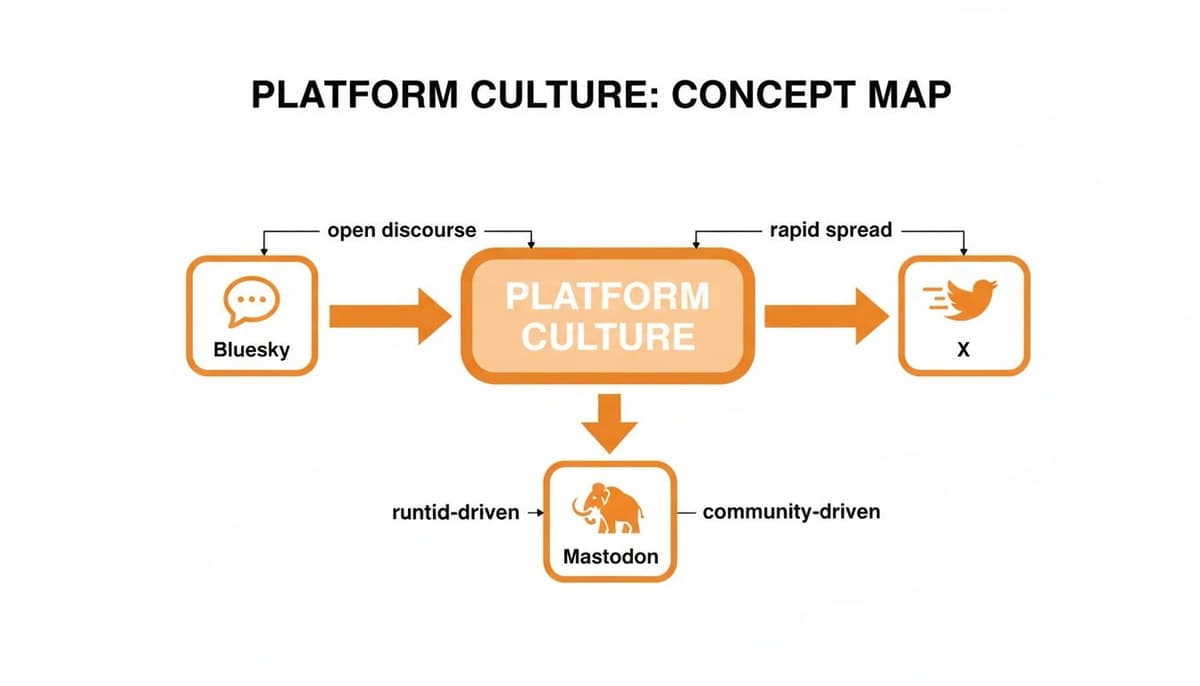
As you can see, X is all about speed, Bluesky thrives on conversation, and Mastodon is built for more deliberate community building. Each one demands a slightly different touch.
The Pitfalls of Identical Content
It’s tempting to save time by posting the same thing everywhere, but that efficiency often comes at a cost. With brands publishing an average of 9.5 posts per day, just pumping up the volume doesn't work. In fact, it can train platform algorithms to ignore you.
When your visuals and captions are identical everywhere, you're missing the chance to connect with the unique audiences on each network. If you're curious about what else might be holding you back, you can learn more about outdated social media practices on StoryChief.
The goal of a crosspost isn't just to broadcast your message everywhere. It's to start a meaningful conversation in each specific community.
In the end, it all comes down to being intentional. Taking a few extra seconds to tweak a post for each platform is the difference between shouting into the void and actually connecting with people. By understanding these blunders, you can build a workflow that makes sure your content always hits the mark.
How to Streamline Your Crossposting Workflow
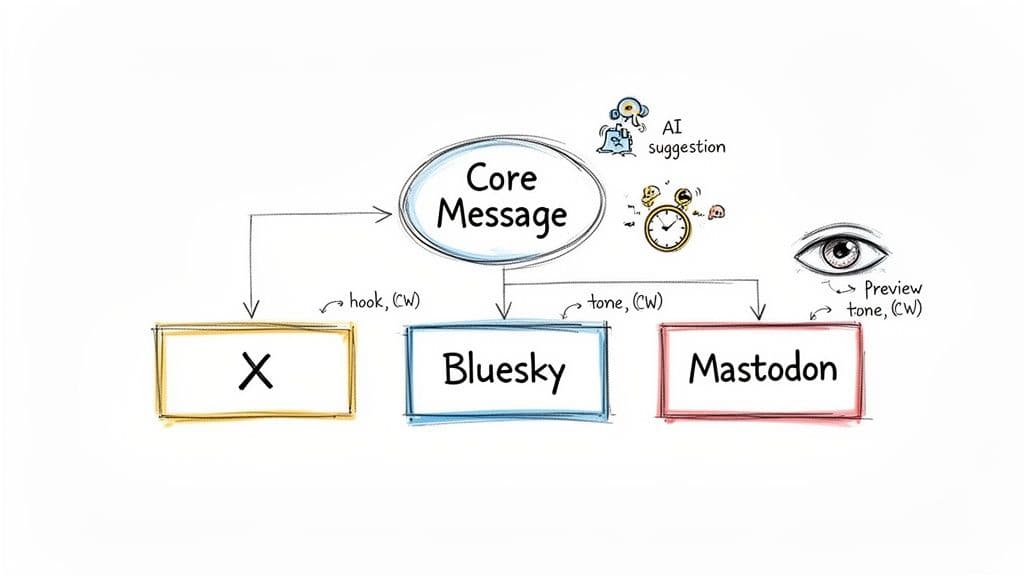
This visual shows the modern way to think about crossposting: one core idea gets intelligently adapted for each platform, with AI suggestions and live previews guiding the way. It’s less about brute-force repetition and more about smart, efficient adaptation.
Knowing the what and why of crossposting is great, but the how is where most people get stuck. Putting all this theory into practice without it becoming a full-time job is the real goal. A modern crosspost workflow isn't just about copying and pasting; it’s about smart adaptation. This is exactly where a dedicated tool like MicroPoster steps in, closing the gap between a brilliant idea and getting it out there perfectly on every platform.
It all starts with your core message, which you’ll draft in a central content editor. Think of this as your source of truth. Before you even think about other platforms, you get to nail down the main point here first.
From Core Message to Tailored Posts
With your central idea locked in, the fun begins. A smart workflow helps you tweak that message for each social network’s unique vibe, all from one screen.
- Platform-Specific Previews: You can see exactly how your post will look on X, Bluesky, and Mastodon in real-time. This is huge for catching weird formatting or character limit problems before hitting "publish."
- Automatic Reformatting: Forget fiddling with line breaks or stripping out unsupported features for each platform. The right tool handles the tedious reformatting automatically, making sure your post fits the rules of each network.
- AI-Powered Enhancements: Feeling stuck? Get suggestions for a punchier hook, better hashtags, or a slightly different tone. This lets you quickly adapt the message without having to completely rewrite it from scratch.
This whole process turns a chore into a few quick clicks. The end result is content that feels like it was born on the platform where it's posted.
A great crossposting workflow doesn't just save time—it improves quality. By removing friction, it frees you to focus on strategic adaptation rather than repetitive manual tasks.
Beyond Drafting to Smart Distribution
An efficient workflow doesn't stop at writing the post. It also needs to cover smart scheduling and analysis. You can set each tailored post to publish at the best time for its specific audience, giving it the best possible shot at getting seen. No more guessing when your followers are online.
Finally, you can track performance across all your channels from a single dashboard. This shows you what’s working and where, giving you the insights needed to get better over time. The idea is to swap a time-consuming manual process for an efficient, data-driven system. When you learn how to crosspost automatically with the right setup, you reclaim hours of your time while actually boosting your content's reach and impact.
Your Crossposting Questions, Answered
Even with the best strategy in hand, you're bound to run into questions once you start crossposting. Let's tackle some of the most common ones that pop up, so you can move forward with confidence and sidestep those typical beginner mistakes.
How Often Should I Be Crossposting?
This is the classic "it depends" question, but for good reason. The right frequency comes down to your platforms, your audience, and—most importantly—how much genuinely good content you can create. There’s no golden number.
Instead of chasing a specific post count, aim for consistency. It’s a million times better to share one thoughtful, well-adapted post every day than to blast out five identical, low-effort posts that just add to the noise. Your analytics are your best friend here. If you see engagement tanking on a platform, you might be overdoing it for that particular crowd.
Is Crossposting Going to Wreck My SEO?
This is a huge concern, especially if you're repurposing blog content on sites like Medium or Substack. The fear is duplicate content, which is when search engines find the same text in multiple places and get confused about which one to rank.
Luckily, this is rarely an issue for social media posts, since Google doesn't index them like a blog article. For longer articles, there's a simple fix: the canonical tag.
A canonical tag (
rel="canonical") is a little snippet of HTML code that points search engines back to the "master" version of your content. It’s like saying, "Hey Google, all these copies are just that—copies. This is the original one that deserves all the credit."
Many platforms, like Medium, are smart enough to add this tag automatically when you import a post from your blog. On others, it might take a bit more work, but the risk is generally minimal as long as your own website is the clear home base for your content.
Is It Okay to Post the Same Thing Everywhere at the Same Time?
Please don't. This is probably the single biggest mistake people make with crossposting. The efficiency of hitting "publish everywhere" at once is tempting, I get it, but it's a shortcut that backfires.
Think about it: your audience on X might be most active during their morning commute, while your Bluesky followers are scrolling after dinner. Staggering your posts to hit each platform's peak engagement window gives your content its best shot at being seen. And, as we've already covered, you should be tweaking the content itself to feel native to each platform, not just copy-pasting.
How Do I Know if My Crossposting Is Actually Working?
Success is about more than just likes. To get a real sense of what's working, you need to look at how your content performs on each network and then zoom out to see the whole picture.
A dedicated tool can give you a single dashboard for this, but you can also track it yourself. Keep an eye on:
- Platform-Specific Engagement: Don't just look at raw numbers. Compare the engagement rate (likes, replies, and shares divided by your follower count) for the same piece of content across X, Bluesky, and Mastodon. Where is it really hitting home?
- Click-Through Rates (CTR): If you're sharing a link, which platform is sending the most traffic? This tells you which audience is most motivated to take action.
- Audience Growth: Is your strategy leading to a steady increase in followers on all your platforms? If one is lagging, it might be time to rethink your approach there.
- Qualitative Feedback: Read the replies! Are people starting conversations? Asking smart questions? This is where you find the context that the numbers can't give you.
By digging into these data points, you'll start seeing patterns. Maybe you'll find that your deep-dive technical threads are a huge hit on Mastodon but get ignored on X. That's not a failure—it's valuable intel you can use to make your content distribution even smarter.
Ready to stop juggling tabs and start building a smarter, more efficient workflow? MicroPoster gives you the tools to write once and publish everywhere with confidence. Streamline your content creation, schedule posts for the perfect time, and watch your audience grow across X, Bluesky, and Mastodon. Start your free trial at https://microposter.so today.