
Let's be honest, the term "Twitter automation" can sound a little...robotic. Many people immediately picture spam bots flooding timelines with generic, soulless content. But that's not what we're talking about here.
Smart Twitter automation is something else entirely. Think of it less as a robot and more as a highly efficient personal assistant for your content strategy. It’s about using technology to handle the repetitive, time-consuming tasks so you can focus on what actually matters: creating great content and having real conversations.
What Is Smart Twitter Automation?
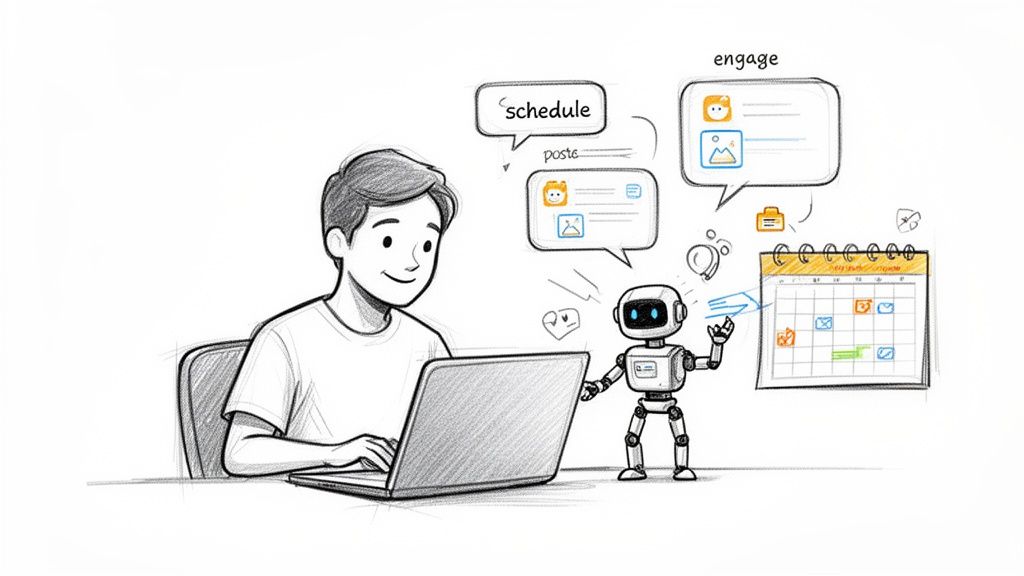
At its heart, smart automation is a strategic system for managing your presence on X (formerly Twitter) with consistency and quality. Instead of manually posting every single tweet in real-time, you build a reliable content pipeline that works for you around the clock.
This isn't about "set it and forget it." It’s about thoughtfully planning and scheduling your best ideas to maintain an active, engaging profile, even when you’re busy with other things.
The Real Goal: Freeing Up Your Time
The point of automation isn't to fake engagement or replace genuine human interaction. Quite the opposite. The goal is to delegate the grunt work so you have more time for the high-value activities that drive organic growth.
This means you can focus on:
- Meaningful Conversations: Jumping into discussions, thoughtfully replying to comments, and building real relationships with your audience.
- High-Quality Content Creation: Spending your creative energy crafting insightful threads and valuable posts that people actually want to read.
- Strategic Planning: Analyzing what’s working, understanding your audience, and refining your content plan for the future.
The scale of automation on the platform is massive. An incredible 66% of all tweets on X are generated by bots. With over 500 million tweets sent daily, that means around 330 million are automated. This shows just how central automation has become to modern communication and marketing strategies. You can find more fascinating X marketing statistics over at BrentonWay.com.
To really grasp the difference, let’s quickly compare the old way of doing things with a smarter, automated approach.
Manual Tweeting vs Smart Automation
This table breaks down the core differences between a purely manual approach and what strategic automation can offer.
| Aspect | Manual Approach | Smart Automation Approach |
|---|---|---|
| Consistency | Inconsistent posting, dependent on your daily schedule and energy levels. | Consistent presence with pre-scheduled content, even when you're offline. |
| Time Investment | High daily time commitment for posting, monitoring, and planning. | Minimal daily time for management; more time for creation and engagement. |
| Content Strategy | Often reactive and spontaneous, making long-term planning difficult. | Proactive and strategic, allowing for content batching and evergreen recycling. |
| Burnout Risk | High. The pressure to "be always on" can quickly lead to creative fatigue. | Low. The system handles the repetitive work, preventing burnout. |
As you can see, smart automation isn't a shortcut to success; it's a more sustainable path.
Your Growth Partner, Not a Replacement
On a fast-paced platform like X, consistency is king. When your followers know they can expect regular, high-value content from you, they're far more likely to stick around, engage, and even recommend your profile to others.
At its best, Twitter automation isn't about faking activity. It's about creating a reliable engine for your content strategy, ensuring your voice is heard consistently without leading to creative burnout.
This perspective shifts automation from a simple tool into a powerful partner. It helps you post when your audience is most active, gives new life to your best evergreen content, and keeps your profile from going dark. Ultimately, it’s about working smarter—not harder—to build a genuine, sustainable presence that attracts a loyal following.
How to Automate on X Without Getting Your Account Banned
Jumping into Twitter automation without knowing the rules is a recipe for disaster. Think of it like this: X (formerly Twitter) is totally fine with automation that makes the platform better for users, but it has zero tolerance for anything that feels like spam or manipulation. The whole game is about understanding where that line is drawn.
At its core, X wants the platform to feel like a place for real human connection. So, any automation that helps you be a more consistent, responsive part of the conversation is generally good to go. But if your goal is just to pump up your numbers with fake engagement or blast out spammy messages, you're going to get flagged, and fast. The platform is built to protect its users from that kind of inauthentic noise.
This means tools for scheduling content, managing replies in a thoughtful way, and tracking your performance are all perfectly safe. They're part of a solid content strategy. It's the aggressive, impersonal, and deceptive stuff that will land you in hot water.
Green Flags: Automation X Approves Of
To stay in the clear, you want to focus on automating tasks that make your presence better without tricking the system or annoying people. These aren't just safe; they’re what savvy creators use to build a professional, consistent account.
Here are a few examples of automation that X is perfectly happy with:
- Scheduling Your Content: This is the bread and butter of safe automation. Planning and scheduling tweets and threads ahead of time keeps your feed active even when you’re not. It’s a lifesaver for staying consistent.
- Recycling Your Greatest Hits: Got a post that did really well? Automatically re-sharing your best-performing evergreen content is a smart move. It extends the life of your work and gets it in front of a whole new wave of followers.
- Simple Welcome Messages: A simple, non-salesy auto-reply to a new follower or a mention can be fine, as long as you do it right. Something like, "Hey, thanks for the follow! Glad to have you here," works well. It's a nice touch that doesn't feel robotic.
These are the kinds of activities that help you work smarter, not harder, all while playing by the rules.
Red Flags: The Fast Track to Suspension
On the other side of the coin are the tactics that X’s policies strictly forbid. These are the things that look and feel like spam, and they're the quickest way to get your account restricted or shut down for good. Your Twitter automation strategy has to steer clear of these, no exceptions.
A simple rule of thumb: If your automation is genuinely meant to help people find good content or have a real conversation, you’re probably safe. If it’s designed for aggressive growth at the expense of the user experience, you’re breaking the rules.
Here’s exactly what you need to avoid:
- Aggressive Following/Unfollowing: We’ve all seen it. Using a tool to mass-follow hundreds of accounts, only to unfollow anyone who doesn’t follow back. This is "follow churn," a classic spam signal that the algorithm is designed to catch and punish.
- Posting Duplicate Content: You absolutely cannot post the exact same tweet across a bunch of different accounts you own. The same goes for posting identical or "substantially similar" content over and over on one account. It’s a clear violation.
- Spammy Auto-Replies: This is a big one. Never automate replies with promotional links or unsolicited sales pitches. For example, setting up a bot to automatically reply to every tweet with a certain hashtag and a link to your product is a surefire way to get suspended.
- Automated Likes and Retweets: Using scripts or bots to automatically like or retweet a massive number of posts is considered platform manipulation. It's an attempt to fake influence, and X does not allow it.
Understanding this difference is everything. It allows you to build a powerful automation system that actually grows your account without ever putting it at risk.
Key Automation Workflows for Consistent Growth
Knowing the rules of Twitter automation is one thing, but actually putting them to work is what gets you results. This is where we shift from theory to practice and look at the exact workflows that successful creators use to build an engaging presence that feels consistent and reliable. Think of these automated systems as the engine quietly running your content strategy, saving you a ton of time.
These workflows aren't about faking engagement or being robotic. They're about building a smart, strategic content pipeline. When you automate the repetitive stuff—like hitting "post" at a specific time—you free up your mental space to focus on what really matters: creating original, high-value content and actually talking to your community.
And let's be real, this approach is quickly becoming standard. The use of automation and AI by social media marketers has jumped by nearly 180% since 2023, fundamentally changing how X strategies are built. It just makes sense. On a platform where ads can pull a 0.86% click-through rate—beating both LinkedIn and YouTube—and deliver a $2.70 ROI for every dollar spent, you need to be efficient. For anyone serious about growth, tools that help draft, schedule, and publish are no longer a "nice-to-have." You can dig into more of this data in Hootsuite's comprehensive social media statistics report.
Content Scheduling for a Constant Presence
The most basic and essential automation workflow is content scheduling. It’s as simple as it sounds: you prepare your tweets and threads ahead of time and tell your tool when to publish them. This is the absolute foundation of a consistent presence, making sure your account stays active even when you’re not.
Picture this: you have a burst of inspiration on a Sunday afternoon and crank out ten brilliant post ideas. Instead of just dumping them all at once and then going silent for days, you can schedule them to roll out all week long. This keeps your audience engaged with a steady drip of content, ensuring you stay on their radar without being glued to your phone.
The diagram below really nails the core principles of doing this safely and effectively.
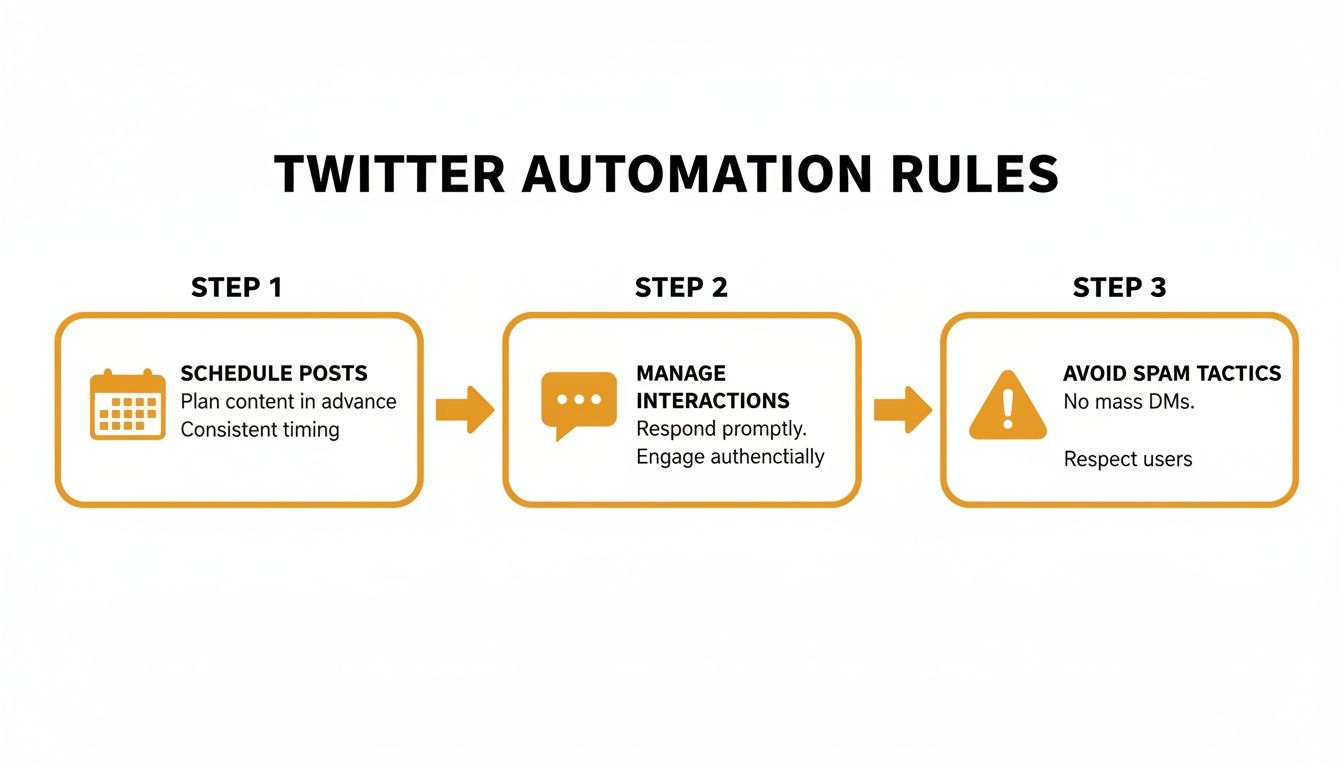
As you can see, it all starts with scheduling great content. That foundation frees you up to manage interactions meaningfully while staying far away from spammy tactics that can get your account flagged.
Auto-Publishing Evergreen Content
Not every tweet is a one-and-done deal. Evergreen content is your collection of timeless, high-value posts—the stuff that’s just as useful today as it will be in six months. It might be a killer thread breaking down a key concept in your niche or a single tweet with a piece of advice that always hits home.
Setting up an automation to re-publish this content is a massive growth hack. It gives your best work a second, third, or even fourth chance to connect with new followers who missed it the first time around.
An evergreen workflow is like having a "greatest hits" playlist for your profile. It automatically recycles your most impactful content, ensuring your best ideas are always in rotation and reaching a wider audience over time.
For instance, a tool like MicroPoster can be set up to periodically grab a post from a pre-approved library of your top performers and share it again. This simple workflow provides incredible value without you having to lift a finger to create something new, squeezing every last drop of ROI from your best ideas.
Thread Automation for Deeper Storytelling
On X, threads are king for telling a detailed story, sharing a deep insight, or breaking down a complicated topic. But let’s be honest, manually posting a long thread in real-time is a pain. It's clunky and super easy to mess up.
Thread automation is the answer. It lets you write and schedule multi-part stories that go live at the perfect time. This workflow makes sure your entire narrative unfolds smoothly, with each tweet posting at just the right interval to build momentum and keep people hooked.
Here’s a quick look at how it works:
- Drafting: You write out the whole thread in one go, using a single editor to organize your points from the opening hook to the final takeaway.
- Scheduling: You just pick the date and time for the first tweet of the thread to be published.
- Publishing: The tool takes it from there, automatically posting each part of the thread in the right order, with whatever delay you’ve set between each one.
This process turns a high-effort, high-reward format into something totally manageable. It's a game-changer for product launches, case studies, or educational mini-courses. If you want to get into the nitty-gritty of setting this up, take a look at our guide on how to automate social media posts. Once you get these key workflows down, you’ll be on your way to building a powerful and efficient presence on X.
Working With the X Algorithm, Not Against It
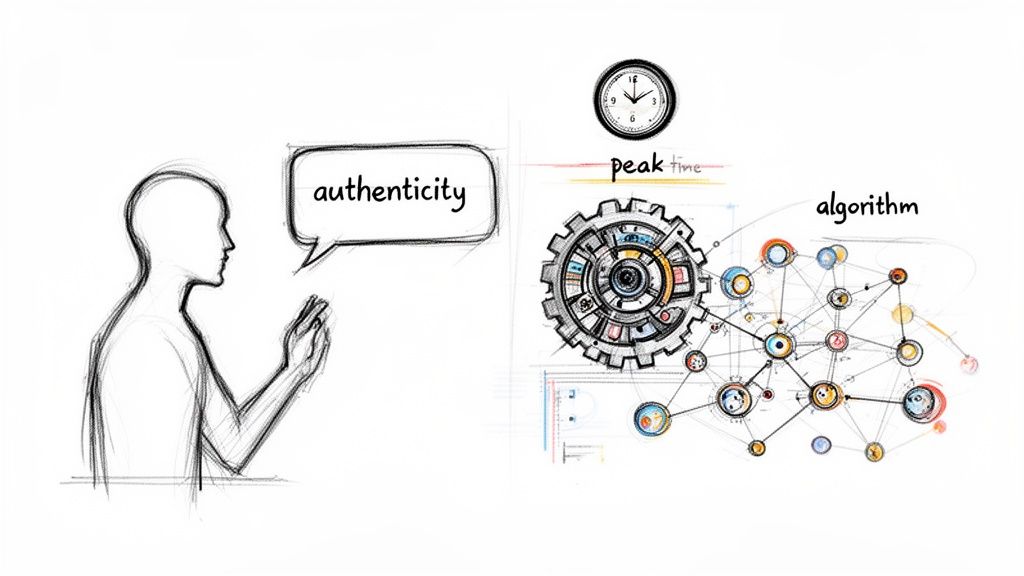
One of the biggest myths I see holding creators back is the idea that automation is the enemy of authenticity. It’s just not true. When you use Twitter automation smartly, it becomes one of your most powerful tools for working with the X algorithm.
Think about it: the algorithm isn't some mysterious force working against you. It's a system designed to reward what people actually want to see. By using automation to show up consistently with great content and engage when it matters most, you're giving the algorithm exactly the signals it's looking for. You’re making technology an ally in being a more reliable and interesting voice on the platform.
Feeding the Algorithm What It Wants
The X algorithm is always learning what makes users stop scrolling. It’s hunting for specific signals to decide which posts to show more people and which ones to let fade away. The good news is that these signals are perfectly aligned with what smart automation helps you do.
Here’s what the algorithm really cares about:
- Consistency: The algorithm loves accounts that contribute to the conversation regularly. Showing up every day keeps you relevant in its eyes.
- Timeliness: Dropping a tweet when your audience is actually online is a game-changer. That initial burst of likes and replies signals to the algorithm that this post is worth showing to more people.
- Engagement Quality: It’s not just about the number of likes. A reply is worth more than a retweet, which is worth more than a like. Content that gets people talking is king.
Tools like MicroPoster are built to help you master all three. You can schedule content to build that consistent rhythm, use data to nail your posting times, and free up your mind to focus on what really matters: creating content that sparks genuine conversation.
The Power of Human-Centric Automation
This brings us to a really important idea: human-centric automation. This isn’t about letting a robot run your account. It’s about using technology to handle the boring, repetitive tasks so your authentic voice can come through louder and clearer.
Think of it like a musician using a metronome. The tool keeps a steady beat, but the soul and creativity come from the musician. Automation provides the rhythm; you provide the authenticity.
The scale of X is mind-boggling. The algorithm makes around five billion ranking decisions every single day, each taking just 1.5 seconds. With the platform’s average engagement rate sitting at a tiny 0.015%, you need a strategy to cut through the noise. The system is constantly calculating the probability of a reply or a retweet, prioritizing quality signals far more than your follower count. If you want to dive deeper into the nuts and bolts, you can explore detailed analyses of how the algorithm works over at TweetArchivist.com.
Blending Scheduled and Spontaneous Content
A truly great strategy is all about balance. You can't automate everything, but you also can't be online 24/7. The sweet spot is a hybrid approach that combines the reliability of scheduled posts with the vibrant energy of live, in-the-moment engagement.
Here's how to put that into practice:
- Automate Your Foundation (The 80%): Use your automation tool to schedule the backbone of your content. This is for your planned threads, evergreen insights, and daily value-packed tweets. This creates the consistency that the algorithm loves.
- Engage in Real-Time (The 20%): Take the time you've saved and pour it into live interaction. Jump on trending topics, write thoughtful replies to comments, and share those random, off-the-cuff thoughts. This is where you build a real community.
This 80/20 mix gives you the best of both worlds. The algorithm sees your consistent output, and your followers feel a genuine connection because you’re there interacting with them. Suddenly, Twitter automation isn’t just a scheduler—it’s a core part of how you build real, lasting relationships.
Choosing The Right Twitter Automation Tool
Let's be clear: not all Twitter automation tools are built the same. When you start looking around, you'll find a massive spectrum of options, from simple schedulers that just post for you to full-blown microblogging suites.
Picking the right one is a big deal. The software you choose will make or break your ability to scale up your content and build a real, engaged community. A basic scheduler gets the job done, but if you're serious about organic growth, you need something designed for the unique rhythm of text-first platforms. The point isn't just to push out content—it's to create, sharpen, and publish it with purpose.
Beyond a Basic Scheduler
Think of a generic scheduler like a kitchen timer. It does one thing well. But a true microblogging suite is the entire kitchen—everything you need from prep to presentation, all in one seamless workflow.
This difference is everything. A more powerful tool doesn't just save you time on posting; it saves you time on the entire creative process, from the first spark of an idea to analyzing what worked. It helps you publish better content, faster.
The right tool doesn't just automate tasks; it elevates your entire content strategy. It should feel less like a utility and more like a creative partner that helps you refine your ideas and amplify your voice.
To get a sense of the broader market, you can look at roundups of social media automation tools, but for the focused work of microblogging, there are a few features you simply can't compromise on.
Essential Features For Organic Growth
As you weigh your options, look for a tool that goes way beyond just scheduling a post for tomorrow. A platform like MicroPoster is built from the ground up for creators who are all-in on building an authentic audience.
Keep an eye out for these core capabilities:
- A Unified Content Creator: You need a single editor where you can draft posts, build out threads, and even create polls without jumping between different apps or windows.
- AI-Powered Writing Assistants: The best tools now include AI that acts like a personal writing coach, helping you nail your hooks, improve clarity, and find relevant hashtags.
- Robust Analytics and Insights: Your tool absolutely must show you what's working and what isn't. Look for analytics that go beyond vanity metrics to track genuine engagement and pinpoint your top-performing content.
A great platform pulls all of this together, helping you create higher-quality content with far more consistency. For a much deeper look at what separates the good from the great, check out our comparison of the top Twitter automation tools.
Generic Scheduler vs Specialized Suite (like MicroPoster)
To really see what's at stake, it helps to compare a generic, all-purpose scheduler with a tool built specifically for this game. The gap in capabilities is often the difference between an account that's stuck and one that's growing every single day.
| Feature | Generic Scheduler | Specialized Suite (MicroPoster) |
|---|---|---|
| Content Creation | Basic text box, usually with character limits and zero formatting help. | Advanced editor with thread creation, virality scores, and AI suggestions. |
| Platform Focus | Spreads features thinly across many platforms (Instagram, Facebook, etc.). | Purpose-built for text-first networks like X, Bluesky, and Mastodon. |
| Automation | Simple scheduling and maybe some basic auto-replies. | Advanced workflows like evergreen content recycling and best-time-to-post suggestions. |
| Analytics | Surface-level metrics like likes and retweets. | In-depth engagement analysis, follower growth tracking, and content performance insights. |
Ultimately, choosing the right tool is an investment in your own growth. By opting for a specialized suite, you're not just automating posts—you're equipping yourself with a system designed to help you build a thriving, engaged community from the ground up.
Measuring Your Automation Success
So, you've set up a slick Twitter automation system. That’s a fantastic start, but it's really only half the job. The real test of any great strategy is the impact it makes. To figure out what's truly working, you have to look past the flashy vanity metrics and dig into the data that shows real, organic growth.
It’s tempting to get obsessed with follower counts and likes, but those numbers don't paint the full picture. A truly effective automation workflow does more than just inflate your stats; it builds a genuinely engaged, responsive, and valuable community around you. Your goal should be to let the data be your guide, making sure every automated post contributes to tangible results.
Key Performance Indicators That Actually Matter
Forget just tracking raw numbers. It's time to shift your focus to the metrics that reveal the true health of your account and the quality of your interactions. These are the Key Performance Indicators (KPIs) that tell you what’s really going on with your automation.
- Engagement Rate: This one is king. It's the percentage of your audience that actually interacts with your content. A high engagement rate is proof that your scheduled tweets are landing well and sparking real conversation, not just shouting into an empty room.
- Reply and Conversation Volume: Are your automated posts actually starting conversations? Keep an eye on the number of replies you get. This is a clear sign that your content is interesting enough to make people pause their scrolling and type out a thought.
- Follower Quality: Let's be honest, not all followers are created equal. Pay close attention to who is following you. Are they real people in your niche? Potential customers? Or just a bunch of bots? Quality will always beat quantity for long-term growth.
- Profile Visits and Link Clicks: If you're trying to drive traffic or establish yourself as an expert, these metrics are gold. They show that your automated content made someone curious enough to check out your profile or click through to your website.
The best automation strategies aren't set in stone; they're constantly refined by data. When you regularly review your analytics, you stop guessing what your audience wants and start giving them exactly what resonates. This creates a powerful cycle of growth.
A Simple Framework for Review and Refinement
Making sense of all this data requires a simple, repeatable process. The first step, of course, is knowing where to look. Learning how to see Twitter analytics is the foundation for tracking the performance of your automated tweets and your overall strategy.
Once you’re comfortable finding your data, block out some time each week to review it using this simple framework:
- Identify Top Performers: Find the scheduled tweets or threads that got the most engagement. What was it about them? The topic? The format? The hook?
- Analyze Underperformers: Now, look at the posts that flopped. Be honest about why. Was it bad timing, a boring topic, or a weak call to action?
- Adjust and Experiment: Take what you've learned and apply it to your upcoming content. Do more of what works, and don't be afraid to test new ideas based on your findings.
This simple feedback loop is what transforms your Twitter automation from a basic scheduling tool into a smart, data-driven engine for growth.
Got Questions About Twitter Automation? Let's Clear Things Up.
Even after laying out a solid plan, it's natural to have a few questions rolling around in your head before you jump into Twitter automation. Being cautious is a good thing—it means you're committed to doing this the right way. Let's tackle some of the most common concerns head-on and reinforce the safe, ethical approach we've been talking about.
My goal here is to make sure you feel completely confident in your automation workflow. Think of these tools as powerful partners for organic growth, not as risky shortcuts.
Can Twitter Automation Get My Account Suspended?
This is the big one, isn't it? The short answer is: only if you misuse it.
Let's be clear: Twitter’s rules aren’t against automation itself. They're against spam. The platform is on the lookout for aggressive, manipulative behavior—things like mass-following hundreds of accounts a day, spamming unsolicited replies with links, or blasting the same exact tweet across a dozen profiles. Those tactics ruin the experience for everyone and get flagged fast.
But using a trusted tool like MicroPoster for legitimate activities is completely safe. We're talking about things like:
- Scheduling your content so you can stay consistent.
- Publishing thoughtful threads that tell a complete story.
- Recycling your evergreen posts to get more eyes on your best stuff.
These actions are all about adding value and are well within platform guidelines. The whole point is to use automation to amplify your content strategy, not to cut corners or game the system.
How Much of My Twitter Activity Should Be Automated?
Finding that sweet spot between automation and genuine interaction is key. A great rule of thumb to follow is the 80/20 rule.
Aim to automate about 80% of your core content. This is your scheduled posts, your pre-planned threads, and the evergreen content that keeps your profile active and interesting. This is the foundation that ensures you have a consistent presence, even when you’re busy with other things.
The other 20% should be reserved for spontaneous, real-time engagement. This is where the human touch shines. Spend this time replying to comments, jumping into trending conversations, and sharing what’s on your mind right now. This hybrid approach gives you the efficiency of automation while keeping the authentic connection that truly builds a community.
Is Twitter Automation Only for Big Brands?
Not at all. Honestly, automation is often more valuable for solo creators, entrepreneurs, and small businesses.
If you're a one-person show or part of a small team, your time is your most valuable asset. Automation tools are the great equalizer. They let you build a professional, engaging presence that can compete with the big players, all without needing a full-time social media manager.
It's your best defense against burnout. It keeps your account active during launch weeks or vacations and frees up your mental space to focus on what really matters: creating incredible content.
Ready to build a powerful, consistent presence on X the smart way? MicroPoster gives you all the tools you need to schedule, analyze, and grow your audience with safe and effective automation. Start your free trial today and see the difference.