social network marketing tips
10 Social Network Marketing Tips for 2026
Upgrade your strategy with these 10 actionable social network marketing tips for 2026. Learn to automate, optimize, and grow your audience effortlessly.
Stop Guessing, Start Systemizing Your Social Media
Juggling multiple social networks feels like a full-time job. You're expected to be a writer, a designer, a community manager, and a data analyst, all while trying to build a business or brand. It's exhausting. But the brands and creators who keep growing usually aren't working harder on social. They're using tighter systems.
That matters more than ever now. Global social media ad spend is projected to reach $276.7 billion in 2025, and 83% of that total ad spend is projected to come from mobile devices by 2030, which makes mobile-first execution a practical requirement, not a design preference (global social ad spend and mobile share projections). People also spend an average of 151 minutes daily on social media and messaging apps, so your content has to fit into fast, distracted, phone-first sessions.
This guide focuses on social network marketing tips that work in real workflows. The aim isn't to turn you into a full-time marketer. It's to help you write once, adapt intelligently, publish consistently, and still have time left to run the rest of your business. If you also want a broader small-business playbook, this guide on how to boost engagement with social media tips complements the system approach well.
1. Master Content Batching and Scheduling Across Multiple Platforms
The fastest way to burn out is to treat every post like a fresh emergency. Batching fixes that. Sit down once, create a week's worth of posts in one focused session, then schedule distribution so your social presence keeps moving even when you're deep in product work, client work, or writing.
A simple rhythm works well. Draft several updates in one sitting, polish them while your voice is consistent, then queue them across the week. That separation between creation and distribution removes a lot of daily friction.
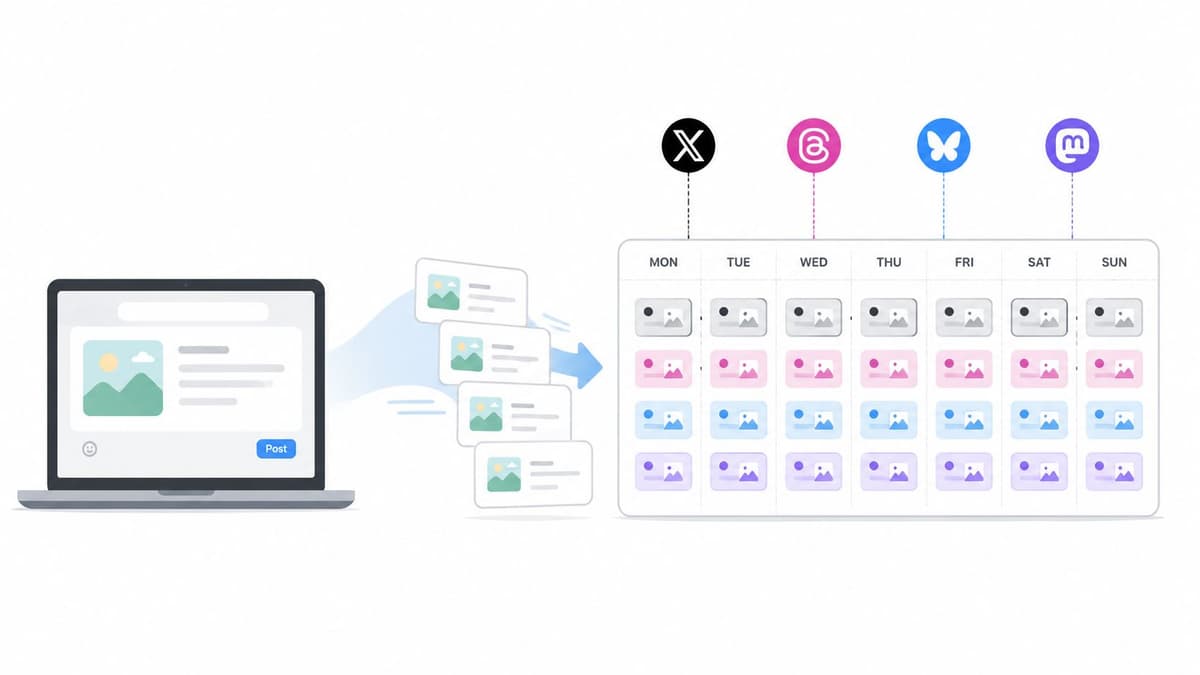
A weekly batching workflow that actually sticks
An indie hacker might batch product updates on Sunday, then schedule them for Monday, Wednesday, and Friday. A newsletter writer can turn one issue into several posts, then let a scheduler drip them out across X, Threads, Bluesky, and Mastodon.
If you already post primarily on one account, tools like MicroPoster make this easier. You can publish in your natural voice on the source platform, then let the tool mirror and adapt the post across text-first networks. If you want a clean overview of the method itself, MicroPoster's guide on content batching for social media is a useful starting point.
Practical rule: Batch when your brain is creative. Schedule when your brain is administrative.
A few habits make batching sustainable:
- Pick one creation block: Reserve one weekly session for drafting, not checking notifications.
- Choose a realistic cadence: Three strong posts spaced through the week usually beat rushed daily posting.
- Write naturally first: Don't over-edit for every network at draft time. Adaptation can happen later.
- Leave room for live posts: Keep your schedule flexible enough for timely reactions or launch-day news.
Later in the workflow, automation handles the boring part.
The hidden win is mental. Once your week is loaded, you stop asking “what should I post today?” and start focusing on better ideas.
2. Leverage Platform-Specific Content Optimization and Threading
Copy-pasting the same post everywhere looks efficient. It usually performs like a shortcut. Every network has different pacing, norms, link behavior, and tolerance for promotional formatting.
That matters because the average person uses about 6.83 different social networks each month, so a one-channel mindset leaves reach on the table and a one-format mindset creates awkward posts across several feeds. Good social network marketing tips don't just say “be everywhere.” They tell you to adapt the same core idea to each platform's culture.
Native-first beats identical posting
A product launch update might become a concise post on Threads, a threaded breakdown on X, and a more contextual version on Mastodon. The message stays the same. The packaging changes.
Platform-aware automation offers support. MicroPoster can split long updates into threads, map handles, resize media for native uploads, and keep the post readable in each environment instead of dumping one generic block of text everywhere.

There's also a trust angle. Sprout Social's 2025 data notes that 78% of users on emerging decentralized platforms like Mastodon actively distrust reposted content that lacks visual or tonal adaptation. That's why native mirroring matters. You don't want to look automated in the bad sense of the word.
Reposting saves time. Native adaptation preserves credibility.
A few practical adjustments help:
- Check thread breaks manually: Auto-threading is useful, but the post still needs to read like one argument.
- Tune hashtags per network: Hashtag density that feels normal on one platform can look spammy on another.
- Match the platform's tone: Threads often rewards conversational warmth. Mastodon often rewards context and less hype.
- Use native media sizing: Cropped images and broken previews damage otherwise good posts.
The goal isn't to become a different brand on every platform. It's to sound like the same person who understands where they're speaking.
3. Build Audience Insight Through AI-Powered Comment Analysis
Most creators overvalue the loud audience and ignore the quiet one. That's a mistake. Public comments are useful, but they don't capture the full picture of who's paying attention and what they care about.
HubSpot's 2025 Social Trends Report found that 65% of high-value conversions in network marketing come from people who never left a public comment but engaged through private DMs or silent content views. If you only optimize for visible reactions, you miss a large part of buying intent.
Use comments as signals, not just praise or criticism
Comment analysis works best when you treat it as research. Repeated questions reveal friction. Repeated phrasing reveals how your audience describes the problem. Repeated objections show you what future posts should answer before people ask.
A founder might notice that replies keep circling back to implementation details, not features. That's a cue to publish setup walkthroughs instead of another feature announcement. A writer might see readers repeatedly ask for templates, which means the audience wants applied help, not just ideas.
MicroPoster includes built-in AI comment analysis, which can make this review process faster across multiple posts. If you want to explore the workflow, MicroPoster's article on analyzing social media comments is worth reading.
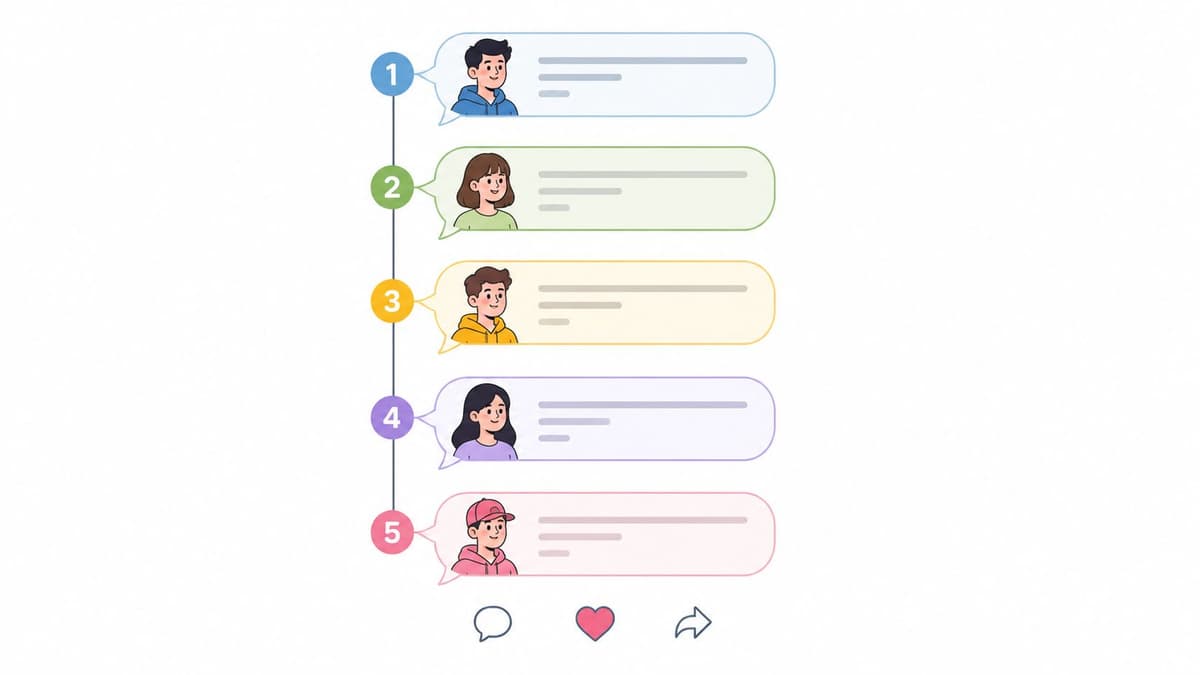
A clean process looks like this:
- Review patterns weekly: Don't inspect every reply in real time if that pulls you off schedule.
- Group by topic: Questions, objections, praise, and confusion each lead to different content.
- Track private signals too: DMs, profile visits, and repeat viewers often reveal stronger intent than comments.
- Feed the next batch: Turn recurring audience language directly into your next set of posts.
The best content strategy often starts in the replies, then gets validated in the inbox.
4. Optimize Posting Times Based on Audience Activity Data
Timing doesn't rescue weak content, but it can bury strong content. If you publish when your audience is asleep, in meetings, or overloaded, your best post can disappear before it gets any early traction.
I've observed a common tendency to rely on guesswork here. They post at whatever time they finish writing, then blame the topic when the result is flat. A better approach is to review your own history, identify when your audience engages, then schedule with intention.
Let data narrow the window
A founder with a mostly North American audience may find that product updates do better in the morning. A technical community manager may discover that Mastodon conversations pick up later in the day. A creator with readers across time zones may schedule the same core message at different windows across networks.
MicroPoster's built-in AI timing tools are useful for this because they remove some of the guesswork from scheduling. The key is to use the recommendation as a starting point, then compare it with your lived understanding of the audience.
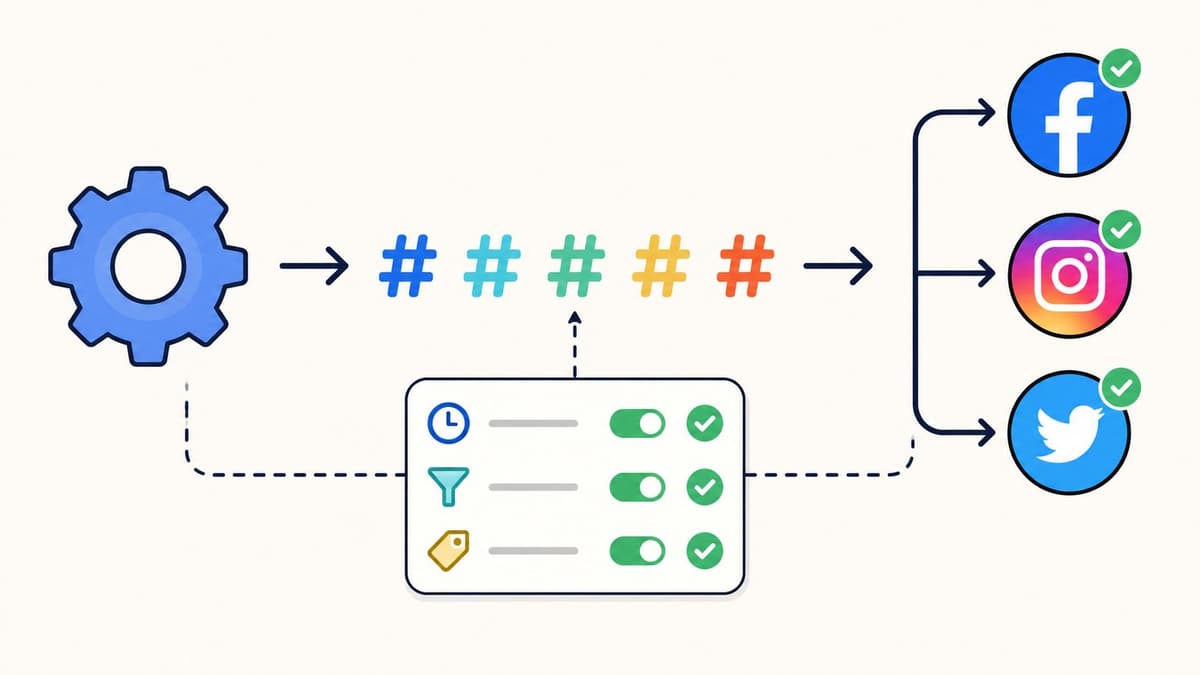
A timing system should stay simple:
- Review recent post history: Look for patterns in replies, clicks, and conversations, not vanity impressions alone.
- Separate by platform: Your Threads audience may behave differently from your Bluesky audience.
- Test small shifts: Move publishing windows slightly instead of making huge changes after one good or bad post.
- Recheck quarterly: Audience composition changes as your account grows.
Field note: Schedule for when readers can respond, not just when they can see the post.
That's especially important for launch posts, opinion threads, or questions meant to start discussion. Visibility matters, but active response matters more.
5. Create Engaging Threads That Drive Conversation and Reach
Some ideas are too dense for a single post. If you compress them too hard, they lose clarity. If you dump them into one long block, people scroll past. Threads solve that by letting you break a concept into connected steps.
This format is especially useful for founders sharing lessons, operators explaining a process, or educators turning a complex topic into digestible pieces. The best thread reads like a guided walk, not a stack of leftovers.
Build each thread around one promise
A strong thread starts with a specific reason to keep reading. “Here's what I learned launching to niche communities” works better than “some thoughts on growth.” Then each post earns the next one by adding a step, example, or objection.
Short-form video under 90 seconds keeps 50% of viewers watching to the end, according to the verified data. The lesson applies to threads too. Brevity and momentum hold attention. You don't need to say less of substance. You need to remove the drag.
A founder might turn “10 mistakes we made in onboarding” into a thread where each post covers one mistake and one fix. A writer can turn one essay into a concise hook, several key arguments, and a final takeaway. With MicroPoster, long updates can be auto-split into a thread, which is useful when you already write in a longer form and want cleaner distribution.
A practical thread structure often looks like this:
- Hook with stakes: Give readers a clear payoff for continuing.
- Keep each post singular: One idea per post is easier to absorb and quote.
- Use connective language: The thread should feel guided, not fragmented.
- End with a response prompt: Ask a useful question or invite a relevant example.
Threads aren't magic. They do, however, give strong ideas more surface area to travel, especially when the first post earns attention and the rest reward it.
6. Maintain Consistent Branding Through Tone and Style Refinement Tools
Inconsistent voice is a quiet growth problem. One day you sound like a founder talking plainly. The next day you sound like a generic brand account. Then a launch post comes out in stiff corporate language and people stop feeling a human behind the account.
Consistency doesn't mean sameness. It means your audience should recognize your point of view, your rhythm, and your attitude across networks.
Define your voice before you automate it
Tone tools only help if you know what “on-brand” sounds like. Write that down. Are you direct and technical? Warm and encouraging? Slightly witty but still clear? Make a short reference from your own best posts so you're refining toward something real.
MicroPoster includes AI tools that can refine tone, expand or shorten posts, and help adjust a message for different contexts. That's useful when you want your X post to sound sharper while your Threads version sounds more conversational.
Your audience forgives imperfect design faster than they forgive identity drift.
A founder speaking to developers may want crisp, functional language. The same founder posting a broader audience update might soften the jargon without dropping authority. The point isn't to flatten your personality. It's to keep the same core voice while adjusting how it lands.
Try this workflow:
- Create a voice reference file: Save a handful of your strongest posts.
- Name two or three tone modes: For example, technical, conversational, and launch-focused.
- Review AI edits before publishing: Refinement is helpful. Blind acceptance creates bland copy.
- Measure resonance qualitatively: Watch replies and reposts for signs the tone feels natural.
Brand recognition on social often comes from writing that feels unmistakably yours, even when a tool helped shape the final version.
7. Expand Your Reach by Mastering Cross-Platform Community Features
Open feeds matter, but communities are where relevance gets sharper. X Communities, Mastodon local timelines, Bluesky starter packs, and similar niche spaces give you something broad posting can't. Concentrated attention from people who already care about the topic.
That changes how you should distribute content. Don't just publish publicly and hope the algorithm does the rest. Place your content where the right conversation is already happening.
Public distribution plus targeted community placement
A startup founder sharing a changelog might post publicly, then adapt the update for a product-focused community. A technical writer might publish a general insight on the main feed and a more detailed version where practitioners gather. A creator might use smaller community features to build familiarity before promoting a launch.
This is one of the more underrated social network marketing tips because it feels less scalable. In practice, it scales better than shouting into the main feed all day. Smaller groups create better context, better feedback, and stronger recognition.
A few rules keep this from becoming spam:
- Lurk before posting: Learn the norms, cadence, and tolerance for links.
- Tweak the framing: A community post should feel written for that group, not pasted at them.
- Add context, not just promotion: Explain why the post matters to those members.
- Reply inside the community: Participation earns trust faster than broadcast alone.
MicroPoster's support for community-related workflows helps here because you can keep the main distribution engine running while still customizing where needed. That balance matters. Community growth rarely comes from automation alone. It comes from using automation to free time for better participation.
8. Automate Hashtag Strategy for Platform-Specific Discoverability
Hashtags are still useful, but only when they match the platform and the post. Too many people either ignore them entirely or stuff them everywhere in hopes of free reach. Both approaches waste opportunity.
The better approach is rules-based. Decide which tags belong to which platform, which belong to specific content types, and which you'll rotate based on relevance. Then stop reinventing the wheel every time you publish.
Set rules once, then refine them
An educator might use a small set of stable topic tags for tutorials, different tags for product updates, and none at all for casual observations. A founder posting on Mastodon may use more community-oriented tags, while keeping X tighter and more selective.
MicroPoster's auto-hashtag and granular rules features are useful for this kind of setup. Instead of manually deciding every post, you can build sensible defaults and then edit when a post needs exceptions.
There's also a broader reach reason to care about discoverability. In Statista's January 2026 global survey, 83% of marketers said increased exposure is the primary benefit of social media marketing, while 71% cited increased traffic as a critical outcome (Statista survey on social media marketing outcomes). That doesn't mean hashtags alone create those outcomes. It does mean discoverability mechanics deserve more attention than they usually get.
A simple system works best:
- Keep a niche tag library: Save tags by topic, audience, and content format.
- Avoid stuffing: Discovery drops when the post looks machine-made or promotional.
- Review which tags fit each network: Norms differ enough that one preset rarely works everywhere.
- Update the library regularly: Language shifts, communities evolve, and stale tags stop helping.
Hashtags should support the post, not become the post.
9. Build a Sustainable Content Engine Through Reposting and Curation
Trying to create original content from scratch every day is one of the fastest ways to make social unsustainable. Your audience often won't see your post the first time it's shared, and many of your best ideas deserve more than one appearance.
Reposting isn't laziness. It's an advantage, if the content is still relevant and you package it well. Curation also matters because it keeps your feed useful without making every post about you.
Reuse what's already proven useful
A founder can repost an evergreen lesson from a previous launch with updated context. A writer can reshare an old thread when the topic becomes timely again. A creator can manually repost a strong post to another network where the audience hasn't seen it before.
MicroPoster includes manual reposting, which is handy when you want to bring back a post without rebuilding it from scratch. That turns your archive into an asset instead of a graveyard.
The other side of this engine is curation. Sharing useful work from others shows taste, keeps your feed fresh, and starts relationships that pure self-promotion won't. If you want to deepen that side of your workflow, it helps to upskill in content automation with AI so repurposing and distribution take less time.
A balanced approach looks like this:
- Tag your evergreen posts: Save the ones that stay useful months later.
- Add new framing when reposting: A fresh lesson or context keeps it from feeling recycled.
- Curate with a point of view: Don't just share links. Explain why the item matters.
- Protect feed balance: Your account should still feel alive, not like a rerun channel.
Sustainable growth usually comes from a repeatable engine, not a constant search for brand-new ideas.
10. Leverage Polls and Interactive Content for Higher Engagement
If your account feels like a broadcast channel, people consume and move on. Interactive posts change that. Polls, direct questions, and simple calls for input give people a lightweight way to participate.
That participation matters because funny content is viewed by 66% of social media marketers as the most effective for their brand, followed by relatable content at 63% and trendy content at 59%. Interactive formats often work best when they borrow from those traits. They feel light, familiar, and easy to answer.
Ask for decisions, not vague opinions
A founder can run a poll on which feature should ship next. A writer can ask which topic readers want expanded. An educator can test whether the audience wants a beginner walkthrough or an advanced breakdown.
MicroPoster supports polls, which is useful when you're trying to build this into a repeatable system instead of remembering to create them manually across platforms. Polls also feed future content. The result can become tomorrow's post, thread, or tutorial.
Ask questions your audience can answer in seconds, then use the answers to guide what you publish next.
A few guidelines keep interactive content useful:
- Be specific: “Which onboarding issue frustrates you most?” works better than “thoughts?”
- Keep options distinct: Overlapping answers make the poll harder to interpret.
- Follow up publicly: Show people their input influenced the next post or product update.
- Use interaction to learn, not just boost metrics: Better signals lead to better content decisions.
Interactive content works because it makes the audience part of the process. That's often the difference between an account people notice and an account people return to.
10-Tip Social Network Marketing Comparison
| Item | Implementation Complexity 🔄 | Resource Requirements ⚡ | Expected Outcomes 📊 / Quality ⭐ | Ideal Use Cases 💡 | Key Advantages ⭐ |
|---|---|---|---|---|---|
| Master Content Batching and Scheduling Across Multiple Platforms | Medium 🔄, initial rule setup and calendar planning | Moderate ⚡, 2–3 hrs/week batching + scheduling tool | High 📊, consistent presence & wider reach · ⭐⭐⭐⭐ | Regular creators, founders, newsletter repurposing | Saves daily time; ensures cross-platform consistency |
| Leverage Platform-Specific Content Optimization and Threading | Medium–High 🔄, per-platform rules and mappings | Moderate ⚡, setup for threading, media resizing | High 📊, higher native engagement & correct display · ⭐⭐⭐⭐ | Multi-platform launches, technical content, cross-posting | Native formatting and improved visibility per platform |
| Build Audience Insight Through AI-Powered Comment Analysis | Low–Medium 🔄, integrate analytics and review outputs | Moderate ⚡, needs comment volume + AI tools | High 📊, actionable topics, sentiment trends · ⭐⭐⭐⭐ | Community managers, data-driven creators | Reveals audience patterns to inform content strategy |
| Optimize Posting Times Based on Audience Activity Data | Medium 🔄, collect historical data and test timings | Low–Moderate ⚡, historical data + scheduling AI | Medium–High 📊, better reach via timing · ⭐⭐⭐ | Growth-focused creators, global audiences | Boosts visibility without changing content |
| Create Engaging Threads That Drive Conversation and Reach | Medium 🔄, craft threads and set auto-splitting rules | Moderate ⚡, more writing time; threading tool | High 📊, more replies/retweets and depth · ⭐⭐⭐⭐ | Thought leaders, educators, founders | Deep storytelling; multiple engagement points per post |
| Maintain Consistent Branding Through Tone and Style Refinement Tools | Low 🔄, define tone and apply AI suggestions | Low ⚡, minimal per-post adjustment time | Medium 📊, stronger brand recognition · ⭐⭐⭐ | Personal brands, scaling creators | Cohesive voice across platforms with less manual editing |
| Expand Your Reach by Mastering Cross-Platform Community Features | High 🔄, research norms and tailor community posts | Moderate–High ⚡, time to join and engage communities | High 📊, targeted reach and authority · ⭐⭐⭐⭐ | Community-focused creators, open-source projects | Access to highly relevant audiences and stronger authority |
| Automate Hashtag Strategy for Platform-Specific Discoverability | Low–Medium 🔄, set rules and refine suggestions | Low ⚡, occasional trend checks + tool use | Medium 📊, improved discoverability · ⭐⭐⭐ | Growth marketers, content managers | Consistent, efficient hashtag use without manual research |
| Build a Sustainable Content Engine Through Reposting and Curation | Medium 🔄, schedule reposts and track history | Low–Moderate ⚡, tracking sheet + curation time | High 📊, multiplies ROI and reduces burnout · ⭐⭐⭐⭐ | Long-term builders, content marketers | Extends content lifespan; reduces creation pressure |
| Leverage Polls and Interactive Content for Higher Engagement | Low 🔄, design questions and deploy polls | Low ⚡, quick to create but needs audience | High 📊, immediate responses and insights · ⭐⭐⭐⭐ | Product feedback, community engagement, creators | Drives interaction and yields direct audience preferences |
From Tips to Action: Automate Your Growth Engine
Effective social network marketing isn't about mastering every platform individually. It's about building a system that keeps your message moving without turning you into a full-time publisher. That's the pattern behind all ten tips. Batch your ideas. Adapt them by platform. Schedule them intentionally. Learn from replies and silent signals. Reuse what keeps working. Make interaction part of the workflow.
The reason systems matter so much now is simple. Social isn't a single feed anymore. People split attention across multiple networks, formats, communities, and devices. You can't manage that well by improvising every day. You need a repeatable operating model that protects your time while keeping your content native and responsive.
There's also a customer service angle that too many teams miss. Sprout Social reports that 73% of consumers will switch to a competitor if a brand fails to respond on social media within 24 hours (Sprout Social data on response expectations). So automation should never mean neglect. The publishing side can run in the background, but the human side still needs attention. The best setup gives you more room to respond, not an excuse to disappear.
If you're evaluating where to start, focus on the tasks that waste the most time first. For most founders and creators, that's cross-platform formatting, scheduling, reposting, and light analysis. Once those are systemized, it becomes much easier to stay consistent without feeling chained to your phone.
Many teams also care about reach because it maps directly to business outcomes. Exposure and traffic remain two of the clearest reasons marketers invest in social, and that's exactly why operational efficiency matters. A good system gets more of your existing ideas into more of the right places, with less manual effort and fewer formatting mistakes.
MicroPoster fits naturally into that kind of stack because it's built around write-once, adapt-everywhere workflows. It can mirror posts to X, Threads, Bluesky, and Mastodon, handle threading and media adjustments, support polls and manual reposting, and use AI to help with timing, tone, and comment analysis. If that matches the way you work, the 7-day free trial is a practical way to test the process with real posts instead of theory. For broader platform and account upkeep, this stream of account access tips and news may also be useful.
The point isn't to automate everything. It's to automate the repetitive parts so you can spend more time on the parts only you can do: sharp ideas, honest positioning, timely replies, and better conversations.
If you want a simpler way to write once and publish across X, Threads, Bluesky, and Mastodon, try MicroPoster. The 7-day trial lets you test batching, scheduling, reposting, polls, and platform-specific adaptation in a real workflow without overcommitting.