how to adapt tweets for Mastodon and Threads
How to Adapt Tweets for Mastodon and Threads
Learn how to adapt tweets for Mastodon and Threads. Our guide covers threading, tone, automation with MicroPoster, and more to boost your reach.
You posted something sharp on X. It landed. Replies came in fast. So you pushed the same text to Mastodon and Threads and expected the same thing to happen there.
Then the Mastodon post felt flat, or worse, slightly out of place. The Threads version looked like a recycled tweet. A mention broke. A long post turned into an awkward wall. The content wasn’t wrong. The packaging was.
This represents a central challenge with multi-platform publishing. Most founders and creators don’t struggle with ideas. They struggle with translation. Not language translation, platform translation. The same point needs a different structure, a different level of context, and a different social posture depending on where it lands.
If you want to learn how to adapt tweets for Mastodon and Threads, start by dropping the idea that cross-posting means mirroring. Good distribution is adaptation. Great distribution is adaptation that happens without adding another manual job to your week.
Why You Can't Just Copy-Paste Your Tweets

Cross-posting is often treated like file transfer. Write once, paste everywhere, move on. That works only if the platforms behave the same way, and they don’t.
X is built around speed, compression, and reaction. Mastodon behaves more like a collection of communities with their own norms. Threads sits closer to conversational discovery tied to Instagram behavior. So when you publish the exact same post everywhere, you’re not being efficient. You’re ignoring the conditions that shape how people see and interpret the post.
The platforms don't reward the same behavior
Twitter’s 280-character limit differs from Mastodon’s 500-character default, which is often higher depending on the server. Mastodon also has a federated structure with over 15 million users across 12,000+ instances as of 2025, and it doesn’t have a single central algorithm like X’s “For You” feed, which changes how visibility works and why local community standards matter so much more on Mastodon (Publer’s breakdown of cross-network scheduling).
That one difference changes a lot.
On X, short, pointed phrasing can ride the feed because the platform is built to circulate hot takes, reactions, and concise claims. On Mastodon, a post usually earns attention because people in that community decide it’s worth engaging with. The feed is more chronological and more social in the old-fashioned sense. Context matters more. Tone matters more. Relevance to the instance matters more.
Threads is different again. It supports conversational posting, but the experience rewards content that feels native to that environment instead of copied over from X. If your Threads post reads like a tweet with the logo swapped out, people can feel it.
Practical rule: A post that performs because it is compressed on X often performs because it is expanded on Mastodon.
Copy-paste creates hidden failure modes
The obvious failure is underperformance. The less obvious failure is reputation.
On Mastodon, identical cross-posting often reads as broadcast behavior from someone who hasn’t bothered to learn the room. If you post a sarcastic one-liner with no context into a community that values thoughtful discussion, you haven’t just lost reach. You’ve signaled that you’re treating the platform like an afterthought.
That matters more than most social media advice admits. Distribution is not just about impressions. It’s about fit.
A lot of founders already understand this instinctively when they do content syndication across blog, newsletter, and LinkedIn. They know the headline and framing have to change even if the core idea stays the same. The same principle applies here. If you need a broader framework for that mindset, this guide on content syndication strategy is worth reading.
The same idea needs different framing
Here’s the mistake I see constantly:
| Platform | Weak version | Better version |
|---|---|---|
| X | blunt claim with no room | blunt claim with a sharp hook |
| Mastodon | same blunt claim pasted over | context, reasoning, then invitation to discuss |
| Threads | same blunt claim pasted over | conversational setup that feels human and current |
The core idea can stay intact. The delivery can’t.
If you wrote, “Most startup advice comes from people who never had to make payroll,” that can work on X because confrontation is part of the format. On Mastodon, the better move is to explain the thought and invite response: why the advice feels detached, what kind of operating constraints you mean, and what practical alternatives people have seen. On Threads, the better move is usually lighter and more conversational, less combative and more relational.
Adaptation is the job, not an extra step
Founders often resist this because it sounds like triple the work. If every post has to be rewritten by hand, you won’t keep it up. The process breaks as soon as you get busy.
That’s why the right workflow starts with a source post, then applies platform rules. Structure changes. Tone changes. mentions change. Threading changes. The content remains yours, but the format becomes native.
That’s what scales. Not copy-paste. Not managing three separate writing sessions for every idea. A repeatable adaptation system.
Structuring Content for Different Threading Models
A long post can fail even when the writing is good. The problem is usually structure.
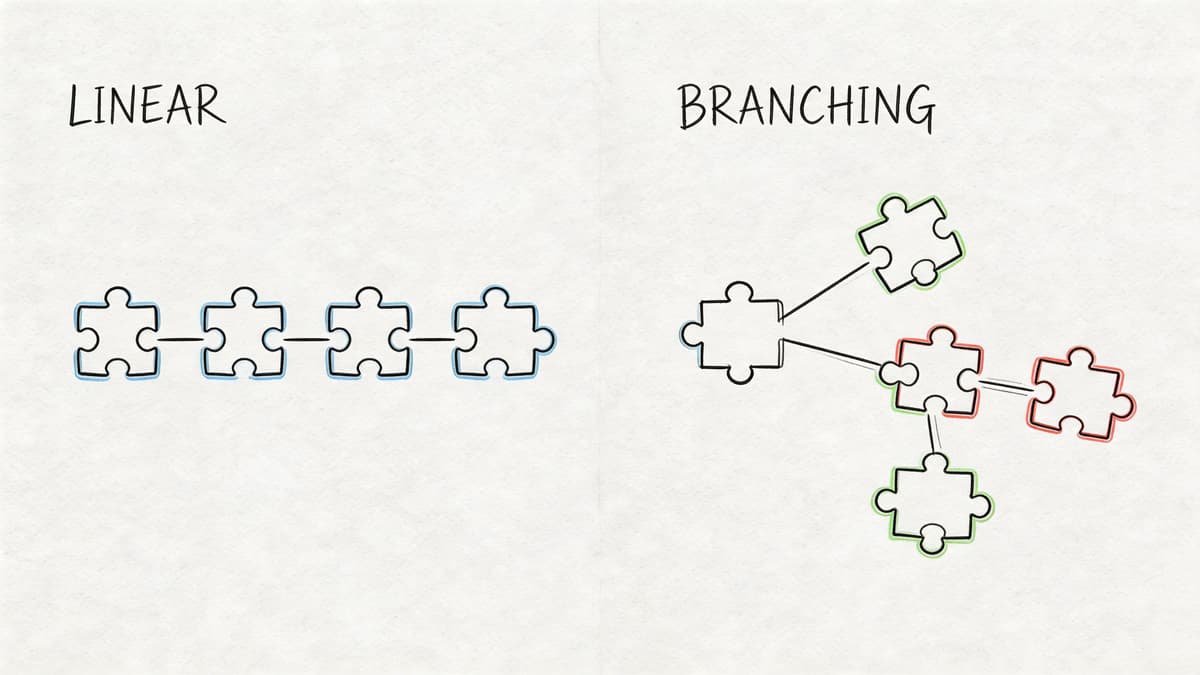
X trained people to think in thread logic. Hook, follow-up, escalation, payoff. Mastodon and Threads don’t break in the same places, and they don’t tolerate the same kind of timeline sprawl. If you want your ideas to travel cleanly, you need to rebuild the post for each threading model instead of dumping one long sequence everywhere.
Start with the atomic idea
Before you split anything, isolate the point of the post in one sentence.
If you can’t identify the atomic idea, you’ll write a thread that rambles on every platform. Strong multi-platform threads are modular. Each segment has a job.
Use this simple model:
Open with the thesis
State the claim or observation clearly.Add one supporting angle
Give the why, not five whys.Close the segment cleanly
Make sure each part can stand on its own if someone sees only that post.
That matters because people often encounter the middle of a thread first. If post three only makes sense after posts one and two, you’re forcing too much sequence dependency.
Mastodon needs shorter, cleaner thread design
Mastodon gives you more space per post, but that doesn’t mean you should write bigger blocks. It means you should write cleaner units.
Using a content warning on each part of a Mastodon thread can reduce vertical space by up to 70% and increase completion rates, while skipping content warnings for long threads is a known etiquette problem because it clutters the timeline for everyone else (Pluralistic’s guide to making Mastodon threads readable).
That changes how I’d structure the same long-form idea:
What works on Mastodon
Use fewer parts
Keep the thread tighter. If a point needs a mini-essay, consider turning it into a blog post and posting a summary plus link.Give each post a clear function
One part for the claim, one part for context, one part for implication, one part for the question.Apply a CW consistently
A simple label like “Long thread 2/4” makes the thread less intrusive and easier to follow.
Long threads on Mastodon aren’t just a formatting choice. They affect everyone else’s reading experience.
What usually fails on Mastodon
- Ten-part tweetstorms copied over unchanged
- Cliffhanger style “wait for the next post” sequencing
- Huge blocks of text with no breathing room
- Threads that assume the feed will algorithmically resurface older parts
Mastodon won’t rescue a badly structured thread. If the sequence feels cumbersome, people leave.
Threads supports flow, but it still needs adaptation
Threads is more forgiving than Mastodon if you’re carrying over a chain of connected thoughts. The problem there is not etiquette so much as feel.
A tweet thread often sounds engineered for retweets. A Threads post should feel like it belongs in an ongoing conversation. So the structure should stay linked, but the tone inside the structure should soften a bit.
Here’s a simple comparison:
| Element | X | Mastodon | Threads |
|---|---|---|---|
| Opening line | hard hook | context-first intro | conversational opener |
| Thread length | can run longer | should stay tighter | moderate, easy to scan |
| Visibility logic | feed dynamics and reposts | chronology and community | conversation-friendly resurfacing |
| Best read style | fast and punchy | modular and considerate | natural and flowing |
Build thread logic once, then apply rules
This is where manual publishing starts to hurt. Splitting a long idea into separate thread versions is tedious, especially if you’re publishing daily.
A workable process looks like this:
Write the source version first
Usually the strongest compressed version starts on X or in your notes.Create split rules by destination
Mastodon gets shorter modular parts and content warnings. Threads gets cleaner flow and less abrupt transitions.Preview before posting
You want to see where a sentence breaks, whether a mention still resolves, and whether the middle posts still make sense.Preserve readability over completeness
Don’t force every word from the original into every destination.
If you’re doing this by hand, you’ll eventually cut corners. That’s why automation matters here more than almost anywhere else in social posting. The useful kind of automation doesn’t just queue content. It handles post splitting, thread continuity, and destination-specific formatting rules so your source post becomes several native versions instead of one duplicated one.
Mastering the Unwritten Rules of Tone and Etiquette
A lot of cross-posting advice stops at character counts. That’s not enough. Most failures happen at the tone layer.
You can format a post correctly and still make it feel wrong. That’s what happens when a tweet voice gets pasted into a platform with different social expectations. The wording may be technically valid, but the stance is off.
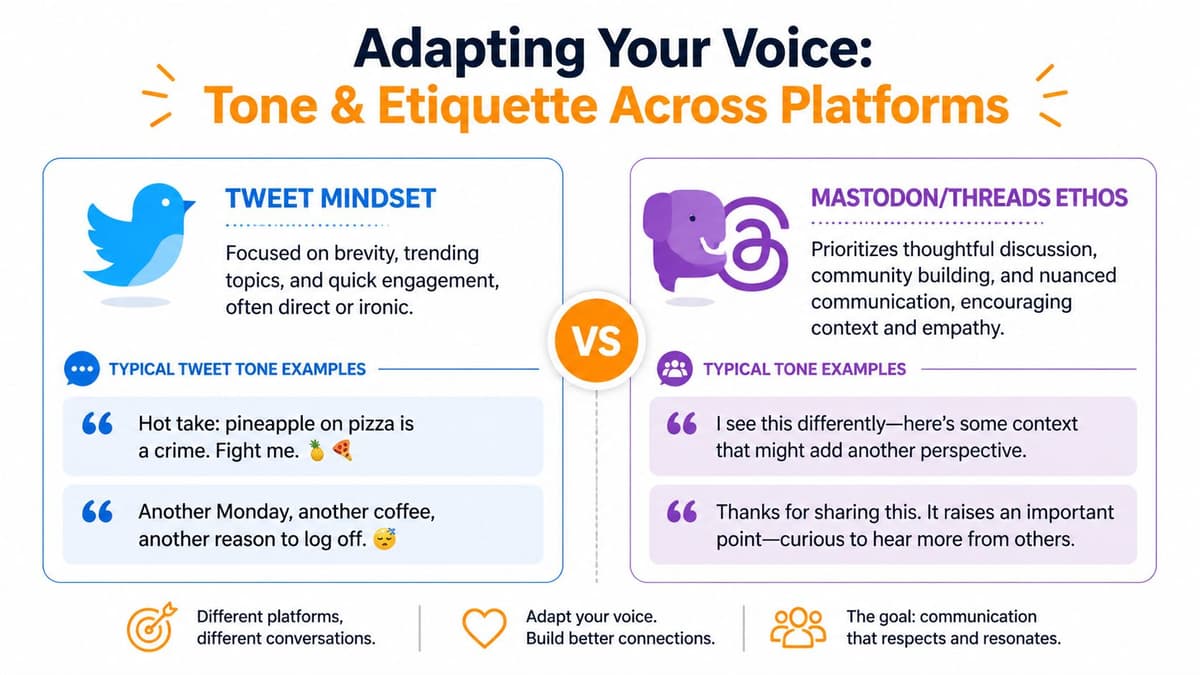
The same message should sound different
Platform-specific framing matters because a provocative Twitter post often needs to become a more nuanced discussion starter on Mastodon. Identical cross-posting tends to underperform there because it misses the platform’s expectation for context and thoughtfulness (BrandGhost’s analysis of Mastodon and Twitter cross-posting).
The easiest way to frame it is:
One idea, three expressions
| Platform | Native style |
|---|---|
| X | compressed, opinionated, sharp |
| Mastodon | contextual, reflective, discussion-oriented |
| Threads | casual, social, conversational |
Now look at the difference in practice.
Core idea: most startup productivity advice ignores constraint-heavy reality.
X version
“Hot take: most productivity advice only works if you have staff, money, and zero interruptions.”
Mastodon version “I keep noticing how much productivity advice assumes support systems many founders don’t have. More time, more help, fewer interruptions. I’m more interested in systems that work under real constraints. What’s held up for you?”
Threads version “A lot of productivity advice falls apart the second your day gets messy. Curious what people use when work is chaotic and resources are tight.”
Same idea. Different posture.
Mastodon punishes performative broadcasting
Mastodon communities are usually more sensitive to context, self-promotion, and over-optimization. That doesn’t mean you can’t promote your work. It means the framing has to respect the room.
A few rules help:
Lead with substance
If you’re sharing a launch, explain why it matters or what problem it solves before asking for attention.Use hashtags selectively
Relevant tags help discovery. Tag stuffing looks lazy and imported.Write like you expect replies, not applause
Mastodon responds better when a post opens a conversation rather than trying to win one.
Field note: The fastest way to make a Mastodon post feel foreign is to publish it like a growth hack.
Threads wants social energy, not tweet residue
Threads has its own trap. People often assume it’s just “X but softer.” That leads to posts that feel stiff, overly compressed, or engineered for dunking. Threads usually works better when the writing sounds like a live human thought instead of a polished debate weapon.
That means:
- shorter transitions between points
- less irony for its own sake
- fewer slogans
- more invitations to respond
If a post sounds like it was built for quote tweets, it usually needs another pass before it goes to Threads.
Keep your voice, change the framing
A lot of creators worry that adaptation means becoming fake. It doesn’t. You’re not changing your beliefs. You’re changing the social packaging.
Consider this:
| What stays constant | What changes |
|---|---|
| point of view | opening line |
| expertise | amount of context |
| topic | level of assertiveness |
| personality | phrasing, tags, and calls to reply |
You should still sound like yourself. Just sound like the version of yourself who understands where they’re posting.
One practical workflow is to keep a “base message” and generate variants from that source. The X version keeps the edge. The Mastodon version adds framing and softens the certainty where appropriate. The Threads version becomes more conversational and easier to join. That is much easier to do with rule-based refinement than with manual rewriting every time.
Handling Mentions, Media, and Links Across Networks
Most adaptation guides focus on wording and ignore the small technical details that subtly disrupt a post. That’s a mistake. A clean sentence with a broken mention or badly handled image still feels careless.
This is the part of cross-network publishing that founders usually discover the hard way. The post goes out. Then someone tells you the tagged person never saw it, the preview looks odd, or the image has no alt text.
Mentions need remapping, not mirroring
A handle on X is not automatically a valid handle on Mastodon. That’s obvious once you think about federation, but it still catches people constantly.
On Mastodon, identity is tied to the full account address, not just the username. If you mention someone the X way when posting to Mastodon, the mention may not resolve correctly. Then the person isn’t notified, the thread loses context, and the conversation gets weaker.
Use a simple mapping checklist:
Create a handle map for frequent mentions
Co-founders, clients, collaborators, partner brands, and recurring community accounts should all have destination-specific versions.Store the full Mastodon address
Use the complete format, not just the username.Review old templates
Many scheduling workflows keep outdated handles long after the person has changed platforms or instances.
The same caution applies in reverse. A Mastodon-native reference may need simplification for X or Threads. Don’t assume one mention format can travel intact.
Media should feel native on each network
Good cross-posting is not just text adaptation. Images and videos need their own pass.
For images, alt text matters most on Mastodon because accessibility expectations are stronger and more visible in the culture. If you skip alt text there, the post can read as low-effort even when the graphic itself is useful.
Use this quick media standard:
| Asset type | What to check before posting |
|---|---|
| image | alt text, crop, readability of text in-image |
| video | native upload behavior, caption presence, thumbnail |
| screenshot | whether the text is legible without zooming |
| link card image | whether the preview thumbnail reinforces the point |
Posts with media fail cross-platform when the asset is treated like a universal attachment instead of part of the message.
If an image works on X because people are used to cramped screenshots, that doesn’t mean it will feel thoughtful on Mastodon or fluid on Threads.
Links should preview cleanly
Links also need a destination-aware approach. A post that depends on the preview card should be checked on each platform, because the same URL can surface differently depending on how the platform fetches and displays metadata.
When adapting a tweet for Mastodon and Threads, use links with intent:
If the post is self-contained, don’t over-rely on the preview
Write enough context in the post itself.If the link is the point, give people a reason to click
Explain what they’ll get, not just what the URL is.Avoid stacking too many moving parts
A post with multiple mentions, a link, hashtags, and media often gets visually noisy fast.
Reply context is a technical issue too
One of the least discussed problems in cross-posting is conversation continuity. The original post may make it over, but replies and quote-style follow-ups often don’t carry properly. That leaves each network with an incomplete version of the discussion.
If your content strategy depends on conversations, this matters a lot more than vanity metrics. You’re not just publishing updates. You’re building a public trail of ideas, objections, and clarifications. If the thread fragments, your best context disappears.
The safest habit is to treat mentions, media, and links as first-class adaptation tasks. They are not cleanup work after the writing is done. They are part of the writing.
Your Automated Adaptation Playbook with MicroPoster
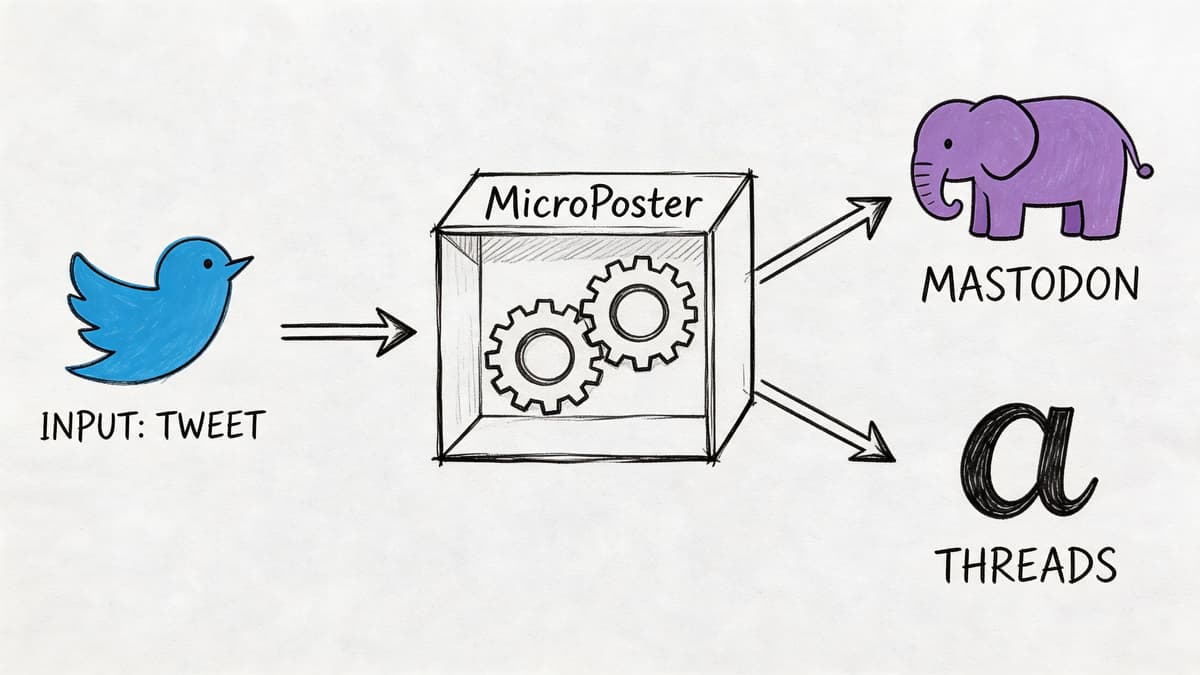
Manual adaptation is useful as a skill. It’s a terrible operating system.
Once you understand what needs to change across X, Mastodon, and Threads, the next problem is consistency. You might adapt well for a week. Then a launch gets busy, your schedule fills up, and you start copy-pasting again because rewriting every post by hand becomes one more tax on your attention.
That’s where automation becomes practical, not theoretical. Manual adaptation can add minutes per post, while adapted posting has been shown to boost Mastodon engagement by 35%, and automation tools matter more now that Threads prioritizes content that feels like an authentic conversation rather than copied-over X content (Statuz on cross-posting workflows and platform-specific adaptation).
If you’re comparing workflows, it also helps to review a broader set of social media automation tools so you can see where scheduling ends and true adaptation begins.
Build rules, not chores
The useful way to automate this is to convert your judgment into rules.
Here’s what that playbook looks like in practice:
Rule set for thread handling
If a source post exceeds X length limits
Split it into a thread automatically.If the destination is Mastodon
Rebuild the thread into shorter modular parts and apply a CW label to the continuation posts.If the destination is Threads
Preserve the sequence, but smooth abrupt transitions so each part reads more conversationally.
Structural work is repetitive, and software is ideally suited to manage such tasks.
Rule set for tone adaptation
Instead of writing three separate versions from scratch, define tone transforms by platform:
| Destination | Tone rule |
|---|---|
| X | keep direct and compressed |
| Mastodon | expand context, reduce provocation, invite discussion |
| Threads | keep it natural, reduce slogan-like phrasing, sound conversational |
That doesn’t remove your voice. It preserves it by preventing sloppy copy-paste from flattening it.
Rule set for mentions and hashtags
Map recurring people and brands
Replace source handles with destination-native handles when available.Trim excess hashtags on Mastodon
Keep only the tags that help discovery or relevance.Drop tags that read as promotional clutter
A hashtag that is normal on one network can feel spammy on another.
The operational benefit is consistency
This is the primary reason to automate how to adapt tweets for Mastodon and Threads. You don’t want occasional excellence. You want a dependable system that keeps working when you’re busy.
MicroPoster’s automatic cross-posting workflow is built around that kind of rule-based publishing. It can detect new source posts, mirror them across networks, and apply platform-specific adaptations like thread splitting, mention mapping, media resizing, and formatting adjustments. That’s useful when the bottleneck isn’t ideas. It’s staying consistent without burning time on repetitive edits.
Operating principle: If your publishing system depends on you remembering every platform norm every single time, it will fail under pressure.
A founder-friendly default setup
If I were setting this up for a startup account or personal founder brand, the baseline rules would be simple:
- Use X as the shortest source format
- Expand for Mastodon when context is missing
- Rewrite openings for Threads so they sound native
- Map known mentions automatically
- Require alt text on media-bound posts
- Preview all thread splits before first publish
- Let automation run, then manually intervene only for high-stakes posts
That model keeps your judgment where it matters and pushes the repetitive mechanics into the background. That’s the right division of labor.
Frequently Asked Questions About Adapting Tweets
Can automation preserve reply context across platforms
Partially, but this is still one of the hardest problems in cross-posting. Many tools fail to migrate threaded replies or quote-posts well, which fragments discussions and can cause a 25-30% drop in engagement on unadapted threads (discussion of reply-context loss in cross-posting workflows).
The practical answer is to treat the original post and the reply chain as separate adaptation layers. Your workflow should preserve the core post automatically and give you a clean way to continue important replies natively when needed.
Will automated adaptation make my posts sound robotic
Not if the system uses rules to reshape your original writing instead of replacing it. Bad automation duplicates. Better automation transforms structure, handles, and formatting while keeping the original point intact.
That same principle applies if you want to repurpose social content into other formats. For example, if you want to turn strong posts into short-form video assets, Aicut Pro’s tweet-to-video workflow is a useful example of format conversion done with a clear destination in mind.
What's the biggest mistake to avoid
Ignoring culture.
It's often thought that the biggest risk is technical failure. Broken mentions are annoying, but social mismatch does more damage over time. If your posts keep reading like imported tweets, people notice. The account starts to feel extractive rather than present.
Should I ever post the exact same thing everywhere
Yes, but rarely.
The best candidates are very short updates, straightforward product notices, or links where the surrounding copy is already neutral and clear. The more opinionated, contextual, or threaded the post is, the more likely it needs adaptation.
If you already post consistently and want the adaptation layer handled without extra manual work, try MicroPoster. It lets you write once, apply platform-specific rules for networks like X, Mastodon, and Threads, and keep your publishing consistent without turning distribution into a second job.