automatic crossposting
A Practical Guide to Automatic Crossposting
Discover how automatic crossposting can save you hours while expanding your reach. Learn to build a smart, efficient cross-platform content strategy.
Automatic crossposting is the process of automatically sharing content from one social media platform (like Instagram, X, or a blog) to others (like Facebook, Bluesky, Threads) using third-party tools (like MicroPoster), saving time while expanding a consistent presence across networks.
Why Smart Creators Rely on Automatic Crossposting
If you've ever managed more than one social media account, you know the drill. You write a killer post for X, then you hop over to Bluesky to tweak it, then again for Mastodon, and maybe once more for Threads. Each network has its own vibe, its own rules, its own character limits. Doing this manually isn't just boring—it’s a massive time sink.
This is exactly where automatic crossposting stops being a simple shortcut and starts being a core part of your strategy.
Think of it as building a smarter workflow. You pick one platform to be your "source of truth"—where you post first—and then let a dedicated tool handle the job of pushing that content out to your other accounts.
It's About More Than Just Saving Time
The real win here isn't just clawing back a few minutes. It's about building a system that lets you focus on what actually moves the needle: creating great content and talking to your community. You get to spend less energy on the logistics of posting and more on strategy and real conversations.
Here’s what that looks like in practice:
- A Consistent Brand Voice: When the distribution is automated, your core message stays the same everywhere. This is huge for building brand recognition and making sure you sound like you on every platform.
- Effortless Reach: The audience you have on X might not be the same group that follows you on Bluesky. Crossposting gets your content in front of everyone, maximizing its impact without you lifting a finger.
- More Time for Real Engagement: All that time you save from manually posting? You can pour it back into replying to comments, joining conversations, and actually building relationships. That’s the stuff that fuels growth.
"The goal of automation isn't to replace human interaction but to eliminate the tedious tasks that prevent it. Smart crossposting frees you up to be more present and engaged with your audience, not less."
The Modern Way to Crosspost
We've come a long way from the old-school tools that just blasted the exact same, often broken-looking, post everywhere. Today's solutions are much smarter. This is especially true for text-focused platforms like X, Bluesky, and Mastodon, where the small details matter.
Tools like MicroPoster were built for this specific world. They get that a long thread on X needs to be elegantly converted into a single, readable post on Bluesky. They know how to handle platform-specific mentions so they don't look out of place. This kind of intelligent adaptation makes your content feel native, no matter where it shows up.
If you're looking to go deeper on how this fits into a larger content strategy, checking out some marketing automation best practices can provide a broader context. By setting up an automated system, you're not just posting faster; you're laying the groundwork for a more scalable and strategic approach to your content.
Building Your Automated Crossposting Workflow
Alright, let's move from theory to practice. This is where an automatic crossposting strategy really starts to pay off. Setting up a solid workflow isn't about getting bogged down in technical details; it’s about making a few smart decisions upfront that save you a ton of time and expand your reach down the road. Think of it as building your own personal content engine that just works.
The whole thing kicks off with one simple, but critical, decision: picking your 'source' platform. This is your content's home base—the network where you create your best stuff and feel most comfortable. For a lot of people who focus on text-based content, that's usually X (what we used to call Twitter), a blog, or a similar microblogging site.
Once you’ve locked that in, you can start connecting your 'destination' accounts. These are all the other places your content will automatically show up. It's like setting up a line of dominoes; you just have to tip the first one, and the rest will fall exactly how you planned.
Choosing Your Central Hub
The tool you use to link everything together is your command center. Something built specifically for this, like MicroPoster, is designed to make this initial setup dead simple. Instead of bouncing between a dozen browser tabs to log in everywhere, you can link all your accounts—from X to Bluesky to Mastodon—right from one dashboard.
This centralized setup is a game-changer. You connect each account just once, and the system handles all the secure handshakes between platforms from then on. That's what lets you write something one time and then decide with a single click where else it needs to go.
This flow chart nails the simplicity of it. It’s a clean, three-stage process.
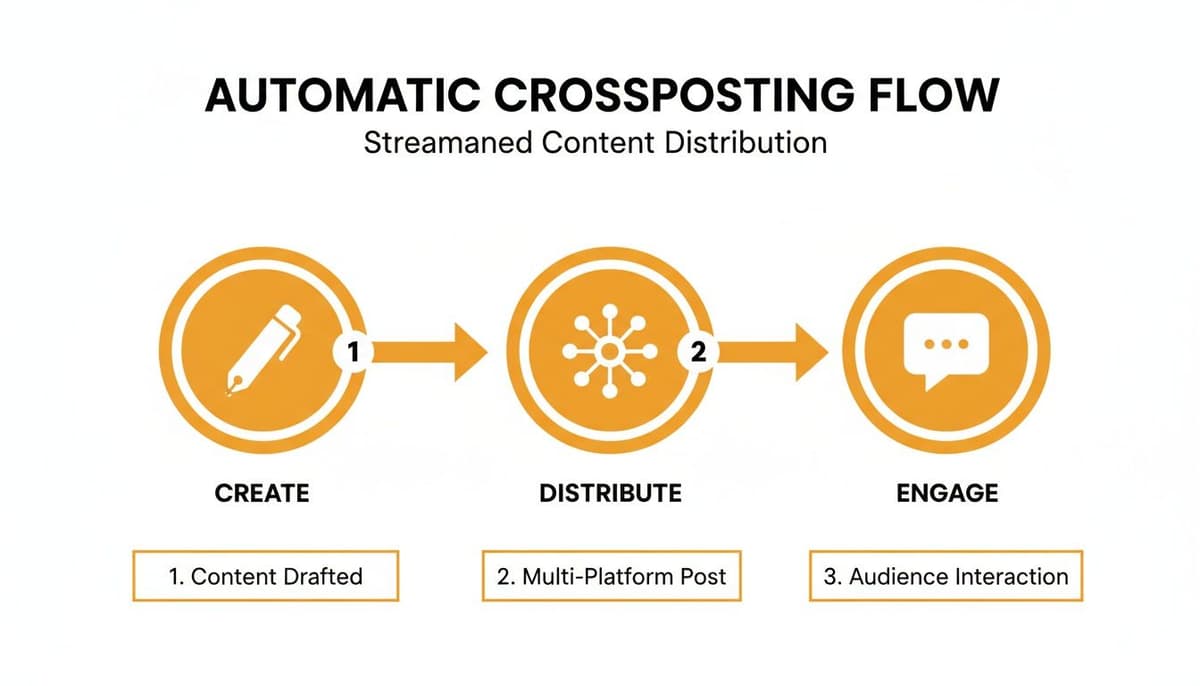
As you can see, it’s not just about blasting content out. It’s a full cycle from creation to engagement, with automation being the powerful engine in the middle.
From a Single Post to a Multi-Platform Presence
With your accounts all hooked up, the real magic starts to happen. The core idea is to separate the act of writing from the task of publishing. This lets you stay in the zone and just focus on crafting a great message on your source platform.
Let's imagine a real-world example. You've just put together a brilliant, five-part thread on X breaking down a complex subject. Trying to manually copy and paste that to other platforms would be a nightmare of formatting fixes and lost context.
With an automated workflow, that X thread can be automatically "stitched" into a single, clean post for Bluesky, with all the right line breaks and links perfectly preserved. No fiddling required.
This kind of smart adaptation is what makes a modern crossposting tool so much more than a dumb copy-paste bot. It gets the subtle differences between platforms. One analysis showed that the best tools can reduce the manual effort of posting by up to 80% for creators managing multiple accounts. That’s a huge win.
Building Your First Automation Rule
Your first rule doesn't need to be some complex masterpiece. Honestly, starting simple is the best way to go. Here are a few foundational rules you can set up right now to see an immediate impact:
- Mirror All Posts: This is the easiest place to start. Set up a "mirror" rule where any post you publish on X automatically gets sent to Bluesky. Simple and effective.
- Keyword-Based Triggers: Get a bit more targeted. You could create a rule that only crossposts content that includes a specific hashtag, like #portfolio, ensuring only your most important work gets amplified.
- Content Type Filters: Maybe you only want your main, text-based posts to be shared, but not your replies or quote posts. A simple filter can ignore certain content types to keep your other feeds from getting cluttered.
Getting these first workflows running is a massive first step. If you want to see how this fits into a bigger plan, check out our guide on how to automate social media posting effectively. Building this engine is an investment that pays you back almost immediately, freeing up your time and energy to focus on what actually matters: creating great content.
Creating Platform-Specific Rules for Smarter Automation
Let's be honest: true crossposting magic isn't about just blasting the same message everywhere. It's about intelligent adaptation. The real win is making your content feel like it was made for the platform where it lands. This means getting past simple copy-paste mirroring and setting up custom rules that respect each network’s culture and quirks.
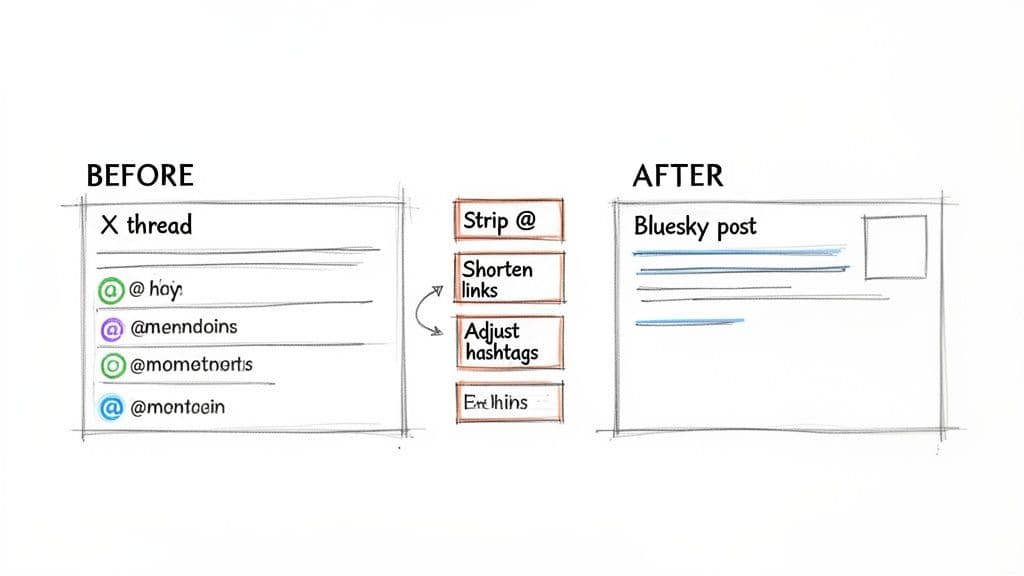
Think about it. A long, detailed thread on X is perfect for a deep dive. But that same exact structure feels clunky and out of place on Bluesky, where single posts often get more traction. Or what about tagging an X user with an @mention? That's completely useless if they don't have an account on Mastodon.
Smart automation anticipates these small disasters and cleans them up before you post.
Why Generic Crossposting Almost Always Fails
Dropping the same content everywhere is a surefire way to get ignored. People can spot generic, robotic content from a mile away, and it just feels lazy. It shows you aren’t paying attention to the conversations happening on that specific network.
The numbers don't lie. A massive analysis of 70 million posts confirmed that platform-native strategies consistently crush generic crossposting. We're talking engagement rates that are 20% higher. When your content actually fits in, people are far more likely to engage with it.
This is exactly where setting up specific rules in a tool like MicroPoster becomes a game-changer. You can build a system that automatically handles those critical little tweaks, making sure your content always looks sharp and intentional.
Building Your Custom Rulebook
Okay, let's get practical. Here are some of the rules I’ve seen work wonders, turning basic automation into something genuinely smart. Think of these rules as your personal filter, transforming a single piece of content into perfectly tailored posts for each destination.
A fantastic place to start is managing platform-specific tags. For example, you can create a simple rule to automatically strip out X-specific @mentions when a post gets sent over to Bluesky or Threads. This instantly prevents those awkward "ghost mentions"—tags pointing to accounts that don't exist—and keeps your posts looking professional.
Here are a few more powerful rules you can set up:
- Hashtag Handling: Automatically add a handful of platform-relevant hashtags to every post heading to Mastodon. This is huge for discoverability within its federated communities.
- CTA Swapping: Set up a rule that adds a specific call-to-action for one network but not another. For example, you might push a "Join our community" link for your Mastodon followers while using "Follow for daily tips" for your Bluesky audience.
- Smart Media Adjustments: X lets you post up to four images, but other platforms have different limits or display them weirdly. Rules can help manage how your media gets handled so it always looks good.
The goal isn't just to post everywhere; it's to start conversations everywhere. Custom rules make your automated content feel less like a broadcast and more like a real person trying to connect.
Comparing Platform Nuances
To build great rules, you have to know the playing field. Each microblogging platform is its own little world with unique features and limitations. Understanding these differences is absolutely essential for building a smart automation strategy. For a deeper look, our guide on how to crosspost from X to Threads gets into the nitty-gritty of connecting those two specifically.
To get you started, I've put together a quick comparison table to help guide your rule-making.
Platform Nuances for Smarter Crossposting
This table breaks down the key differences you'll want to account for when setting up your automatic crossposting rules.
| Feature | X (Twitter) | Bluesky | Mastodon |
|---|---|---|---|
| Character Limit | 280 (Standard), 4,000 (Premium) | 300 | 500 (default, varies by server) |
| Threading | Natively supported and very common. | Supported, but single posts are more common. | Supported, similar to X. |
| @Mentions | Platform-specific (@username) |
Platform-specific (@handle.bsky.social) |
Instance-specific (@user@instance.social) |
| Link Handling | t.co shortener, rich link previews. | Full URLs, rich link previews. | Full URLs, rich link previews. |
Nailing these small but significant details is the secret to a sophisticated automatic crossposting strategy. It lets you build a system that respects each platform's culture, which ultimately translates to better engagement and a far more authentic presence.
Finding Your Cadence for Maximum Impact
Now that you've set up your platform-specific rules, the heavy lifting on the technical side is done. Your automatic crossposting engine is ready to go. But let's be honest, the mechanics are only half the battle. A powerful workflow is useless without a smart strategy, so it’s time to talk about cadence—the rhythm and frequency of your posts.
This is where automation stops being about just "doing more" and starts being about "doing better." Instead of just blasting content everywhere, you can build a content calendar that actually works for you. The goal is to be intentional, not just loud.

Different Platforms Different Rhythms
Trust me, a one-size-fits-all posting frequency is a surefire way to annoy your audience. Every social network has its own vibe and unwritten rules about how much is too much. What feels normal on a chaotic, high-volume platform like X would quickly get you muted on a more laid-back network.
This nuance has become especially critical with the rise of new microblogging platforms. The data doesn't lie; for instance, posting 3-4 times a day on X can nearly triple the engagement for accounts that maintain that pace. If you want to dive deeper into the numbers, Buffer's comprehensive guide on the topic is a great read.
But try that same pace on Bluesky or Threads, and you'll come across as spammy. A good, sustainable strategy means adapting your timing to each specific audience.
Using Automation to Stagger Your Content
This is exactly where a smart scheduling tool earns its keep. Instead of dropping the same post everywhere at the exact same time—a dead giveaway of lazy automation—you can build in strategic delays.
A tool with features like those in the MicroPoster suite lets you stagger your posts intelligently. You’re still sharing the same core message, but it shows up at the ideal time for each network.
Think about it like this:
- Your main post hits X at 9:00 AM, catching the morning commute scrollers.
- An adapted version for Bluesky is scheduled for 11:30 AM, targeting a completely different peak activity window.
- Finally, that same post lands on Mastodon at 2:00 PM, timed for when its community is most likely to engage.
It’s a simple technique, but staggering your content makes your presence feel far more organic and dramatically boosts the odds of it being seen by the right people.
Smart scheduling isn’t just about filling slots on a calendar; it’s about aligning your content with your audience's behavior. Automation gives you the power to be present in multiple places at once without being physically there.
Building a Sustainable Content Calendar
At the end of the day, the best cadence is the one you can actually stick with. Consistency is key, and burnout is its worst enemy. Your automation workflow should feel like a support system, not another chore.
I always recommend starting with your "tentpole" content—the big, important posts you're creating each week. Get those on the calendar first. From there, you can use your automatic crossposting rules to fill in the gaps with evergreen content, quick takes, or discussion-starters.
Here’s a simple framework to get you started:
- Set a Baseline: Decide on a minimum number of posts per week for each platform. Maybe that's two original posts a day on X but only one on Bluesky.
- Find Your Peak Times: Use your analytics (or just good old-fashioned observation) to see when your audience is online and active. Schedule your most important content for those windows.
- Automate the Gaps: Let your crossposting tool share relevant content between platforms during off-peak hours. This keeps your feed active without you having to be glued to your screen.
This approach flips your content strategy from a frantic, reactive mess into a calm, proactive system. You get to create when inspiration strikes, and automation handles the rest, ensuring your work gets delivered for maximum impact, every single time.
Common Crossposting Mistakes and How to Sidestep Them
While automatic crossposting is a huge time-saver, it's definitely not a "set it and forget it" magic button. If you just flip the switch without a smart strategy, your content can end up looking robotic, out of place, or just plain broken.
The good news? The most common tripwires are actually pretty simple to avoid once you know what they are. Think of your automation tool as a capable assistant—it handles the grunt work, but you still need to give it the right instructions. Let's break down some of the classic blunders I see all the time and, more importantly, how to fix them.
The Ghost Mention Problem
One of the most glaring giveaways of lazy automation is what I call the "ghost mention." This is when you tag someone's X handle in a post, and that exact post is zapped over to Bluesky or Mastodon. The problem is, that user either isn't on the other platform or has a completely different handle.
What you're left with is a dead tag that does nothing, confuses your readers, and basically screams, "This was posted by a robot!"
Thankfully, the fix is easy. You just need to set up platform-aware rules. A good tool can be told to automatically strip out any X-style @mentions before the post goes live on other networks. It’s a simple tweak that keeps your content looking clean and native.
Forgetting About Character Limits and Formatting
Another common misstep is ignoring that each platform plays by its own rules. A thoughtful 450-character post that works perfectly on Mastodon will get chopped in half when it lands on Bluesky, which has a 300-character limit. Your followers end up with a confusing, half-finished thought.
Formatting is a similar minefield. A post with careful paragraph breaks on one network can easily collapse into a dense, unreadable wall of text on another.
The secret is using a system that adapts content, not just copies it. Your tool should be smart enough to either shorten a post gracefully or, even better, automatically split a longer post into a numbered thread. This keeps your original message intact.
The Audience Fatigue Issue
Blasting the exact same content across every single channel at the exact same second is the quickest way to burn out your audience. If someone follows you on X and Threads, seeing the same update hit both feeds simultaneously feels redundant and a bit spammy.
It gives them a reason to unfollow you on one of those platforms because you're not adding unique value.
This is where smart scheduling is your best friend. Instead of hitting "publish" everywhere at once, build in some simple delays.
- Post your main update on X in the morning.
- Schedule an adapted version to go out on Bluesky a few hours later.
- Let it pop up on Mastodon the next day.
This simple staggering makes your presence feel more natural and actually increases the odds that your content will be seen by more people without annoying your biggest fans.
Tools like the auto crossposting feature in MicroPoster are built for this kind of intelligent scheduling. By avoiding these common pitfalls, your automatic crossposting can go from being a potential liability to one of your most powerful strategic assets.
Answering Your Top Questions About Automatic Crossposting
Even the most seasoned creators have questions when they first start automating their content. It's totally normal. Let's walk through some of the most common concerns I hear and get you the straightforward answers you need.
Will Automation Kill My Engagement?
This is the big one, isn't it? And it's a fair question. The short answer: not if you do it right.
Engagement takes a nosedive when automation is used as a lazy shortcut—think blasting the exact same, unedited post across every platform at the same second. That’s not a strategy; it’s spam.
Smart crossposting, on the other hand, is all about adaptation. When you use a tool like MicroPoster that lets you set up platform-specific rules and templates, your content feels native wherever it lands. You can automatically strip out irrelevant @mentions, shorten posts to fit character limits, and even swap in unique hashtags for each audience. When your content looks like it belongs, people will engage with it.
Which Platform Should I Post to First?
Your "primary" or "source" platform should be wherever you're most comfortable creating. Where do your ideas flow best? Where are you already most active? For a lot of people, especially those in the microblogging world, that's a text-first platform like X (formerly Twitter) or a personal blog.
Why start with text? It's the most flexible building block for content. It’s incredibly easy to tweak a text post for other platforms—you can shorten it, expand on it, or pair it with different images or videos. Starting with text gives you the most options when your automation kicks in.
Don't pick your source platform based on which network is biggest. Pick the one that fits your creative process. Your automation should work for you, not the other way around.
What About Platform-Specific Features like Polls or Reels?
Great question. What do you do with X Polls, Instagram Reels, or other features that only exist on one network? Simple: you post those manually.
These features are designed for native interaction and just don't translate well when you try to crosspost them. It's best to leave them out of your automation workflow.
Think of it as a hybrid approach:
- Automation: Handles the core of your content—the text updates, images, links, and standard videos that can be shared consistently.
- Manual Posting: Used for special, high-engagement posts that rely on a platform's unique features.
This gives you the best of both worlds. You get the efficiency of automatic crossposting for your everyday content, plus the authenticity of jumping in to create something special when the moment is right. Automation builds your baseline presence, and your native posts add the personality.
Should I Post Everywhere at Once or Stagger the Times?
Seeing the same post appear on three different feeds at the exact same time is a dead giveaway that a bot is at work. It can make your content feel robotic and lead to your followers just tuning you out.
Staggering your posts is almost always the better move. By scheduling your content to go live at different times on different networks, you create a much more organic feel. It also gives your message a longer lifespan and lets you hit the peak activity times for each platform's unique audience. Even a simple delay of an hour or two can make a huge difference.
Ready to build a smarter, more efficient content strategy? With MicroPoster, you can stop wasting time on manual posting and start focusing on what truly matters—creating great content and engaging with your community. Explore our powerful automatic crossposting feature and see how easy it is to maintain a consistent presence across X, Bluesky, and Mastodon.